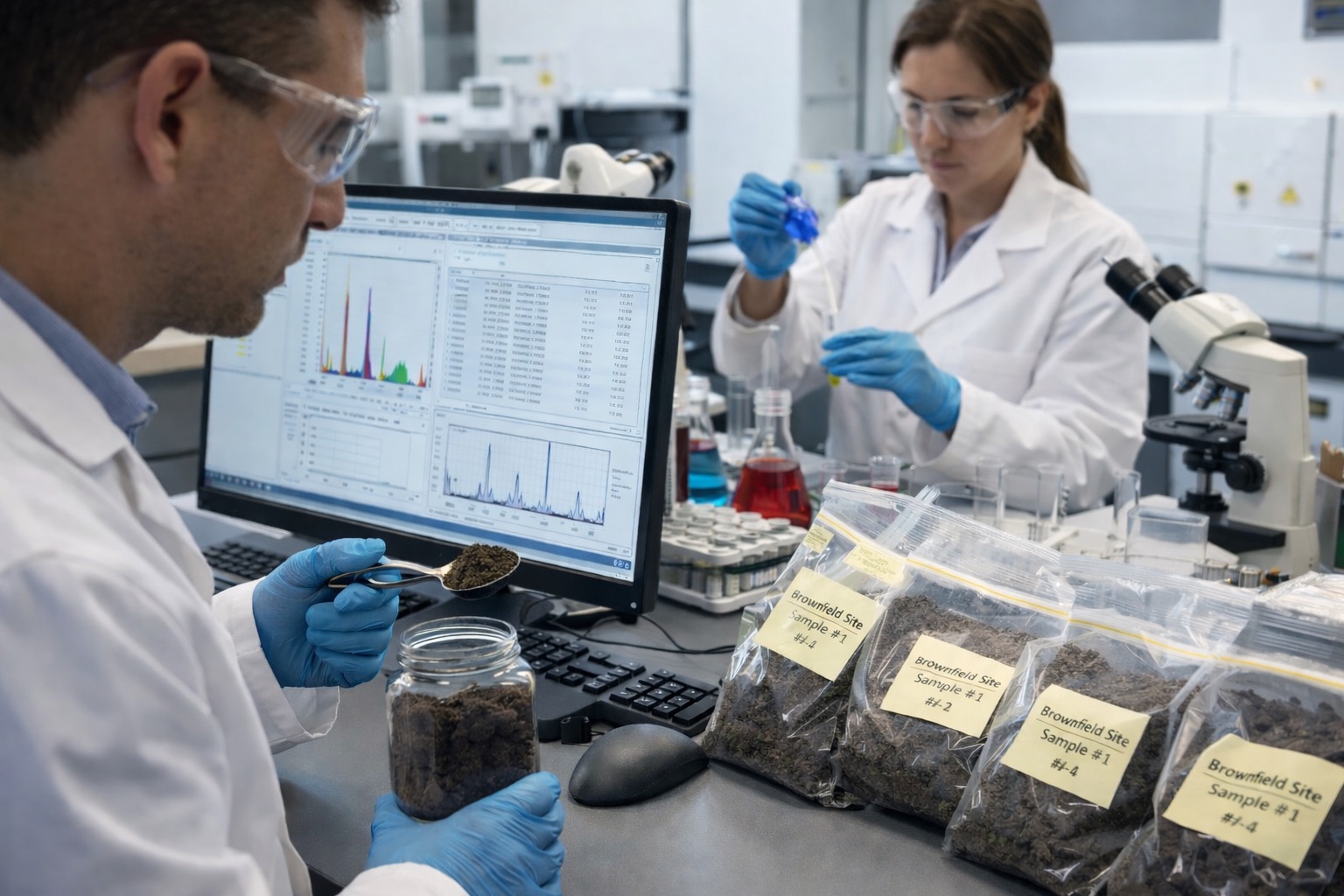
Brownfield Site Testing and Environmental Soil Analysis
Brownfield sites are old developed lands. In the past, they had been used for business or industry. Many have come to be empty or abandoned.
Some were factories. Some were gas stations. Others were storage yards. These sites may have contamination. Soil may hold chemicals.
Groundwater may also be polluted. Before the construction of such land occurs, testing is required.
Brownfield site testing helps to find hidden risks. It protects people. It protects the environment. It also defends investors and property owners.
In places such as Los Angeles and throughout California, environmental regulations are strict. Testing is not optional. This is needed prior to redevelopment. This article covers, in layman’s terms, what brownfield testing is.
What Is a Brownfield Site Test?
A brownfield site means land that was used before. It is not clean and untouched land. It could have pollution due to past activity.
Examples of common brownfield sites are old factories. Old gas stations are typical examples. Warehouses and auto repair shops are also included in this group.
Over time, there could be fuel leaks. Chemicals may spill. Waste may be buried. Such actions can poison the soil and water.
Brownfield land is distinguished from greenfield land. Greenfield land has not been used for development yet. Brownfield land must be tested before being reused.
Why is Brownfield Testing important?
Contaminated soil can cause harm to health. Heavy metals, such as lead, can be introduced into the body.
Children are at high risk. Dust from soil can contain toxic dust. Petroleum products could emit vapors. These vapors can enter the buildings. They may cause issues with indoor air quality.
Groundwater contamination is spreadable. It may move across the boundary of the properties. This causes legal and environmental issues. It is these that are found early by testing. It prevents future harm.
The California Environmental Protection Agency determines the environmental rules in California. These rules ensure the protection of land, air, and water.
The lack of testing can result in project delays. Permits may be denied. Costs may increase later.
Learn how brownfield site testing and environmental soil analysis identify contamination, support redevelopment, and ensure regulatory compliance.
Common Contaminants in Brownfield Sites
Heavy metals are common. Lead is often found. There may also be arsenic and cadmium. Petroleum hydrocarbons occur widely near gas stations.
These come from fuel leaks. Volatile Organic Compounds or VOCs may be found at your dry cleaner or a factory. These chemicals can vaporize and enter buildings.
Polycyclic Aromatic Hydrocarbons are commonly known as PAHs and may be found near industrial sites.
Industrial solvents are also possible contaminants. Each chemical needs to be properly tested.
Read more to learn how brownfield site testing and environmental soil analysis identify contamination, support redevelopment, and ensure regulatory compliance.
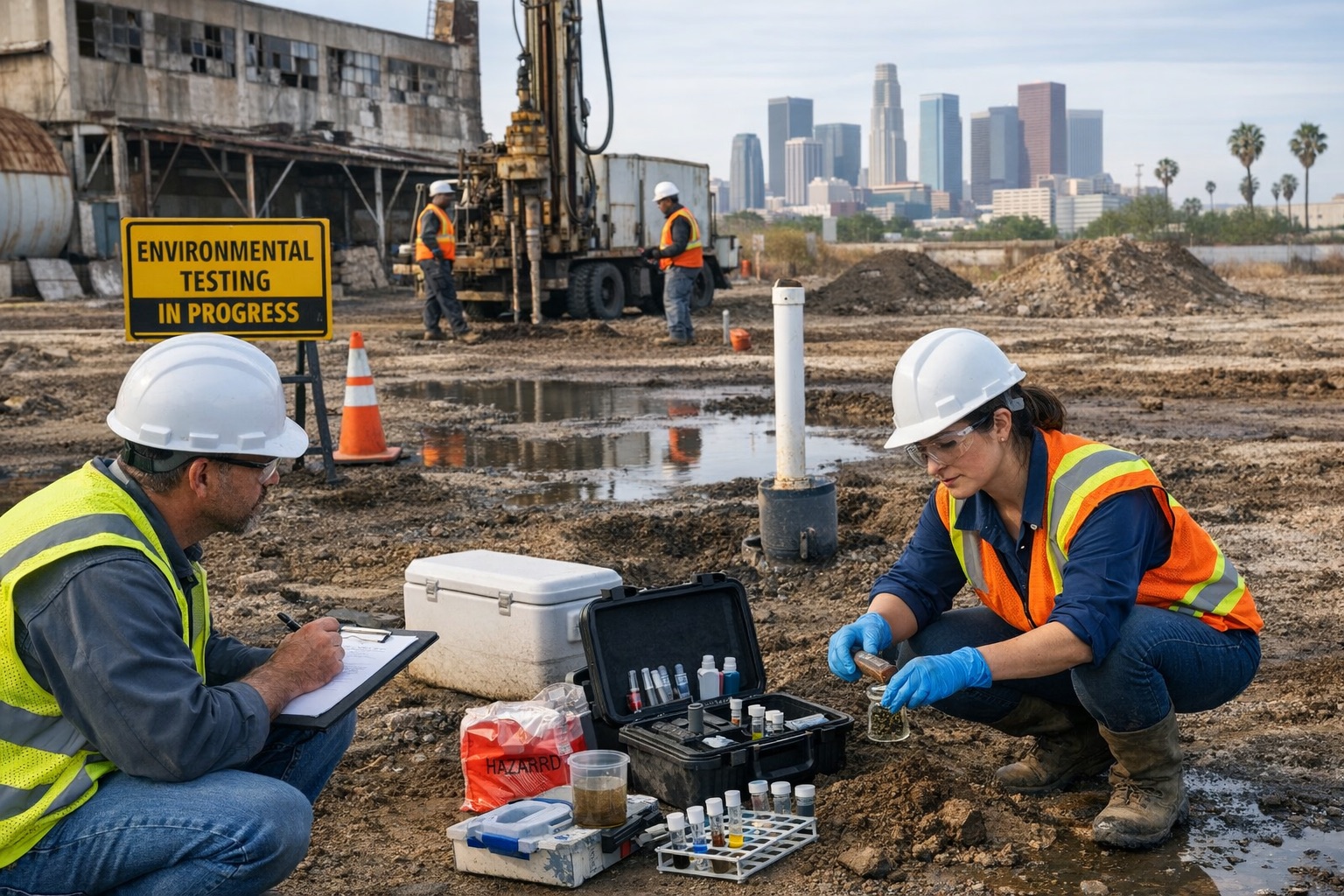
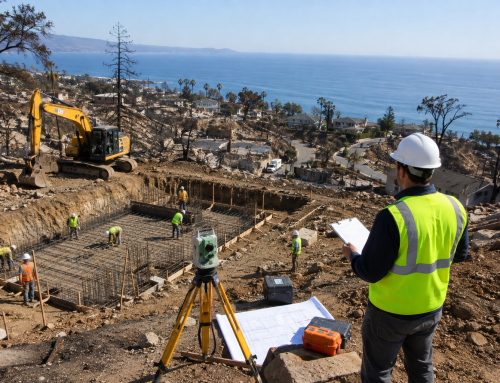
Environmental scientists performing brownfield soil testing at an industrial redevelopment site in Los Angeles, ensuring safe environmental analysis and sustainable land redevelopment.
How is brownfield testing carried out in construction projects?
Primarily, it is carried out through environmental assessments, soil testing, and groundwater testing as follows:
The Environmental Site Assessment- Phase I
The first step of brownfield testing is phase I environmental assessment. This does not include sampling of soil. It focuses on research. Experts review old records. They study maps and photos. They check property history. They seek evidence of past contamination.
They also visit the site. They look for the stains of soil as well as the storage tanks or old equipment. If they see the possibility of risks, they recommend Phase II testing.
Phase I is based on national standards. It gives a sense of confidence to the lenders and investors.
The Environmental Site Assessment- Phase II
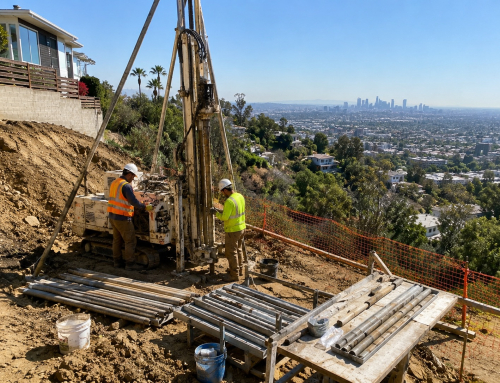
Phase II is the phase of field testing. Soil samples are obtained from the ground. Drilling rigs are used for drilling boreholes.
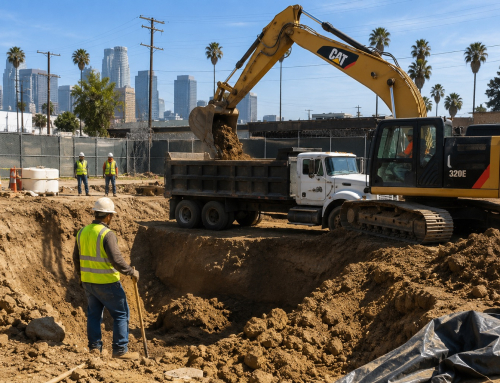
Test pits may also be dug. Different samples are taken from different depths. This helps experts to understand how deep contaminant may go.
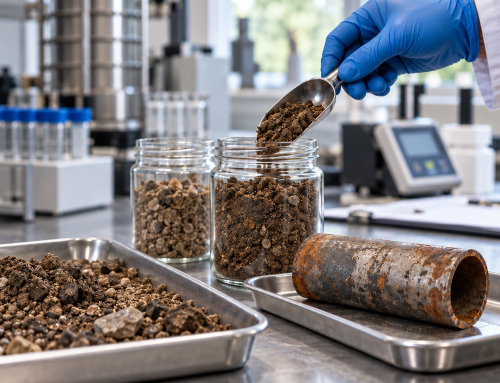
Samples are sent to certified laboratories. The testing involves the identification of chemicals and the measurement of levels.
Phase II gives clear answers. It verifies whether there is any contamination.
Laboratory Soil Testing
With the help of advanced tools, laboratories test soil samples. They are used for measuring minor quantities of chemicals.
Metals testing is run for lead and arsenic. Hydrocarbon testing is for checking for fuel products. VOC testing measures the presence of chemicals that can be in the form of vapors.
So, pH testing involves the measurement of the acidity of the soil.
Soil chemistry influences the movement of chemicals. The leachability test checks the possibility of contaminants getting into groundwater. That is important in getting accurate results.
Laboratories should be certified. Equipment is required to be calibrated. Safe decisions are made on the basis of reliable data.
Groundwater Testing
Sometimes contamination occurs in the groundwater. When this happens, it is installed with monitoring wells. Wells give experts a way to collect samples of water below the surface.
Test samples are conducted in laboratories. The results are compared with safety limits. In Southern California, groundwater is managed by the Los Angeles Regional Water Quality Control Board.
Groundwater testing can go on for years. This is to ensure no contamination spreads.
Regulations and Local Oversight
Environmental testing should comply with federal and state regulations. The US Environmental Protection Agency gives national guidance. State rules are enforced by the California Environmental Protection Agency.
In Los Angeles, development permits may be obtained from the Los Angeles Department of Building and Safety.
Geologic hazard maps are a product of the California Geological Survey. Transportation projects may require a coordinate relationship with the California Department of Transportation. The purpose of all agencies is to ensure public safety.
Risk Assessment and Cleanup
Risk assessment is useful for finding out the severity of contamination issues. It will determine how high the level of contamination needs to be reduced.
Cleanup strategies are then selected. It will be dependent upon soil chemistry, the depth of contamination, and future land use plans. After testing, experts review results. They compare chemical levels with safety limits.
If levels are high, cleanup is required. Contaminated soil may be removed. Clean soil may replace it.
Some sites use stabilization. This reduces chemical movement. Bioremediation uses natural bacteria to break down pollutants.
Some sites use caps. A protective layer covers contaminated soil. Cleanup plans must be approved by regulators.
Benefits of Brownfield Testing
Testing for the protection of future residents. It protects workers. It preserves communities that are nearby.
Brownfield testing helps in sustainable development. Especially when it comes to the safe reuse of previously used land.
It also helps in designing construction projects with greater environmental awareness.
Most importantly, Brownfield testing reduces legal risk. It increases property value. It creates trust for the investors. Cities such as Los Angeles rely upon land reuse. Space is limited.
Redevelopment helps to stimulate growth. Brownfield testing can enable old land to be reused safely.
Early testing helps to reduce unexpected problems of contamination. It makes the project approval processes easier.
Challenges in Brownfield Projects
Brownfield sites may be complicated. Contamination may be hidden. Old records are possibly incomplete. Fill material may vary.
Costs may rise when the contamination is deeper than anticipated. Cleanup may take time. Permits may require review.
Despite these challenges, testing avoids bigger problems in the future. Brownfield projects may require or have specialized equipment and/or experts.
It is important to properly evaluate complex situations below ground. Uncertain depth and type of contamination can make remediation more difficult and lengthier.
Choosing the Right Environmental Team
One more thing to consider is choosing a certified laboratory. You should ensure that the team will have experience in working on brownfield sites.
They should be familiar with California regulations. Reports should be clear and simplified. Data should be easily understandable.
Ensure that the environmental team has the correct certifications. Check if the team is based on recognized testing standards.
Inquire about the procedures for brownfield testing with the team. A good team will have detailed reports and technical support throughout the testing and cleanup process.
Good communication helps to avoid delays. A very competent team enhances project success.
Final Thoughts
Brownfield site testing and environmental soil analysis are important steps before redevelopment. Contamination is found in these tests. They protect health. They support compliance with an act.
Phase I studies have a site history review. Soil samples are collected in phase II testing. Groundwater testing checks bigger risks.
Cleanup may follow if needed. In California and Los Angeles, strict rules are there to ensure safe development.
Brownfield testing makes risky land safe property. It supports smart growth. It will safeguard communities into the future.
F.A.Q.s
How long does it take to do brownfield testing?
Phase I may take a few weeks. Depending on the size of the site and the length of time required to finish lab analysis, Phase II can take longer. Clean up, if needed, can be done in several months to some extent.
Can brownfield land be redeveloped safely?
Yes. With appropriate testing and remediation, abrasive brownfield sites can be reused successfully. Many residential properties and business construction projects are built on remediated land.
What are the benefits of Brownfield redevelopment?
Brownfield redevelopment minimizes urban sprawl. It improves unused land. It increases property value. It also promotes sustainable city growth in places like LA.
Is groundwater testing mandatory all the time?
Not always. Groundwater testing is necessary when there is a likelihood of contamination between these surface areas. Monitoring wells may be installed to be used for testing.
Build with knowledge. Build with confidence. Build smart from the ground up.