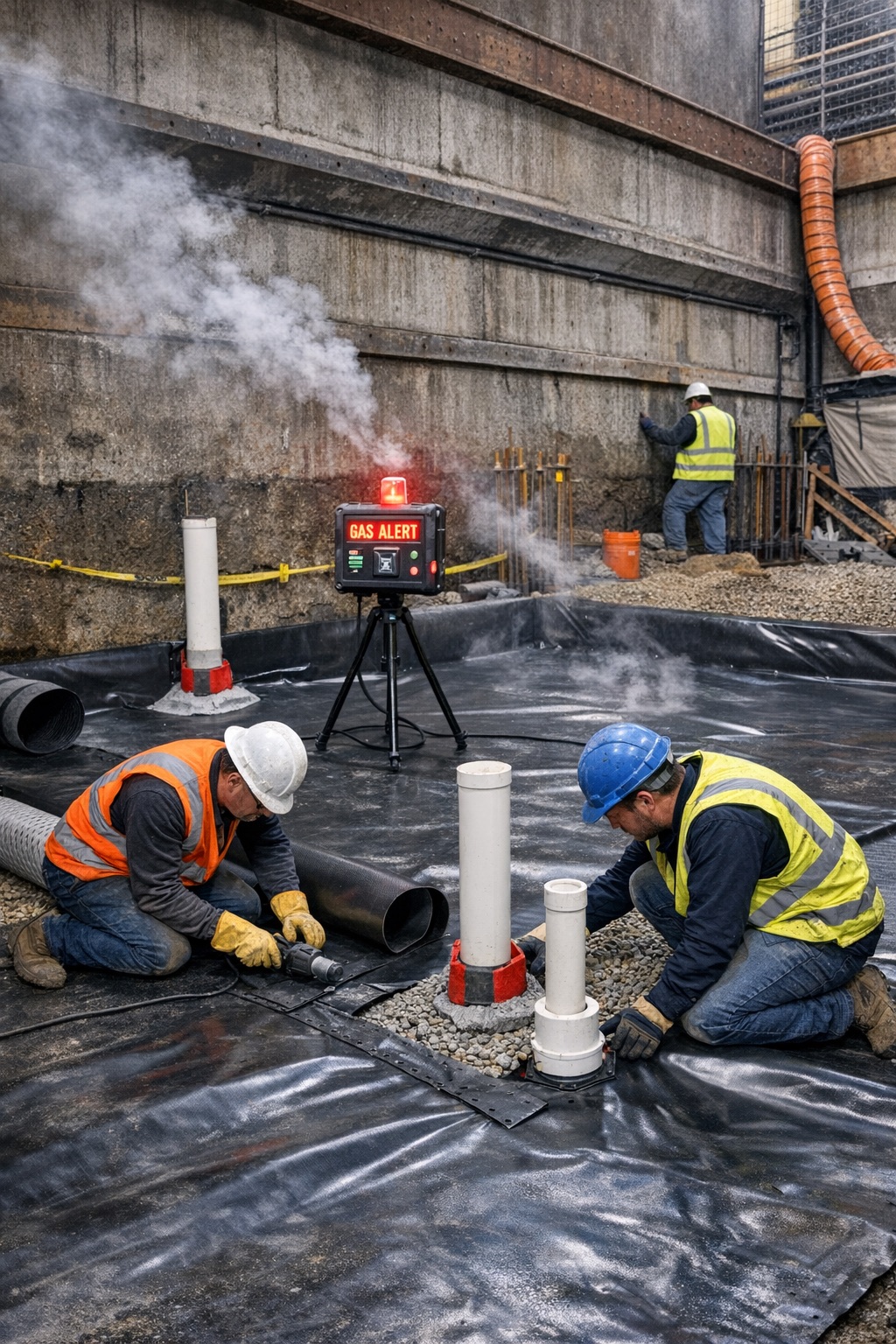
Introduction
Development has taken the form of upward construction. The space has been constrained by urban sprawl. Basements, vertical development or underground parking are being sought by engineers. The underground structures are subjected to soil, water, and gases. This is a predicament for construction professionals and property owners.
The soil can be seeped by water and gas as well as into the buildings. Their influence may cause structural damage and damage to human beings. Therefore, the waterproof design is necessary to contain gas and moisture.
Smoke, moisture and gas tend to accompany each other. They are the same as cracks, joints, and soil pores, which they excavate. When one gets in, then another can be behind. It is no longer possible to have a simple waterproofing system.
The engineers need to come up with total systems. This keeps off dangerous gases, like methane, and water, too, out of such systems. Such a strategy is less risky. It increases integrity and environmental regulations.
Why Subsurface Gas and Moisture are Risky for Buildings?
Find out why subsurface Gas and Moisture are Risky for Buildings, especially new construction buildings in Los Angeles, California.
Methane Gas and Soil Vapor Migration
Methane gas is a common construction hazard in below-grade construction. It is formed as a result of organic decomposition. Landfills, wetlands, and buried waste are respectable sources.
Methane is readily transferred through the soil. It flows through pores, cracks, and fractures. It can enter the buildings through small openings. After getting inside, it is able to concentrate in confined areas.
Methane is inflammable, thus dangerous. An explosion may arise due to high concentrations. Even a small amount at low levels can cause safety concerns.
Moreover, the soil may also contain other harmful chemicals. It can be volatile organic compounds (VOCs). These are gases that can affect the indoor air quality.
Moisture and Structural Damage
Water is another major issue. Below-ground structures are surrounded by groundwater. It develops pressure against walls and slabs. Such pressure is known as hydrostatic pressure.
Water can be drawn in through cracks and joints. It can also bandage through porous materials. Over time, this results in serious problems for them.
It is the moisture that causes corrosion in steel. It weakens concrete. It supports mold growth. It damages the finishes and interiors.
Combined Effects on Buildings
Gas and moisture combine to be an even greater problem. Moisture opens communication routes for gas movement. Contaminant carried into the building by gas.
This affects indoor air quality. It also reduces the structure’s durability. The maintenance costs increase over time. Repairs become expensive.
Soil Testing for Retaining Wall Construction is one of the most important steps in the engineering process to avoid any fines and closures during construction. Proper soil testing and soil compaction reports and inspections help you safeguard schedules, jobs and project budgets. The Los Angeles Department of Building and Safety says visual checks help catch early problems.
Code and Regulatory Requirements
Learn more about the Code and Regulatory Requirements in Los Angeles County
Read more to find out why subsurface waterproofing can help properly develop a property and construction stability, along with avoiding concerns of sinkholes in Los Angeles county.
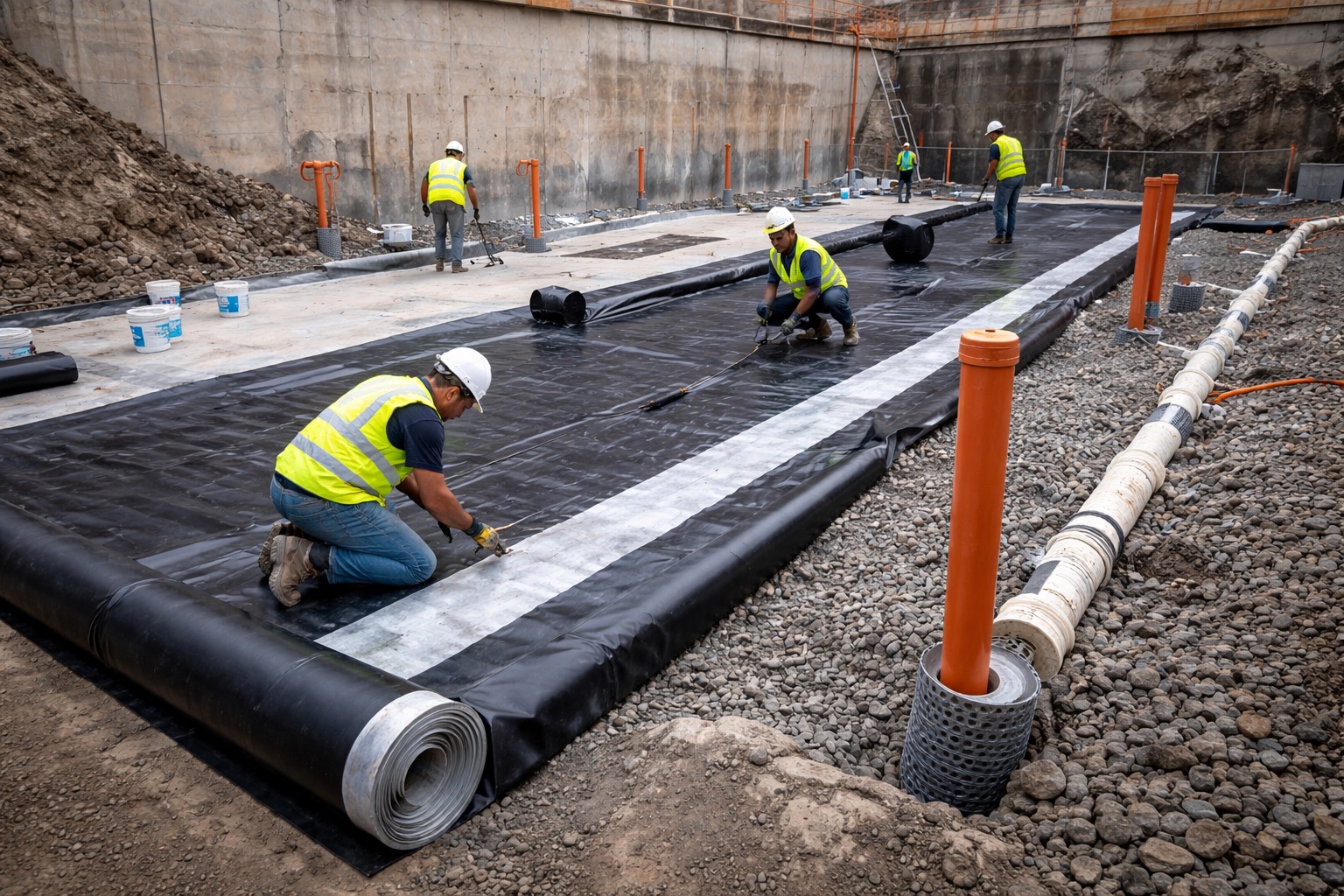
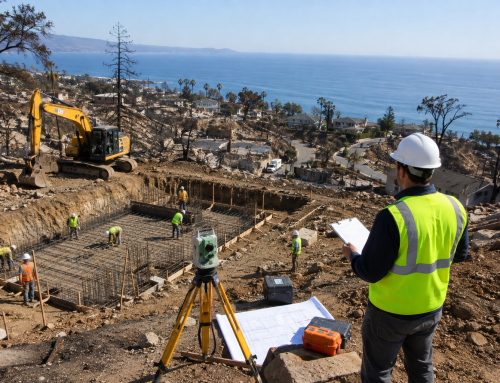
Subsurface waterproofing system installation with methane gas barrier and vapor protection membrane in below-grade construction project, ensuring moisture control and structural safety.
Building Codes for Gas Protection
There are very strict rules for methane control in many regions. Areas close to landfills or oil fields are often referred to as methane zones.
Authorities require gas mitigation systems in such zones. These involve membranes, venting layers and monitoring systems.
For example, there are detailed guidelines from such agencies as the Los Angeles Department of Building and Safety. They need testing and proper system design before construction.
Environmental Regulations and Site Assessment
Before construction begins, a site investigation is required. Engineers conduct tests of the soil and groundwater. They check for the presence and contamination of gases.
Organizations, such as the California Geological Survey, have data on hazards. These help the engineers understand the risks.
Environmental site assessments are also required. These studies assess soil gas and groundwater conditions. These determine the design of protective systems.
Compliance for Waterproofing Systems
Designs must satisfy structural and environmental standards. Engineers must offer detailed plans. These include the barrier system and venting design.
Inspection during construction is also important. The authorities ensure systems are installed correctly. A certification is required prior to occupancy.
Functional Requirements of a Combined Barrier
A good system has to perform various functions. It must block gas. It must stop the water. It has to collaborate with the structure.
Gas Resistant and Vapor Protection
The system must be resistant to the diffusion of the gas. It should block access to the building from methane and vapor. All joints and penetrations in the joints must be closed. Even slight gaps can provide entry for gases. Continuous barriers are necessary.
Moisture Resistant and Waterproofing
The system must also have some resistance to water pressure. It should be capable of dealing with hydrostatic conditions. It must be effective for several years.
Durability is important. Materials should not degrade as time passes. They have to face chemicals and soil conditions.
Structural Compatibility
The barrier should be integrated with the building. It must have a connection with slabs, walls, and footings. It should also deal with movement. Soil can settle. Structures can shift. The system must not be broken under these conditions.
Key Components of a Subsurface Waterproofing and Gas Barrier System
Depending on the area’s conditions, engineers use different types of walls. Due consideration is given to soil type, space, and cost. Also, the project’s lifespan and proper selection ensure performance and safety.
Gas and Vapor Barrier Membrane
As their name suggests, these are the primary defense layers. They are put under slabs and along walls. They are in a form of continuous barrier. Common materials are high-density polyethene (HDPE).
Also, composite membranes are used. These materials are of low gas permeability. Proper installation is of the utmost importance. Seams must be sealed. Overlaps must be secure.
Venting and Gas Collection Systems
Gas barriers alone are not enough. Venting systems are also needed. These systems collect gas and release it safely.
A vent layer is placed beneath the slab. It allows gas to move freely. Pipes carry the gas to the outside.
There are two types of systems. Passive systems rely on natural airflow. Active systems use fans for better control.
Drainage and Moisture Control Layers
Drainage systems reduce water pressure. They help water move away from the structure. Gravel layers or drainage boards are used. Subdrains collect water and direct it away. This reduces hydrostatic pressure. It also protects the waterproofing membrane.
Sealants and Penetration Protection
Pipes and conduits pass through walls and slabs. These points are weak areas. They must be sealed properly. Special sealants and boots are used. Joint systems are also installed. These prevent leaks and gas entry.
Designing the System: Step-by-Step
Designing Subsurface Waterproofing Systems in Los Angeles County require compliance inspections. Find out how to setup a permit compliant construction.
Step 1: Site Investigation
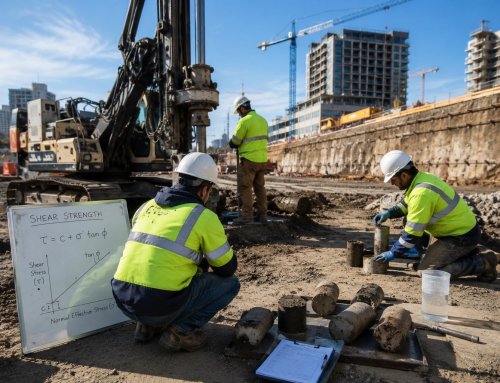
The first step is understanding the site. Engineers conduct soil testing. They measure gas levels. They study groundwater conditions. This helps identify risks. It guides the design process.
Step 2: Selection of Materials
Materials are selected based on site conditions. Gas permeability is a key factor. Durability is also important. The chosen system must meet regulatory requirements. It must also fit the structural design.
Step 3: Ventilation and Drainage Design
Engineers design venting systems. They decide between passive and active systems. Drainage systems are also designed. These reduce water pressure and improve performance.
Step 4: Integration with Structural Design
The waterproofing system must align with the structure. Details at joints and connections are critical. Coordination between engineers is important. Structural and geotechnical teams must work together.
Step 5: Construction Documentation
Detailed drawings are prepared. Specifications are written clearly. Contractors follow these during construction. Clear documentation reduces errors. It ensures proper installation.
Installation Best Practices
For a retaining wall, geotechnical conditions and considerations are important for foundation design. Here are some aspects to consider, such as:
Surface Preparation
The surface must be clean and smooth. Debris must be removed. Sharp objects can damage membranes. Proper preparation improves performance.
Membrane Installation
Membranes must be placed carefully. Seams must overlap correctly. Joints must be sealed tightly. Avoid punctures during installation. Protect the membrane at all times.
Quality Control
Inspection is critical. Every seam and joint must be checked. Testing may be required. Leak detection methods can be used. These ensure system integrity.
Coordination with Other Trades
Other trades can damage the system. Plumbing and electricity should be arranged. Penetrations sealing should be done. Construction protection is mandatory.
Common Mistakes to Avoid
Cases of poor sealing around ground penetrations are one of the common mistakes. Gaps in concrete or groundwork usually develop when pipes are used. These cavities should be covered adequately.
Another issue is incomplete membrane coverage. Even small gaps can allow gas and water entry.
Ignoring drainage design is also a problem. Without drainage, pressure builds up. This leads to failure.
Lack of inspection is another major issue. Good designs may break down when fitted in a poor manner.
Maintenance and Long-Term Monitoring
Engineers perform load analysis. They design reinforcement and check stability. All calculations must meet code requirements.
Venting System Inspection
Venting systems must be checked regularly. Pipes should remain clear. Blockages reduce effectiveness.
Gas Monitoring
Engineers consult the site while it is being constructed. They check excavation, reinforcement & drainage. Quality control gets the wall built as designed.
Drainage Maintenance
Drains must remain clear. Blockages can lead to water buildup. Regular maintenance is necessary.
Repair and Rehabilitation
Over time, repairs may be needed. Membranes can be patched. Additional systems can be added if required. Early action prevents major damage.
Final Thoughts on Subsurface Waterproofing
The design of subsurface construction is no longer all about waterproofing. It should also have gas control. There is an intrusion of methane and vapor in the air. They can affect safety and health to some extent.
A combined system will be the most appropriate. It is a combination of membranes, venting and drainage. It helps securing the building and the people staying in it.
Designing and installation are of great importance. Site investigation, material selection and quality control play important roles.
There is also the Regulatory Compliance. Agencies can give good advice, such as the California Geological Survey and the Los Angeles Department of Building and Safety. Conclusively, it is time and money saving by way of making money at a young age through planning. It eliminates future difficulties. It guarantees a long-term performance.
Gas and moisture control should be considered by the engineers and developers. An efficient system would yield safer, well-designed, powerful buildings.
F.A.Q.s
What is the Most Common Retaining Wall in California?
The most common retaining walls are cantilever. They are powerful, and their cost is low.
When do you need a permit for building retaining walls in LA County?
Permits are mandatory if a wall exceeds a certain height. There is also a need for engineering design.
Why is a retaining wall behind retaining walls with a subdrain?
It removes the water and vents the force. This prevents wall failure.
Why is a cantilever retaining wall different from a restrained retaining wall?
Cantilever walls have their underpinning support in their base. Restrained walls use anchors or tiebacks.
How do earthquakes influence the design of a retaining wall in California?
Earthquakes require additional forces. Walls of buildings must be designed to withstand shaking and soil movement.
Build with knowledge. Build with confidence. Build smart from the ground up.