What Property Owners Need to Know Before Grading
Slope stability is the ability of soil or rock to remain in place. A stable slope does not slide or collapse. An unstable slope can fail. This failure can damage buildings and roads. It can also create safety risks.
Slope stability is very important in Los Angeles. The region has hills and steep terrain. Excessive rainfall may cause the soil to be loose. Such conditions put the slope at risk of failure.
Engineers study slope stability before grading. They evaluate soil strength. They analyze groundwater and slope geometry. Two common types of analysis are used. These are surficial slope stability and global slope stability. Both are important for safe grading.
Local regulations also require slope evaluation. Agencies like the Los Angeles Department of Building and Safety (LADBS) require slope stability reports. This article explains slope stability in Los Angeles. It explains surficial and global analysis. It also explains safe grading practices.
What Is Slope Stability in LA?
Slope stability means resistance against failure. Soil and rock must resist sliding. There are two forces acting on slopes. Driving forces push soil downward.
Resisting forces hold soil in place. If resisting forces are higher, the slope is stable. If driving forces are higher, the slope fails.
Why Slope Stability Matters in Los Angeles?
Los Angeles has many hillside developments. Homes are built on steep terrain. Similarly, road infrastructure was also constructed through the slopes.
Earthquakes are very common in the region; seismic activity reduces soil strength. This increases failure risk. Heavy rainfall also affects slopes. Water enters the soil. This increases weight and reduces strength. Urban expansion increases grading activity. This changes natural slopes. Proper analysis becomes necessary.
The slope stability testing for construction helps prevent project delays and closures. Properly framed inspections safeguard schedules, jobs and project budgets. The Los Angeles Department of Building and Safety says visual checks help catch early problems.
Read more to find out why it’s important to retain a Geotechnical Engineer on-site for your construction projects to help properly develop a property and slope stability, along with avoiding property disasters in LA.
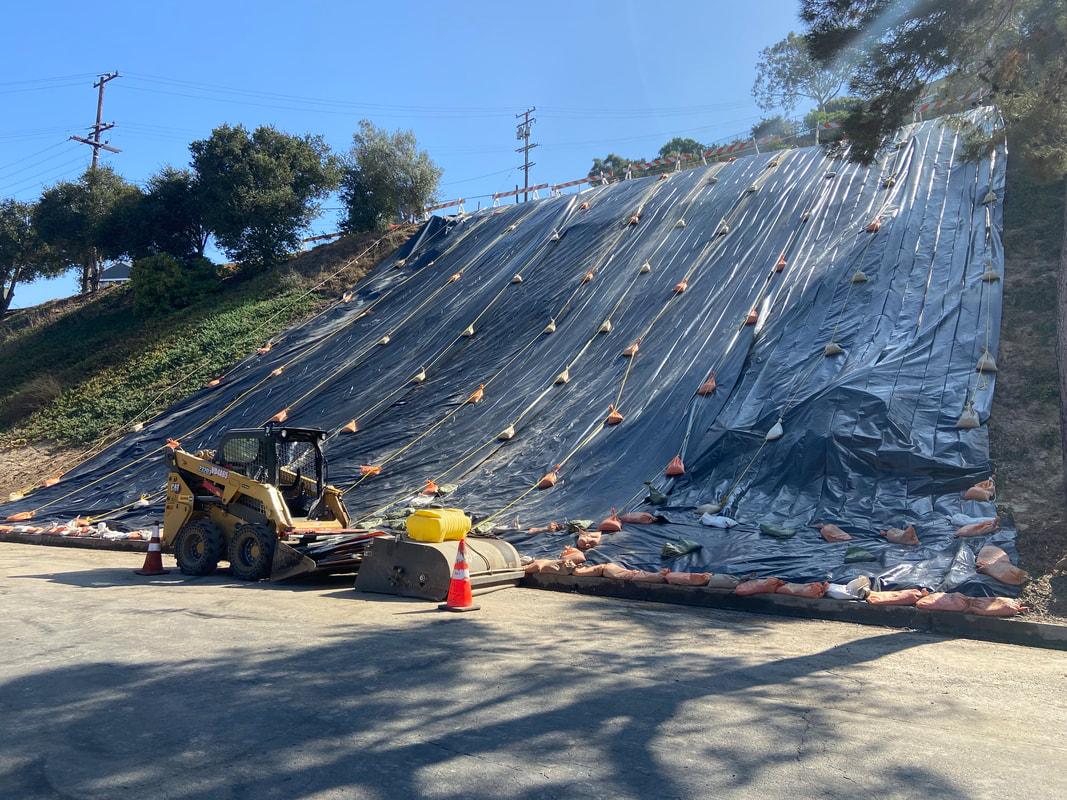
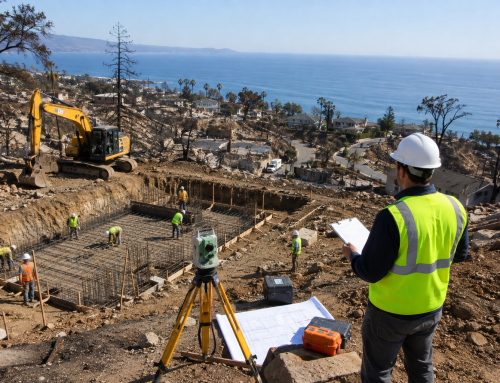
Hillside grading in Los Angeles showing benching and drainage installation during geotechnical slope stability analysis for safe construction.
Common Causes of Slope Failure in LA County
Natural Causes
Rainfall infiltration is a major cause. Water increases soil weight. It also reduces shear strength. Seismic activity is another factor because earthquake shaking loosens soil.
Slopes may slide during shaking. Weak soil layers also cause failure. Clay layers can act as slip surfaces. This leads to movement.
Human Causes
Usually, the slopes get weakened by improper grading. Overcutting removes support. Overfilling increases the load. Overloading slopes also causes failure. Buildings near edges increase stress. Poor drainage systems allow water buildup. This reduces stability.
Real Risks in Construction Projects
Slope failure can damage structures. Retaining walls may crack. Foundations may shift. Projects may face delays. Repairs increase cost. Compliance issues may arise. Permits may be denied. Proper analysis prevents these risks.
Surficial Slope Stability Explained
Surficial stability deals with shallow failures. These failures occur near the surface. They usually occur within 1 to 10 feet of depth. The top soil layer is affected.
Common Surficial Failures
Soil erosion is common. Surface soil washes away. Sloughing occurs on steep slopes. Soil moves slowly downward. Shallow slides may occur after rainfall. These failures are small but frequent.
Key Factors Affecting Surficial Stability
The following are some important factors that affect surficial stability.
- Surface drainage is an important factor. It features largely in the stability of the surfaces. Water can be washed off slope surfaces by proper drainage. This lessens soil erosion and softening. Inadequate drainage leads to overflowing of water along the slope. The instability may also be enhanced by ponding water around slope edges.
- Vegetation also enhances surficial stability. Plants prevent the impact of rain on the soil surface. Soil particles are held together by roots. Surface runoff is also slowed by vegetation. This reduces erosion. However, the weight of large trees can decrease stability without proper planning.
- Another factor is the type of soil. Sandy soil is easily eroded. Silty soil is also washed away easily. Plastic clay can be extremely plastic and result in shallow slides. Compacted soil has better performance.
- The slope angle also influences the stability at the surface. Gradients are steeper and are more favorable to erosion. The driving force is enhanced by gravity. The topography of gentle slopes is more stable. A less steep slope enhances safety.
- Disturbance of surface soil by construction activity can occur. Assessment eliminates protective plants. The bare soil is exposed to erosion. There should be temporary erosion control measures such as mulch, geotextiles, and hydroseeding.
How Engineers Analyze Surficial Stability?
Engineers use limit equilibrium methods. These methods calculate safety factors. Simplified calculations are often used. Analysis focuses on near-surface soil properties. Drainage conditions are also evaluated.
Global Slope Stability Explained
Global stability deals with deep failures. These failures involve large soil masses. Movement occurs below the surface. Slip surfaces extend deeper.
Characteristics of Global Failures
Global failures often form rotational slides. Soil moves in a circular pattern. Slip surfaces extend deep into slopes. These failures affect large areas. Damage is usually severe.
Key Factors
Subsurface soil layers control deep stability. Weak layers increase risk. Groundwater conditions also matter. High water levels reduce strength. Slope geometry affects stability. Steeper slopes are less stable.
Methods Used for Global Analysis
Engineers use computer modeling. Software evaluates slope behavior. Circular failure analysis is common. Factor of safety calculations are performed. These confirm stability.
Surficial vs. Global Slope Stability: Key Differences
We can differentiate the surficial and global slope stability in terms of:
Depth of Failure
Surficial failures are shallow. They occur near the surface. Global failures are deep. They involve a large soil mass.
Impact on Structures
Surficial failures cause minor damage. They affect surface soil. Global failures cause major damage. Buildings and roads may be affected.
Analysis Complexity
Surficial analysis is simpler. Fewer parameters are needed. Global analysis is complex. Detailed soil data is required.
When Each Analysis Is Required
Small grading projects may need surficial analysis. Large hillside developments require global analysis. Many projects require both evaluations.
Role of Geotechnical Slope Analysis in LA Projects
Geotechnical slope analysis is a key tool for assessing slope stability. In construction projects, especially in LA, it is inevitable. It can be carried out as:
Site Investigation
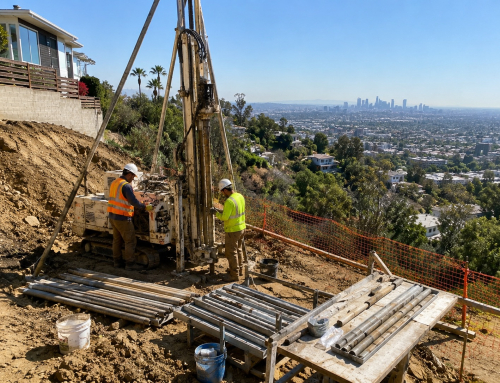
Site investigation is the first step. Engineers collect soil samples. Boreholes are drilled to explore the subsurface layers. Groundwater conditions are also evaluated.
Laboratory Testing
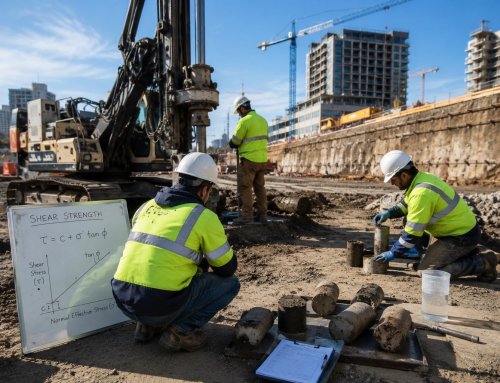
Laboratory tests measure shear strength. Moisture content is also tested. These values help calculate stability.
Engineering Recommendations
Engineers recommend safe slope angles. Retaining systems may be suggested. Drainage design is also provided.
Quality Control
Engineers inspect materials and the quality of work. They make sure everything is as per design. Agencies such as the California Department of Transportation have tight rules.
LADBS Slope Requirements and Compliance
Slope grading must follow safety standards. Reports are required for hillside construction. The Los Angeles Department of Building and Safety provides grading requirements.
Slope Stability Report Requirements in California
Reports must include soil data. Factor of safety calculations are required. Engineering recommendations must be included.
Importance of Compliance
Compliance helps obtain permits. It ensures legal safety. It avoids penalties and delays.
Safe Grading Practices in Los Angeles
In Los Angeles, safe grading can be done by following some key practices. Such as:
Proper Earthwork Design
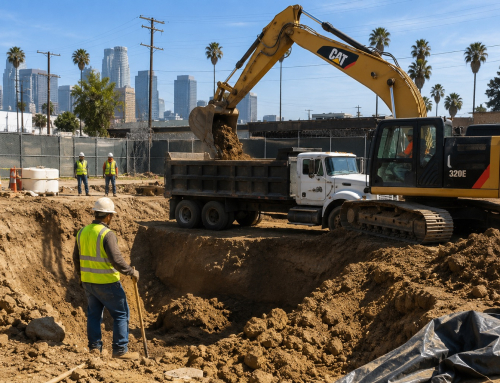
Balanced cut and fill should be used. Slope angles should be controlled. Benching improves stability.
Drainage Management
Surface drainage ought to be given. Drainage underground decreases water pressure. Stability is enhanced by the proper drainage.
Erosion Control Measures
Plants assist in the conservation of slopes. Similarly, geotextiles prevent erosion and mulching also minimizes soil erosion.
Modern Techniques in Slope Stability Analysis
Engineers use GIS mapping for slope evaluation. This helps identify risk areas. Advanced geotechnical software improves analysis accuracy.
Real-time monitoring systems track slope movement. These systems provide early warning. Agencies like the California Geological Survey provide hazard mapping data used in analysis.
Common Mistakes in Slope Design
- Ignoring groundwater is a common mistake. Water reduces soil strength.
- Underestimating soil variability causes errors. Soil layers change with depth.
- Poor drainage planning increases failure risk.
- Skipping detailed analysis leads to unsafe design.
Benefits of Proper Slope Stability Analysis
- Proper analysis prevents landslides.
- It ensures long-term stability.
- It reduces repair costs.
- It improves construction safety.
- It helps obtain approvals faster.
Conclusion
In Los Angeles, slope stability is critical. The terrain of this region has hills, rainfall, and earthquakes. These factors increase failure risk. Engineers perform surficial and global slope analysis to ensure safety.
Surficial stability deals with shallow failures. Global stability evaluates deep movement. Both analyses are important for grading projects.
Proper site investigation and testing improve design. Drainage and slope geometry must be controlled. Local guidelines compliance is also required.
Following these practices prevents landslides. It protects structures and people. Proper slope stability analysis ensures safe and long-term performance. The Marshall Geoscience certified expert geotechnical engineers in Los Angeles, CA have all the solutions ready to get your property permit-ready for construction.
F.A.Q.s
What is slope stability in LA?
Slope stability is the strength of slopes to remain stable under natural and construction conditions.
Compare surficial and global slope stability.
Surficial stability deals with shallow failures. Global stability focuses on deep slope failures.
Why is slope stability important in Los Angeles?
The Los Angeles terrain has hills, earthquakes, and rainfall. These conditions increase slope failure risk.
What is required in a slope stability report in California?
It includes soil data, slope analysis, and factor of safety calculations.
Build with knowledge. Build with confidence. Build smart from the ground up.