Staying Ahead: Los Angeles Environmental Compliance Consultation
Los Angeles has one of the most layered regulatory environments in the country. A development project may be under several jurisdictions simultaneously! It can involve city departments, county agencies, regional boards, state programs, and federal law.
The repercussions of missing a permit, a survey, or an overdue report come swiftly. Stop building demands, daily fines, extended financing deals, and even forfeited project deals may be a result. Moreover, this liability can linger for decades, hanging over a property. This explains why environmental compliance consulting has become imperative for anybody who is developing, purchasing, or operating property in the LA area.
This guide explains what compliance consultants do. The guide breaks down the regulatory landscape layer by layer. Moreover, it explains to developers, property owners, and facility operators how to stay ahead of LA’s environmental regulations
What Is Environmental Compliance Consultation?
Environmental compliance consulting is a professional service designed to locate, comply with, and record federal, state, and local environmental responsibilities. Mainly, the consultant helps in fulfilling the requirements for the business, developer, or property owner.
Consultants handle all matters from permitting to remediation oversight and regulatory agency negotiation. They can navigate the regulatory hurdles into a clear compliance plan for action. However, overlapping rules and regulations make the hurdles complex.
At the core of the matter, they are proactive and not reactive. A consultant brought in for due diligence scopes out all the relevant regulations before ground breaking. Hiring the consultant for a solution under a warning situation is “damage control”. Both are excellent, but the first comes with an incredible price reduction.
The Regulatory Landscape in Los Angeles
Understanding who regulates what is half the battle in LA. Three layers of government share and sometimes overlap in authority over environmental issues.
- Federal Authorities
The baselines have been established by the U.S. Environmental Protection Agency (EPA) at the national level. The most salient pieces of legislation are the Clean Water Act and the Clean Air Act, and the RCRA and the CERCLA.
Some projects may also require the U.S. Army Corps of Engineers, Los Angeles District permits. Especially the projects impacting rivers, streams, or wetlands require these permits. However, California is often not the only entity responsible for implementing these types of programs under federal law. In many cases, the state has the authority to administer the program, often with more stringent requirements.
- State Departments
On top of the federal layer, California has a challenging structure of its own. Public agencies require assessing the environmental impacts of discretionary projects. The Governor’s Office of Land Use and Climate Innovation maintains the California Environmental Quality Act (CEQA). Further, CEQA provides a searchable CEQAnet database that provides access to useful documents.
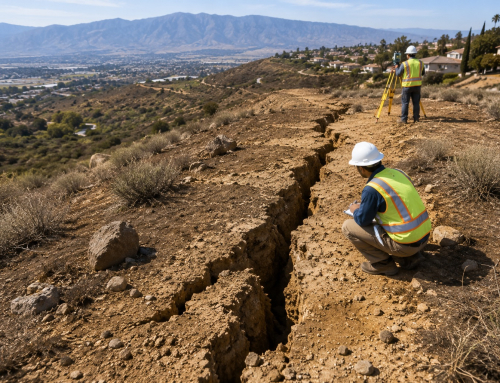
If projects require state highways or are on Caltrans’ right of way, Caltrans permitting becomes an issue. The Ca1lifornia Geological Survey (CGS) eliminates or outlines the seismic hazard and fault zones. It informs grading and building requirements.
Likewise, water quality and statewide stormwater permits are regulated by the State Water Resources Control Board. The DTSC oversees procedures and requirements relating to hazardous waste and remediation activities occurring on contaminated sites. These boards and departments work under CalEPA. Businesses also have to follow warning requirements under Proposition 65 managed by OEHHA.
- The Regional and Local Agencies
This is where Los Angeles gets genuinely complicated. South Coast Air Quality Management District has the most stringent regulations in the country. The LA Regional Water Quality Control Board (Region 4) has regional stormwater and cleanup programs, as well.
LA County Public Works is responsible for flood control, grading, and industrial waste in unorganized areas. In cities, three different agencies- the LADBS, the LA Fire Department, and LA Sanitation & Environment are responsible.
Here’s the trap that catches unprepared teams: overlapping jurisdiction. You might need an asbestos notification for SCAQMD, a permit from LADBS for a demolition job. Similarly, you may require a construction stormwater permit from the State Water Board, and hazardous materials clearance from LAFD. Satisfying one of those agencies does absolutely nothing for the other three.
Key Compliance Areas for LA Projects
Check the following
CEQA and Environmental Review
This can happen after major redesigns, and it can also happen if you add more than the size limits allow. Moreover, changing the lot layout can also result in losing the lane. It can also happen if you convert the home into something different. Those projects revert to standard review but are still doable, just slower and back on the full fee schedule.
The right environmental compliance assessments like Phase 1 and Phase 2 Environmental Site Assessments inspections prevent project delays by avoiding risky project decisions that can cause massive construction issues. Properly framed inspections safeguard schedules, jobs and your project budgets.
Stormwater Compliance
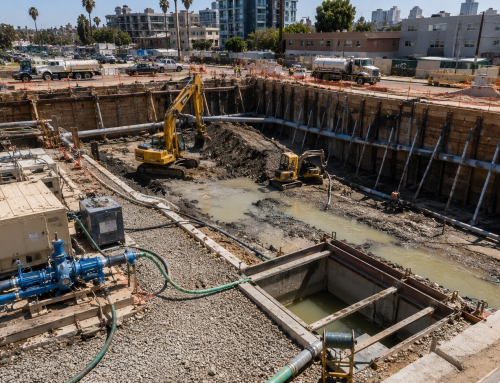
You’ll need permits under the state’s Construction General Permit, along with a SWPPP while disturbing an acre or more of ground. Many industrial facilities need Industrial General Permit coverage too. And new developments in LA have to meet MS4 and Low Impact Development standards, which means capturing and treating runoff right there on site.
Find out why every property undergoing construction in Los Angeles requires a Phase I Environmental Site Assessment and how storm-water, and other environmental factors in Los Angeles, can affect your construction, especially when building a retaining wall for a hillside property in Los Angeles.

Environmental compliance consulting team conducting a site review for a Los Angeles construction project, ensuring CEQA compliance, environmental permits, and regulatory approvals.
Air Quality and SCAQMD Permits
SCAQMD Rule 403 contains the rules for fugitive dust on construction. Often, equipment such as generators, boilers, and spray booths must have their own permit to build and operate. Standards for VOC limits apply to coatings and solvents. SCAQMD requires pre-notification regardless of asbestos involvement for any demolition or renovation.
Hazardous Materials and Waste
Consider asbestos/lead-based paint testing before renovating or demolishing a structure from 80s. The facility must submit the Hazardous Materials Business Plans with their CUPA, especially with the storage beyond threshold.
DTSC oversees the rules governing hazardous waste generators and requires proper accumulation, labeling, and manifesting of hazardous waste.
Contaminated Sites and Soil Management
Phase I Environmental Site Assessments are standard practice in property deals. If the assessment turns up recognized environmental conditions, Phase II sampling usually follows. Moving soil in or out of LA means documenting that it’s clean.
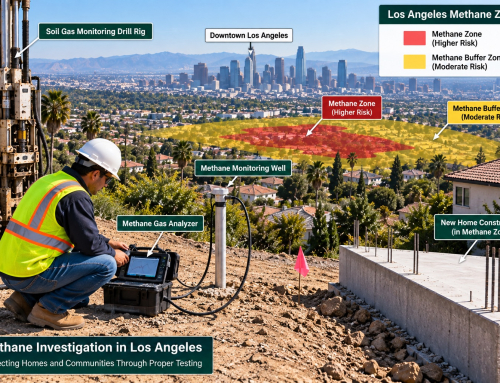
Cleanups run under DTSC or Regional Board oversight. Large swaths of the city sit within designated methane zones, which brings special LADBS mitigation requirements into play.
Wetlands, Habitat, and Protected Resources
If you are working near a drainage, you may be dealing with jurisdictional waters. It means the Army Corps, the Regional Board, and the California Department of Fish and Wildlife have authority. Local departments protect native trees. Similarly, if your project is in the coastal zone, you will require the California Coastal Commission review.
When Do You Require a Compliance Consultant?
When you observe the stakes or the complexity rise beyond routine, you may need a compliance consultant. That usually means property acquisitions where the lender wants a Phase I ESA. New development, grading, or demolition work. Ongoing industrial or commercial operations with permits and annual reporting obligations.
Any notice of violation, inspection finding, or enforcement action — the sooner the better on those. A post-fire rebuild requires debris removal, soil testing, and emergency permitting; compress the timeline.
What an Environmental Compliance Consultant Actually Does?
A good consultant starts with a regulatory applicability review, essentially a systematic audit for your site or operation.
The work branches out from here. It goes to permit strategy and applications, coordinating and negotiating with agencies, running site assessments and sampling programs. The process ends up in preparing the core compliance documents.
Consultants build the infrastructure that keeps compliance running day to day, i.e., staff training, recordkeeping systems, monitoring programs, annual reports.
For land enforcement, they manage the response, negotiate corrective actions, and frequently knock penalties down by a meaningful amount.
The Cost of Non-Compliance in LA
California’s penalty exposure is steep, and it compounds. Many violations build up daily. Stormwater violations alone can cost thousands of dollars per day.
Agencies can issue stop-work orders or pull permits entirely. Though fines are only part of it, unresolved environmental issues kill deals.
Lenders walk away from properties with open cases. Escrows collapse over Phase II findings. Buyers demand heavy discounts to cover the uncertainty.
The authoritative departments can cause reputational damage and third-party liability. The math is simple: consulting fees are small next to enforcement, delays, and lost deals.
A Proactive Compliance Strategy for staying ahead
A proactive approach is important to ensure our compliance. You must follow the four steps below to stay “ahead” in LA.
- First, do your regulatory scoping early during due diligence and schematic design.
- Secondly, create a compliance calendar with all renewal, report, inspection, and monitoring dates for every agency you work with.
- Third, have your environmental, geotechnical, and civil teams talk from the start. Don’t wait until soil, drainage, and hazard issues are solved.
- Watch regulatory changes. Stormwater permits update on a regular cycle. SCAQMD rules keep getting tighter. CEQA case law is always evolving.
Conclusion: A Planned Compliance Is the Cheapest
LA’s multi-agency regulatory maze rewards one thing above all: early, expert navigation. Each department has its own permits, deadlines, and its own enforcement teeth. No single approval can cover all the requirements.
The projects that succeed have one thing in common: they treat environmental compliance as a design input.
Ahead of the LA’s rules prepared? Contact your local region for a compliance review or a project-related regulatory review. You can make the toughest regulatory climate into a project climate that you can handle.
Build with knowledge. Build with confidence. Build smart from the ground up.