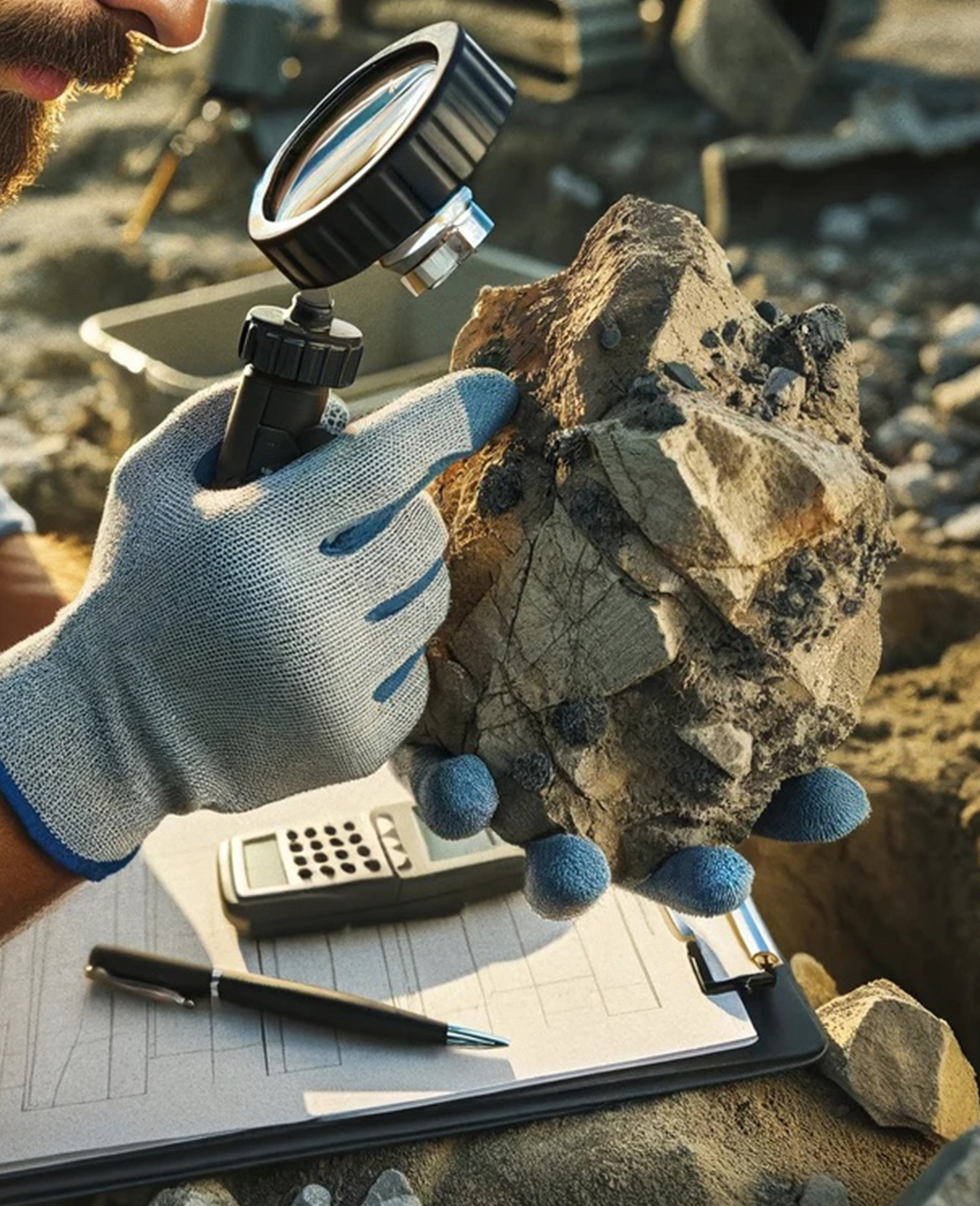
Certified Inspections. We are federally and locally certified inspectors.
Fully Insured. We operate with the highest level of insurance
State Board Licensed. We are licensed professional engineers & geologists
Wildfire-Affected Property Soil Reports, Environmental Ground Testing, and Rebuild Permit Requirements
Rebuilding after wildfire in Los Angeles, Altadena, or Pacific Palisades? Learn when soils reports, geological reports, slope stability studies, environmental soil testing, and grading approvals are required for post-fire permit approval. Marshall Geoscience tailors solutions to meet unique project challenges, no matter how bad the fire affected you and your family.
Post-Wildfire Geotechnical & Engineering Services We Offer
Need Help Rebuilding After The Los Angeles Fires?
Our expertise is essential for ensuring that your post-wildfire construction projects are sustainable, comply with regulations, and minimize their impact on the environment.
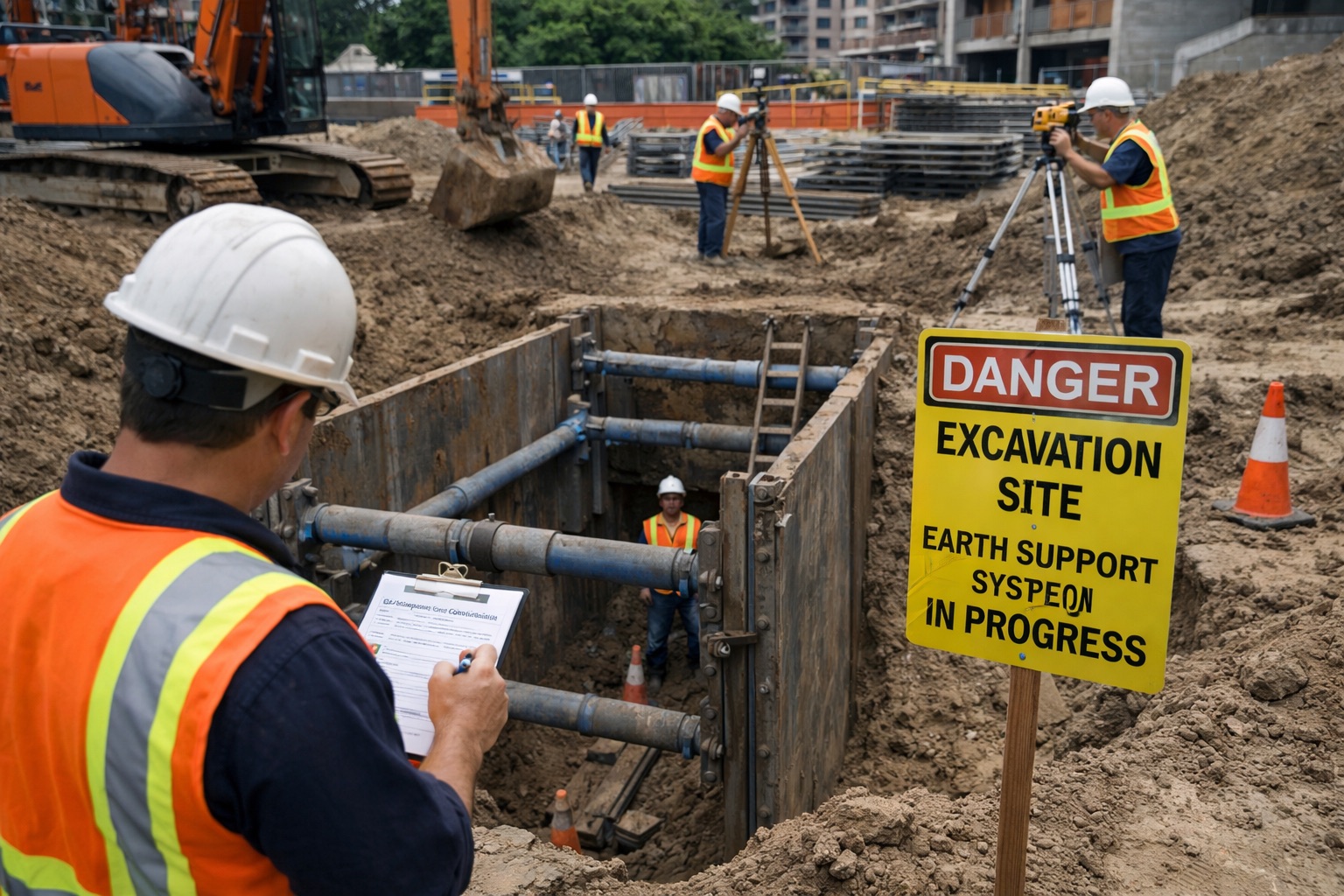
Construction Inspections / Construction Services / Geotechnical Engineering
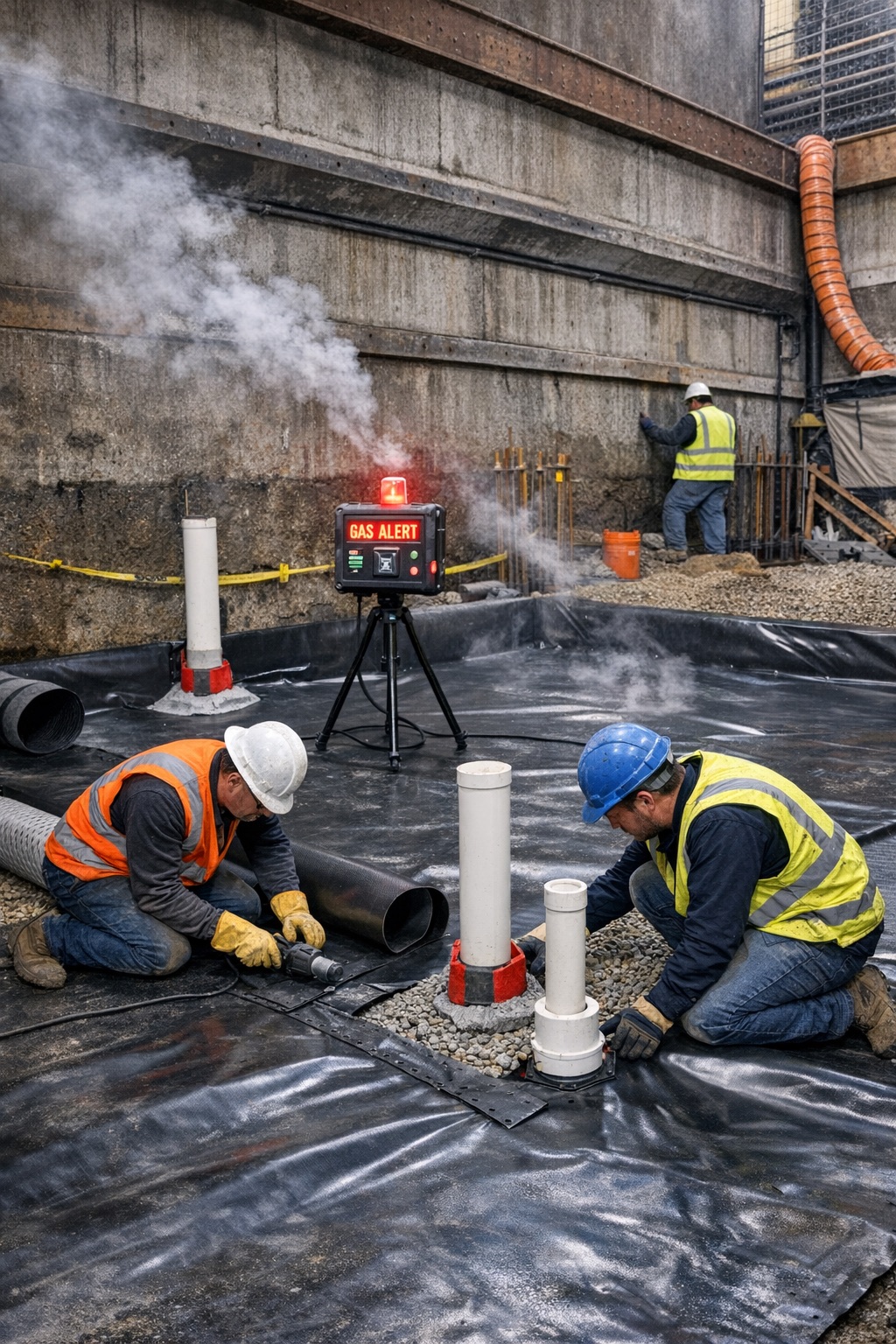
Construction Inspections / Construction Services / Geotechnical Engineering
Wildfire-Affected Property Soil Reports, Environmental Ground Testing, and Rebuild Permit Requirements in Los Angeles, Altadena, and Pacific Palisades
California’s executive orders are one reason rebuild permitting has moved faster than many owners expected. On January 12, 2025, Governor Newsom issued an order suspending CEQA review and California Coastal Act permitting for reconstruction of substantially damaged or destroyed properties from the Southern California firestorms.
On February 13, 2025, the Governor issued another order clarifying and expanding those suspensions, helping owners access original plans, extending permit timelines, and facilitating local streamlining. Then, on March 27, 2025, the Governor signed an additional order specifically to accelerate rebuilding in Altadena, Malibu, and Pacific Palisades, including faster rebuilding of utility infrastructure and undergrounding work.
State streamlining helps remove procedural delay, but it does not waive the need for competent site analysis. Owners still have to satisfy the applicable local building official, grading reviewer, fire official, and health or environmental reviewer where the site conditions require it. That is exactly why soils reports, geological reports, and slope stability analyses remain central to wildfire rebuilds in Los Angeles County.
Why wildfire rebuilds often require more than a standard permit set
Wildfire can change how a site behaves. Burn damage can affect vegetation, surface protection, drainage response, erosion potential, and the practical feasibility of reusing foundations, fills, retaining systems, and hillside improvements. That is why LA County says a soils report is still required in many rebuild scenarios, including projects involving caissons, deep piles, geotechnical hazards, basement walls, and other specified conditions, and why the City of Los Angeles requires geology and soils reports for Palisades homes in geologically sensitive areas.
This is especially important for hillside and edge-of-slope properties. In Pacific Palisades, the City’s wildfire rebuilding FAQ states that if a home is in a geologically sensitive area, it will require geological and soils reports, and hillside stability risks must be addressed through LADBS grading review. The same FAQ says that these reports should account for slope stability and risk mitigations, which makes them far more than routine paperwork.
The City’s LADBS bulletin for Palisades rebuilds goes even further. It identifies Palisades Geohazard Risk Assessment Zones (PGRAZ) and states that properties in the orange and yellow zones require combined geology and soils reportsreviewed by the LADBS Grading Division. The bulletin also explains that orange zones generally involve sites on or next to steep slopes or potential landslide areas, while yellow zones include sites at the bottom of steep slopes that may be affected by mudslide debris.
Environmental ground testing matters too — not just geotechnical reports
For burned properties, the permit conversation should not stop at bearing capacity and slope setback. Environmental ground testing matters because wildfire debris, ash, burned structures, and runoff can leave behind contaminants that affect demolition, excavation, worker safety, site reuse, and long-term residential exposure.
LA County Public Health launched a wildfire soil testing effort for the Eaton and Palisades burn areas, and the County’s official program says properties in those burn areas are prioritized for free soil testing. The County’s testing FAQ also notes that the free program is lead-only testing. That is useful, but it is not the same thing as a full project-specific environmental due diligence scope for redevelopment.
That distinction matters because LA County’s soil-testing updates also reported localized chemical impacts to soil above health-based screening thresholds in the Palisades fire area, and the County’s community sampling materials caution that individual parcels may differ from representative sampling results. In other words, area-wide public testing is helpful for public health screening, but it does not replace a site-specific environmental testing strategy for an owner preparing to excavate, grade, reuse a foundation, install utilities, or document a clean rebuild file for design professionals, carriers, buyers, or lenders.
LA County Public Health has also issued a health advisory for people residing within 250 yards of a burned structure or parcel in or near the Eaton and Palisades burn areas. That reinforces a practical point for property owners: before reconstruction begins, they should think not only about structural design, but also about exposure risk, disturbed soil management, dust control, and whether additional environmental sampling is prudent before earthwork starts.
The Phase 1 testing for construction helps prevent project delays and closures. Properly framed inspections safeguard schedules, jobs and project budgets. The Los Angeles Department of Building and Safety says visual checks help catch early problems.
Debris removal is not the end of the site investigation process
Many owners assume that once debris is cleared, the lot is ready for design and permitting. That is not always true. LA County says Phase 2 debris removal included fire ash, hazardous trees, and structural remains, and property owners are advised to retain their final debris-removal documentation for their records as they move into the rebuilding phase.
That matters because debris removal and rebuild permitting are related, but not identical. LA County’s fire rebuild FAQ explains that the need for a grading permit after removal of burned structures, foundations, and the contaminated soil layer depends on how much soil was removed, whether below-grade or basement walls are backfilled, and the site condition. On fire-damaged lots, that means geotechnical judgment often becomes part of the entitlement path, not just part of construction means and methods.
Need soils reports, geological reports, slope stability analysis, or environmental ground testing for a wildfire-affected property in Los Angeles, Altadena, or Pacific Palisades? Marshall Geoscience provides geotechnical engineering, engineering geology, environmental testing, field inspections, and laboratory support to help property owners move from damaged lot conditions to permit-ready rebuild documentation.
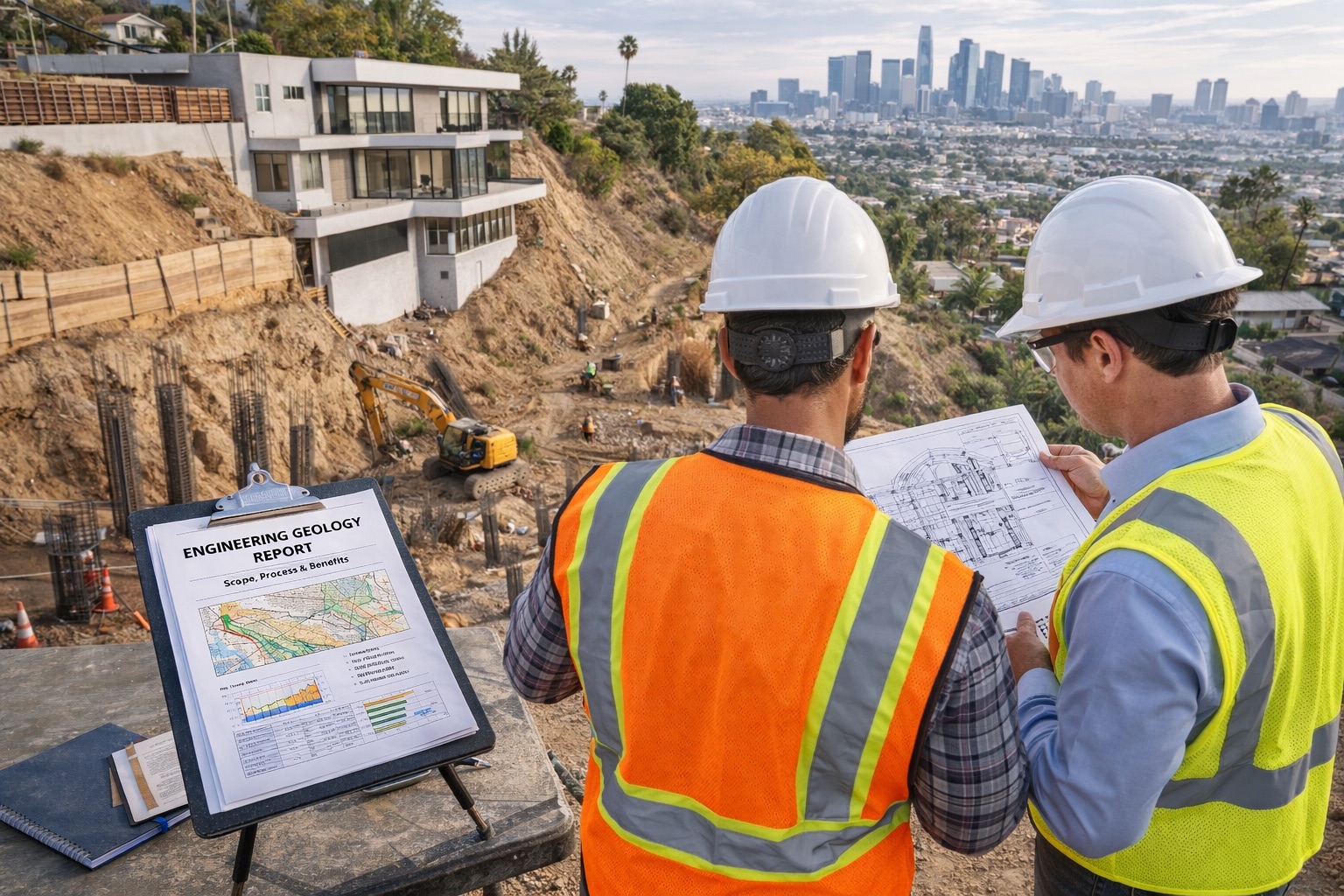
Engineering geology site investigation for a hillside residential project in Los Angeles, showing geologist and engineer reviewing soil reports, foundation plans, slope stability, and seismic design requirements for safe home construction in Southern California
Pacific Palisades: what property owners need to know inside the City of Los Angeles
For properties in Pacific Palisades within the City of Los Angeles, the City’s official rebuild FAQ says all reconstruction projects on sites with structures substantially damaged or destroyed by the Palisades fire are eligible for expedited initial permit review, with City departments targeting review completion within 30 days. Like-for-like eligible projects are generally defined as rebuilds in substantially the same location that do not exceed 110% of the previous footprint and height.
But streamlined review does not eliminate geotechnical requirements. The City expressly says that homes in geologically sensitive areas require geological and soil reports, that those reports must be submitted to the LADBS Grading Section, and that slope stability and mitigation measures must be addressed. The City also notes that geologically sensitive sites do not qualify for the Self-Certification pilot.
LADBS’ Palisades geotechnical bulletin is particularly important for owners, architects, and consultants. It states that:
- PGRAZ orange and yellow zone properties require combined geology and soils reports.
- Properties outside those zones may still require a soils report for excavations deeper than 5 feet or where lateral support is removed.
- Previously approved soils or geology/soils reports may sometimes be reused if there is an approval letter within 10 years of the Mayor’s order.
- Reports approved under older code cycles may need updating for seismic design parameters, seismic slope stability analysis, and seismic lateral earth pressures.
- Neighboring properties may jointly retain one geotechnical firm to reduce mobilization and reporting costs.
That last point is especially valuable for neighborhoods where multiple adjacent hillside lots burned in the same event. It means post-fire geotechnical work can sometimes be coordinated efficiently without sacrificing site-specific engineering judgment.
The City also allows, in some cases, reuse of prior approved plans and prior approved soils/geology reports, but only under specific conditions. The EO1 implementation guidelines say that existing approved soil and geology reports dated within 10 years may be resubmitted, though reports approved before the 2020 Los Angeles Building Code must be updated for seismic parameters, including seismic slope stability analyses and seismic lateral earth pressures for retaining walls over six feet high.
Altadena and other unincorporated LA County fire areas
For Altadena, which is primarily in unincorporated Los Angeles County, the County rebuild rules are different from the City of Los Angeles rules, so owners should not assume Pacific Palisades procedures apply there.
LA County’s recovery FAQ says that like-for-like rebuild projects do not need to comply with current zoning code requirements, but they still must comply with current Building Code, Fire Code, and Health and Safety Coderequirements. In the Eaton fire area, the County has also suspended certain standards for qualifying like-for-like rebuilds, including some EV-ready, cool roof, graywater-ready, and LID-related provisions under limited conditions.
At the same time, the County has been clear that geotechnical issues did not disappear. Its official fire rebuild FAQ states that a soils report is not always required for a conventional raised or slab-on-grade foundation with continuous footings meeting minimum standards, but soils reports are still required for caissons or deep piles, geotechnical hazards, basement walls, and certain other criteria. The same FAQ says Public Works Geotechnical and Materials Engineering approval may be required before rebuilding where a geologic hazard is present.
The County’s rebuild permit-process page also warns that additional documentation and fees may apply to projects on hillsides steeper than 3:1, within a geological hazard area, in a Fire Hazard Severity Zone, or on lots with onsite wastewater systems or water-flow constraints. County departments say they are targeting residential plan review within 10 business days for first review and 5 business days for subsequent reviews, but those timelines still assume a complete and technically adequate submittal.
For qualifying owner-occupied rebuilds in unincorporated Los Angeles County, the County’s fee deferral program is also important: it explicitly includes soils/geological review fees among the deferred fees. That is a meaningful practical benefit for Altadena homeowners hiring geotechnical and geological consultants as part of their permit package.
State-level California rules still matter — even when local agencies issue the permit
California’s executive orders are one reason rebuild permitting has moved faster than many owners expected. On January 12, 2025, Governor Newsom issued an order suspending CEQA review and California Coastal Act permitting for reconstruction of substantially damaged or destroyed properties from the Southern California firestorms.
On February 13, 2025, the Governor issued another order clarifying and expanding those suspensions, helping owners access original plans, extending permit timelines, and facilitating local streamlining. Then, on March 27, 2025, the Governor signed an additional order specifically to accelerate rebuilding in Altadena, Malibu, and Pacific Palisades, including faster rebuilding of utility infrastructure and undergrounding work.
State streamlining helps remove procedural delay, but it does not waive the need for competent site analysis. Owners still have to satisfy the applicable local building official, grading reviewer, fire official, and health or environmental reviewer where the site conditions require it. That is exactly why soils reports, geological reports, and slope stability analyses remain central to wildfire rebuilds in Los Angeles County.
Conclusion
If your property was damaged by wildfire in Los Angeles, Altadena, or Pacific Palisades, the rebuild process is not only architectural and structural. It is also geotechnical, geological, environmental, and regulatory. Streamlined executive orders may reduce red tape, but they do not eliminate the need for soils reports, geological reports, slope stability review, environmental ground testing, grading analysis, and site-specific engineering recommendations where conditions require them.
For many fire-affected lots, the fastest path to a permit is not skipping geotechnical work. It is doing the right technical work early, with the right scope, so the permit file is complete the first time. That is where an experienced geotechnical and geological consultant can make the difference between a delayed rebuild and a defensible, code-aligned path forward.
F.A.Q.s
Do I need a soils report to rebuild after wildfire in Los Angeles County?
Not always. LA County says a soils report may not be required for conventional raised or slab-on-grade foundations with continuous footings meeting minimum standards, but it is still required for caissons, deep piles, geotechnical hazards, basement walls, and certain other conditions.
Are geological and slope stability reports required in Pacific Palisades?
Often, yes. The City of Los Angeles says homes in geologically sensitive Palisades areas require geological and soils reports, and the report should address slope stability and mitigation measures through LADBS grading review.
Is environmental soil testing still useful after debris removal?
Yes. LA County’s public health findings show localized chemical impacts in parts of the Palisades burn area, and the County notes that individual parcels may differ from representative samples. Area-wide screening is helpful, but it does not replace site-specific environmental evaluation before excavation and rebuilding.
Will my rebuild still have to meet current code?
Yes. Even where zoning or review rules are streamlined, rebuilds still generally have to satisfy current building, fire, and health and safety requirements, unless a specific approved prior-plan pathway applies.
Build with knowledge. Build with confidence. Build smart from the ground up.
Other Engineering Services
Trustworthy Team
Our team at Marshall GeoScience has a reputation for providing the highest level of customer service.
Specialty Expertise
We are a team comprised of licensed and certified experts in different fields of construction with more than 20+ years of experience.
Industry Experience
We have developed projects in a broad spectrum of industries.
More Geotechnical Insights
We are the state’s leading physical engineers for post-wildire soil testing and land re-habiting.

The foundation of our work begins here.
Reimagining the future of our natural resources.
Environmental engineers play a crucial role in both residential and commercial development projects by integrating principles from engineering, soil science, biology, and chemistry to develop solutions to environmental problems.