There are some indoor air hazards. There are dangers that cannot be smelled or seen. One of such dangers is radon gas. It is nocturnal and threatening. Not all of them are aware that it is located indoors in buildings. Radon can be anywhere, such as in homes, offices, schools, and hospitals.
Radon propagates through the ground into buildings. It is accumulated gradually. As time passes, it may cause serious effects. With long-term exposure, severe health issues may develop. Lung cancer is the largest issue of concern. This renders radon testing crucial.
Radon can only be detected through testing. You cannot see it. You are not able to smell it. You are not able to taste it. They can be made aware of the risky levels by testing early. When it is identified, the risk can be mitigated by the mitigation systems.
In this article, the author describes what radon is. It gives the location where it is found. It also describes how testing works. You will learn about health hazards and precautions. The goal is simple. Radon testing can save lives in buildings.
Why is Radon So Dangerous?
Radon is a gas. It is a naturally occurring radioactive gas. It usually forms when uranium breaks down in soil and rock. This process happens underground. The gas then moves toward the surface.
Radon has no color. It has no smell. It has no taste. This makes it very hard to detect. People can breathe it for years without knowing.
Radon exists everywhere. Outdoor levels are usually low. Indoor levels can be higher. Buildings trap radon inside. This increases exposure risk.
Radon builds up slowly. This is what makes it dangerous. People breathe it daily. Long exposure increases health risks.
Radon particles damage lung tissue. Over time, this damage can cause cancer. The effects appear years later. There are no early warning signs.
Testing is the only reliable detection method. Without testing, exposure continues silently.
How Radon Can Enter Your Home or Office
Radon enters through small openings. These openings are often unnoticed. Common entry points include:
- Cracks in concrete floors
- Gaps around pipes
- Construction joints
- Crawl spaces
- Basement walls
- Drainage systems
Poor sealing increases radon entry. Negative pressure inside buildings also pulls radon upward. Once inside, the gas accumulates.
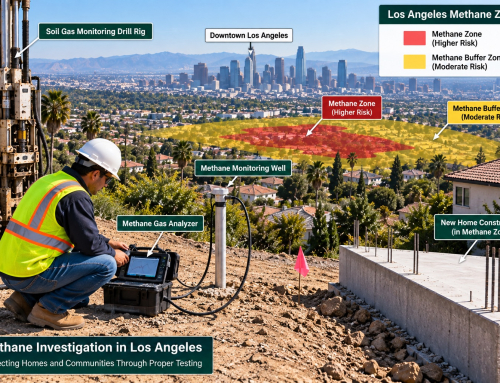
The right inspections for Radon gas contamination in Los Angeles can prevent project delays and save lives!
Where Radon Is Most Common?
Where Radon Is Most Common?
Radon risk depends on geology. Areas with uranium-rich soil have higher radon levels. Rocky terrain also increases risk.
Poorly ventilated areas trap radon easily. Cold climates can increase indoor levels. Buildings remain closed longer.
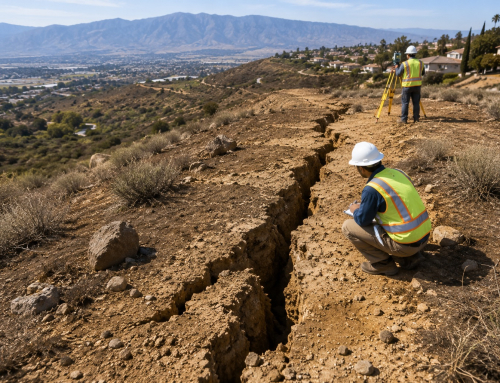
Some regions map radon-prone zones. Government agencies publish risk maps. In this regard, the California Geological Survey provides geological data. These maps help identify high-risk locations.
Read more to find out Why Radon Gas is a serious and silent killer in new and old buildings.
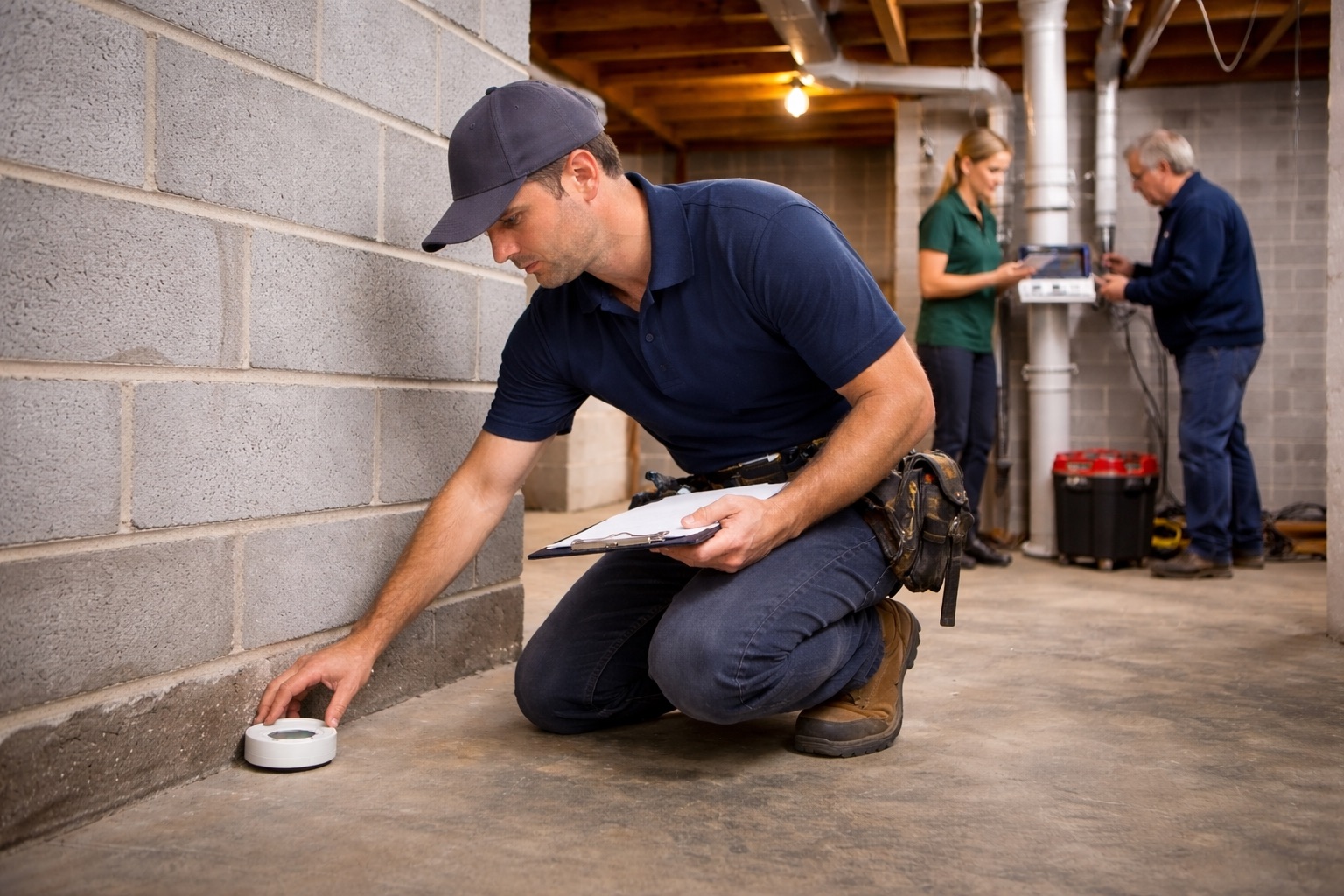
Technician placing radon detector on the lowest floor of a building to measure indoor radon gas levels as part of professional radon testing and mitigation assessment.
Types of Buildings at Risk
Radon can affect any building. Some structures are more vulnerable. Low-level floors usually have higher radon. Crawl spaces also increase risk. These include:
- Basements of residential buildings
- Ground-floor apartments of office buildings
- Schools
- Hospitals
- Warehouses
Factors That Increase Radon Levels
Several factors affect radon concentration. These include:
- Building design and soil type.
- Loose soil allows easier gas movement.
- Fractured foundations enhance points of entry.
- Poor ventilation leads to trapping radon indoors.
- The weather also affects levels. Cold weather increases indoor accumulation.
- Wind and pressure changes influence radon flow.
Radon Testing: How It Works?
Types of Radon Testing Methods
There are several testing options. Each method measures radon differently.
- Short-term test kits measure radon for 2 to 7 days. They provide quick results. These are useful for screening.
- Long-term tests can take 90 days or more. They provide more accurate averages. These tests account for seasonal changes.
- Continuous radon monitors track levels constantly. They record hourly readings. Professionals often use these devices.
Professional vs DIY Testing
(Do-it-yourself) DIY kits are affordable. They are easy to use. However, placement errors reduce accuracy.
Professional testing is more reliable. Experts know where to place detectors. They also interpret results correctly.
Professional testing is recommended when:
- Buying property
- Selling property
- High-risk areas
- Commercial buildings
- Post-mitigation verification
Testing Process Step-by-Step
The testing process is simple. First, detectors are placed in the lowest occupied level. Placement must avoid drafts and sunlight.
Secondly, testing begins. Testing of the building is carried out when it is closed. This will guarantee correct results.
Third, Detectors are gathered. Results are analyzed. The concentration of radon is usually in pCi/L.
When levels exceed the recommended levels, there should be mitigation measures.
Health Effects of Radon Exposure
Radon and Lung Cancer
Radon is the second leading cause of lung cancer. Smoking remains the first. The risk increases with long exposure.
Radon decays, emitting radioactive particles. The cells are harmed by these particles. Cancer can come about over time.
Those with prolonged exposure are at a greater risk. A combination of exposure and smoking is more harmful.
Symptoms and Long-Term Impact
Exposure to radon has no immediate symptoms. This renders it hard to pick. Damage occurs slowly. Symptoms can appear over the years.
These present as breathing issues and coughing. At this point, it can seriously damage the lungs.
Early testing prevents long-term exposure. This reduces health risks.
High-Risk Groups
High-risk groups include:
- Smokers
- Children and elderly individuals
- People in basements
- Workers in enclosed buildings
Some people face higher risks. Children are more vulnerable. Their lungs are still developing. Testing helps protect them.
Why Radon Testing Is Critical for New Construction?
Pre-Construction Soil Testing
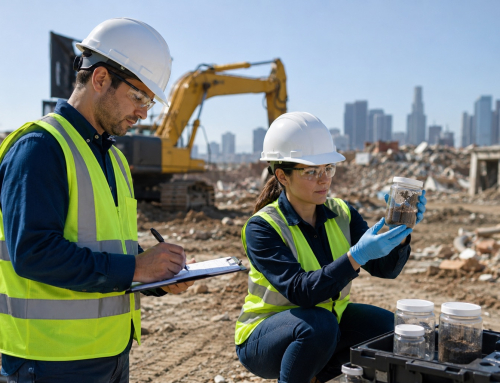
Radon testing should begin before construction. Soil testing identifies radon-prone sites. This allows early planning.
Developers can adjust the design. Preventive systems can be installed. This reduces future mitigation costs.
Designing Radon-Resistant Buildings
Radon-resistant construction includes several features. These include sealed foundations and ventilation layers.
Sub-slab barriers reduce gas entry. Vent pipes redirect radon outdoors. Passive systems can later become active systems.
These designs improve safety from day one.
Benefits for Contractors and Owners
Radon-resistant buildings are safer. They reduce liability for builders. Owners gain healthier environments.
Properties with radon mitigation sell faster. Buyers prefer tested buildings. This increases property value.
Mitigation Options If High Radon Levels Are Found
Common Radon Mitigation Systems
Several mitigation methods reduce radon. The most common is sub-slab depressurization. This system uses a fan and a pipe.
Vent pipe systems move radon outside. Sealing cracks reduces entry points. Crawl space ventilation also helps.
How Mitigation Systems Work
These systems create negative pressure under slabs. This pulls radon away from the building. The gas vents safely outdoors.
Improved airflow reduces accumulation. Sealing prevents additional entry.
Effectiveness of Mitigation
Proper systems reduce radon significantly. Many systems reduce levels by 50% to 99%.
Professional installation is important. Poor installation reduces effectiveness. Post-mitigation testing confirms results.
Costs and ROI of Radon Testing and Mitigation
The Cost of Radon Testing
DIY kits are low-cost. They are affordable for homeowners. Professional testing costs more. However, accuracy is better.
Commercial testing costs depend on building size. Large facilities require multiple detectors.
Cost of Mitigation Systems
Mitigation systems vary in price. Installation cost depends on building design. Active systems cost more than passive systems.
Maintenance costs are low. Fans may need replacement after several years.
Return on Investment (ROI)
Radon testing protects health. This is the biggest benefit. Early detection prevents medical costs. Mitigation increases property value. Buyers prefer tested homes. Insurance risks also decrease.
Regulations and Building Code Requirements
Overview of EPA Radon Guidelines
The U.S. EPA suggests that over 4 pCi/L. at lower concentrations are harmless. It is advisable to test every building. Safe levels are ensured by regular testing. It must also be required to do post-mitigation testing.
Local Building Code Requirements
There are areas that require radon-resistant construction. Testing can be compulsory in both schools and government buildings. Guidelines are given by local agencies.
The Los Angeles Department of Building and Safety and the California Department of Transportation issue the safety standards. These standards concern both building and environmental conditions.
Compliance ensures legal safety. It protects occupants. It also supports building approvals. Following guidelines leads to a reduction in liability. It improves public health.
Common Mistakes in Radon Testing
Not testing at all is a significant error. There are numerous buildings that do not test for radon. This increases risk.
- Improper positioning of detectors will influence accuracy.
- Use no kitchens and bathrooms.
- High results should not be disregarded. This should be immediately mitigated.
- Not retesting after mitigation is another mistake.
- Verification is important.
Benefits of Radon Testing
Radon must be tested regularly. The following are some prominent benefits of testing radon.
- It helps detect changes early.
- Radon levels can vary over time. Testing ensures continued safety.
- Occupants remain protected. Indoor air quality improves.
- Testing provides peace of mind. Building owners feel confident.
- Regular testing is especially important after renovations.
Conclusion
Radon is not visible but poisonous. It sneakily gets into buildings. In the long term, it may lead to severe health issues. The exposure of many people is unknown. That is why radon testing is necessary.
It is easily tested and effective. It detects the dangerous levels at an early age. Mitigation systems mitigate risk once identified. These technologies are secure and economical.
Radon testing saves the lives of families, workers, and students. It also enhances the property’s value. Not only do builders and owners have safer buildings, but also
The frequent use of testing and mitigation saves lives. All buildings and houses are to be tested. Early measures today avert long-term health risks.
Build with knowledge. Build with confidence. Build smart from the ground up.