Certified Inspections. We are federally and locally certified inspectors.
Fully Insured. We operate with the highest level of insurance
State Board Licensed. We are licensed professional engineers & geologists
ADU Permit and Inspection Requirements in Los Angeles: Why Soils Reports and Geological Reports Matter
Building an ADU in Los Angeles often requires more than architectural plans. Learn when soils reports, geologic investigations, grading permits, and slope stability evaluations can affect ADU permits, inspections, and final approval in the City of Los Angeles.
ADU (Accessory Dwelling Unit) Construction & Design
Want to Develop and Build Your Dream ADU?
Our expertise is essential for ensuring that your ADU Building and Construction projects are sustainable, comply with regulations, and minimize their impact on the environment.
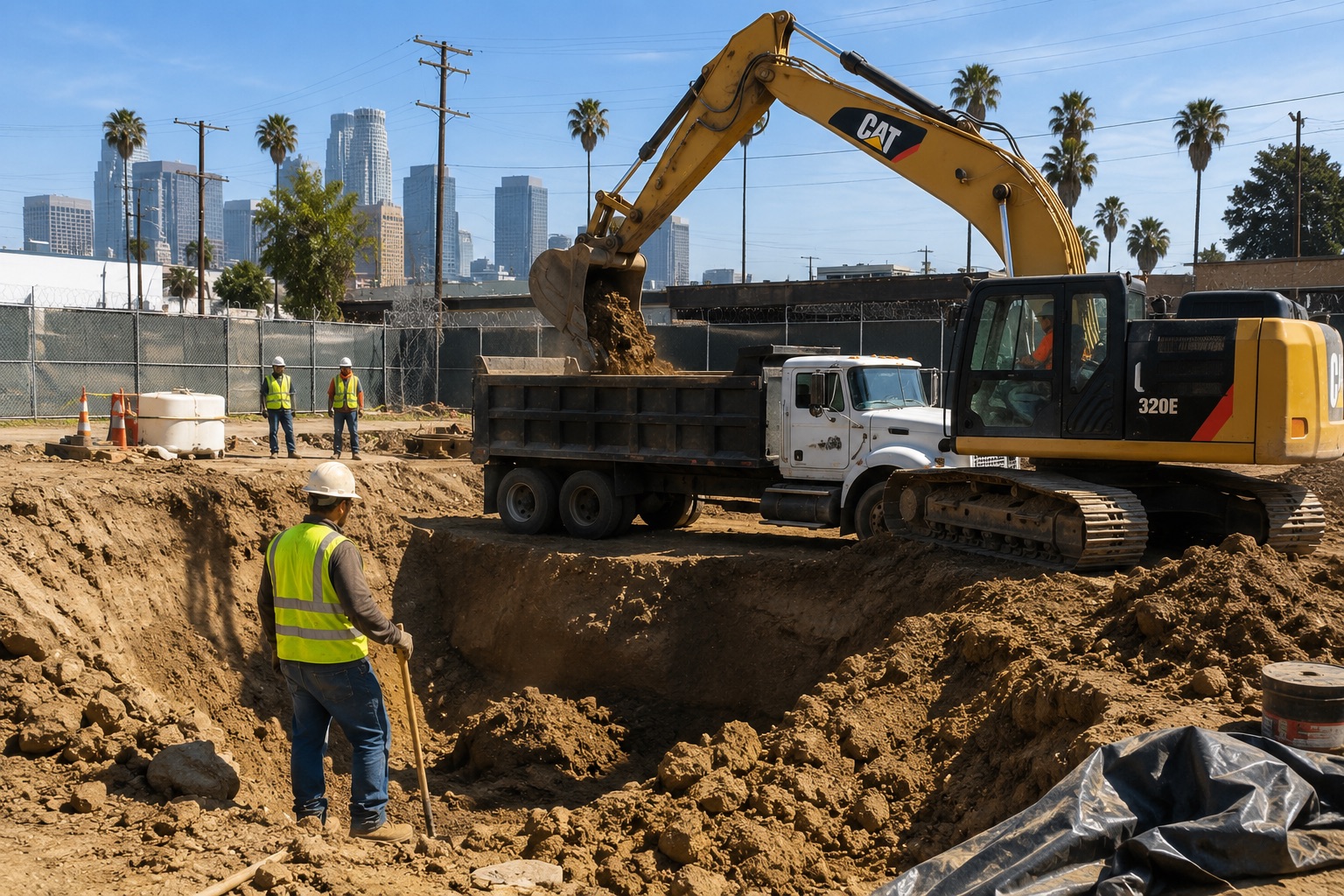
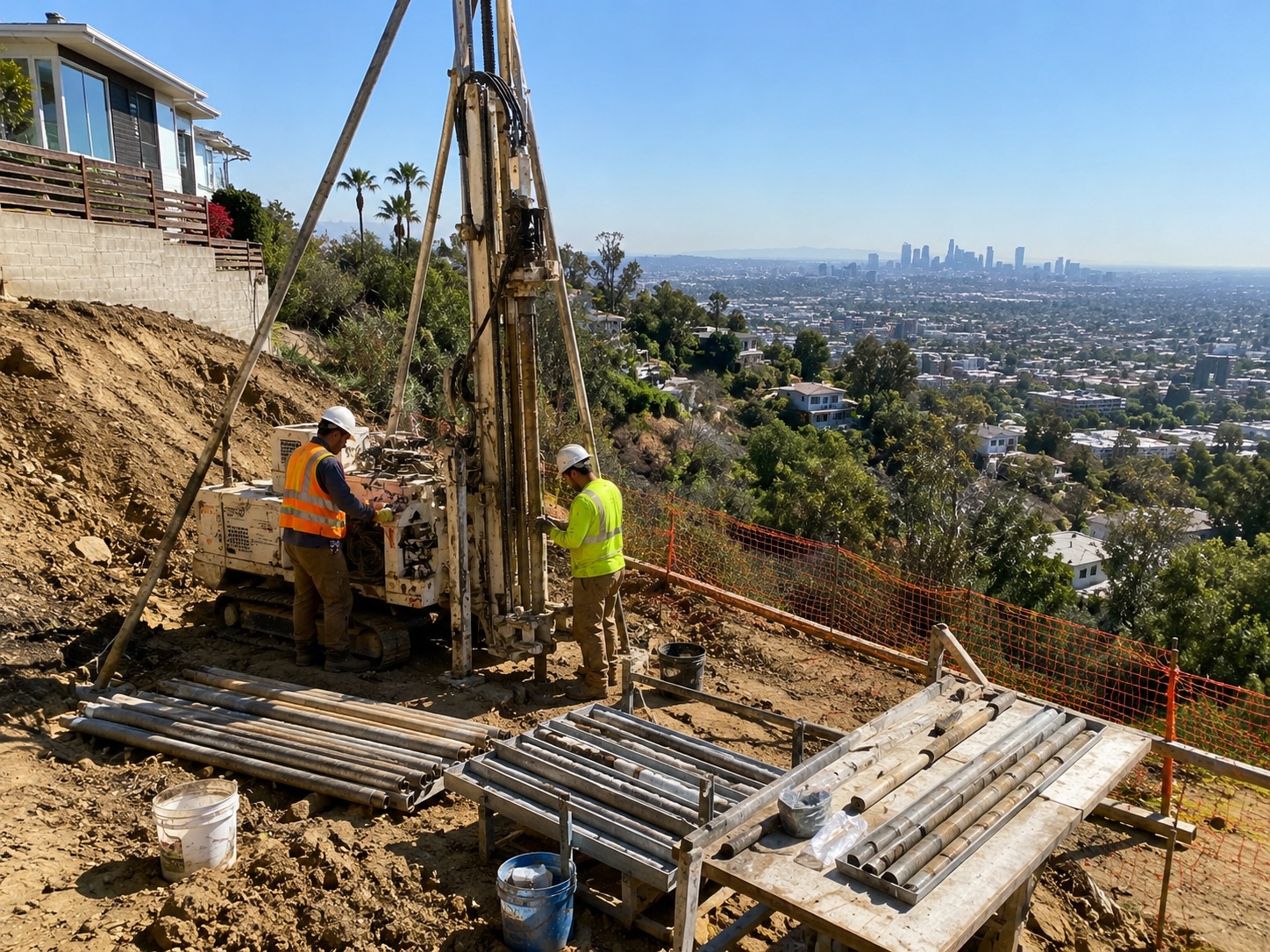
Why Soils Reports and Geological Reports Matter
If you are planning to build an accessory dwelling unit in the City of Los Angeles, your permit path may be ministerial under California’s ADU laws, but that does not mean your site is simple from an engineering standpoint. In Los Angeles, many ADU delays are driven not by the floor plan, but by the ground beneath it: hillside conditions, fill, retaining walls, lateral support, liquefaction exposure, landslide risk, and fault-zone issues. Los Angeles City Planning’s current ADU memo confirms that ADUs are processed ministerially in eligible residential areas, while the California HCD handbook reflects the current state-law framework, including the completeness and approval timelines for ADU applications.
For property owners, architects, and builders, the practical question is usually not whether an ADU is allowed. The real question is whether the lot will require a soils report, engineering geologic report, combined soils-and-geology report, slope stability evaluation, or grading permit before LADBS will sign off on the project. That is where early geotechnical planning can save months of redesign and permit corrections.
City of Los Angeles vs. unincorporated Los Angeles County
This information applies to projects in the City of Los Angeles. However, if the parcel is in unincorporated Los Angeles County, the process is different, and the County’s ADU guideline says applicants should follow the County’s own ADU pathway instead of the City’s. These guidelines should be strictly adhered to. We are here to help!
Are ADUs in Los Angeles still subject to site-specific engineering review?
Yes. Even when an applicant uses one of LADBS’ approved ADU standard plans, LADBS still reviews site-specific factors, including foundation requirements and zoning compliance. In other words, a pre-approved ADU plan can shorten plan check, but it does not eliminate geotechnical review when the lot conditions call for it.
Building an ADU in Los Angeles, California can trigger more than a standard building permit. Learn when soils reports, geology reports, slope stability evaluations, grading permits, and inspections can affect ADU permit approval and construction in Los Angeles.
When a soils report is commonly required for an LA ADU
LADBS states that a soils report is needed for construction on a slope steeper than 3:1 (horizontal to vertical), for excavations that remove lateral support, when a structure cannot be designed using code-prescribed soil values, when the structure does not conform to Chapter 18 criteria, and for certain sites within mapped seismic hazard zones that are not exempt. For many ADU projects, those triggers come up when the project includes a detached unit on sloping terrain, retaining walls, cut-and-fill pad work, or foundations near a descending slope.
Read more to find out how Accessory dwelling units (ADUs) are generally allowed through a ministerial process in the City of Los Angeles, but that does not mean every ADU is simple to permit. Marshall GeoScience can help you get your property and foundation ready for ADU permit approval.
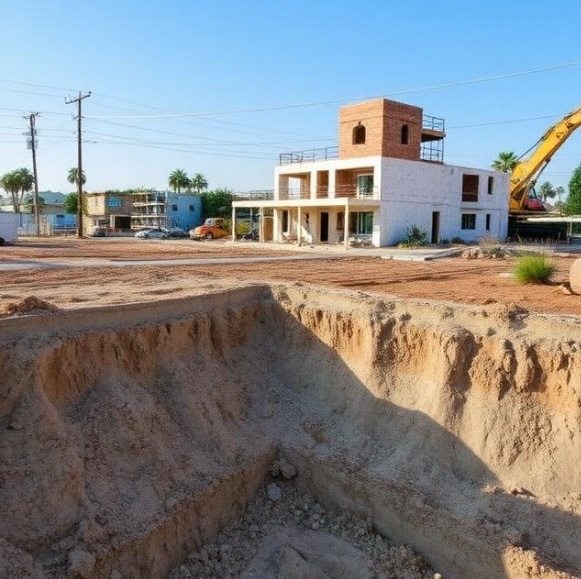
ADU Design and Development in Los Angeles, California by Marshall GeoScience Geotechnical Engineers
When a geology report or combined soils-and-geology report may be required
LADBS also states that a geology report is needed for development within an Alquist-Priolo Earthquake Fault Zoneor a Preliminary Fault Rupture Study Area. A combined soils and geology report is needed for projects in a Hillside Grading Area, or where bedrock is encountered in addition to soils-report triggers. That is especially important for hillside ADUs, garage conversions with uphill cuts, and projects where retaining walls or back-cuts may expose variable materials or adverse geologic conditions.
Why seismic hazard mapping matters before ADU design gets too far
The California Geological Survey’s Seismic Hazard Zone program explains that these regulatory zones identify areas prone to liquefaction and earthquake-induced landslides, and that cities and counties must use those maps in their planning and building-permit processes. CGS also states that site-specific geotechnical investigations are required before permitting most human-occupancy development within these zones. The fastest public screening tool is EQ Zapp, which lets owners and consultants check whether a property falls within a seismic hazard zone, earthquake fault zone, or both.
When a slope stability report becomes critical
For hillside ADUs, a basic soils report may not be enough. LADBS’ current Slope Stability Evaluation and Acceptance Standards bulletin states that a stability evaluation is required for cut, fill, and natural slopes steeper than 2:1, as well as slopes that expose incompetent earth materials, unfavorable geologic structure, or evidence of prior instability or landslide activity. The bulletin also states that the minimum acceptable static factor of safety is 1.5 for cut, fill, and natural slopes.
That matters because many Los Angeles ADU sites are not flat. If the proposed ADU sits near the top or toe of a slope, or if the project requires excavation into a hillside, the geotechnical scope may expand from basic foundation recommendations into full slope-stability analysis, retaining-wall support parameters, drainage controls, and construction-phase observation requirements.
How soils and geology reports affect the permit set
The LADBS ADU permit application form shows that the permit package may include items such as Soil/Geology Report, Grading Pre-Inspection (GPI), Hillside Referral Form, Slope Band Analysis, and Lateral Support Review Acknowledgment, depending on the site.
LADBS’ ADU correction sheet further states that soil/foundation/geology reports must be approved by the Grading Section, that the Department approval letter must be provided, and that the plans must show compliance with the report and approval-letter conditions. It also requires a copy of the Grading Pre-Inspection Report when applicable.
That is a major issue for owners trying to move quickly. A geotechnical report is not just a background document. On many ADU projects, it becomes a controlling part of the approved plan set, affecting foundation design, setbacks from slopes, retaining details, drainage provisions, and the inspection sequence.
When grading permits and retaining-wall approvals may be triggered
LADBS states that grading permits are required for grading work in the hillside grading area, removal and recompaction, or backfill. Its grading-permit page also says grading plan checks are required before permit issuance for work such as site preparation, removal and recompaction for building pads, retaining wall cuts, back-cuts, and backfill, slope repairs, and landslide repairs or removal.
For ADU construction, that means the building permit is often only part of the approval path. A detached ADU on a rear slope, a garage conversion with a new retaining wall, or an addition that removes lateral support can trigger separate grading review or related approvals even though the ADU itself is broadly allowed under state law.
Inspections that commonly affect ADU timelines
LADBS states that, once a permit is issued, construction can begin, but inspection must be requested before any work is covered or concealed. LADBS also explains that the permit process ends with final approval and issuance of a Certificate of Occupancy after construction and final inspection are approved. Its building-process FAQ says applicants request inspections as work progresses, and LADBS issues the Certificate of Occupancy after approval of all construction and final inspection.
For geotechnically sensitive ADUs, LADBS’ Grading Division says it provides inspection for foundation excavations, grading, and fill placement, and that soils and/or geology reports are usually required before permits are issued for technical review by geotechnical engineers and geologists.
Fees and timing notes owners should know
The current HCD ADU Handbook states that permitting agencies must determine whether an ADU application is complete and give written notice within 15 business days, and that a completed ADU application must generally be approved or denied within 60 days when there is an existing dwelling on the lot. The same handbook also states that ADUs under 750 square feet are exempt from local impact fees, while larger ADUs can be charged proportionately.
Why Marshall GeoScience should be involved early
For ADU projects in Los Angeles, the smartest time to involve a geotechnical consultant from Marshall GeoScience in Los Angeles, CA is before structural plans are finalized and before the permit package is submitted.
Early due diligence can identify whether the lot is in a hillside grading area, whether hazard-zone mapping may trigger investigation, whether retaining walls or cut-and-fill work will require grading review, and whether the ADU concept should be repositioned or redesigned to avoid avoidable corrections.
For owners, designers, and contractors, that can mean fewer surprises, faster plan check, fewer corrections, and a more realistic construction budget.
Conclusion
ADU approvals in Los Angeles may be streamlined, but site conditions still control risk. If your ADU is on a hillside lot, near a slope, within a seismic hazard zone, near a fault zone, or dependent on new retaining structures or grading work, your project may require much more than a standard building submission. In those cases, soils reports, geological investigations, and slope stability evaluations are often the documents that determine whether the project moves smoothly through permitting and inspection.
Marshall GeoScience can help property owners, architects, and builders evaluate ADU sites early, prepare the required geotechnical and geologic reports, and support smoother LADBS review for hillside, slope-adjacent, and geologically sensitive projects.
F.A.Q.s
Do all ADUs in Los Angeles need a soils report?
No. But LADBS says a soils report is required in several common situations, including construction on slopes steeper than 3:1, excavations removing lateral support, cases where code-prescribed soil values are not enough, and certain seismic hazard-zone sites.
Can I use a standard ADU plan and skip geotechnical review?
No. LADBS says even approved standard plans are still reviewed for site-specific factors, including foundation requirements.
When is a geology report required for an ADU?
LADBS says a geology report is needed within an Alquist-Priolo Earthquake Fault Zone or a Preliminary Fault Rupture Study Area, and a combined soils-and-geology report may be required in a Hillside Grading Area or when bedrock is encountered in addition to soils-report triggers.
When do slope stability reports matter for ADUs?
LADBS’ current bulletin requires stability evaluation for cut, fill, and natural slopes steeper than 2:1, as well as slopes with evidence of instability or adverse geologic conditions.
Can retaining walls or pad work trigger extra permits?
Yes. LADBS says grading permits and grading plan check may be required for site preparation, removal and recompaction for building pads, and retaining-wall cuts, back-cuts, and backfill.
How do I check whether my lot may have seismic or fault-zone issues?
The California Geological Survey recommends using EQ Zapp to check whether a property is in a Seismic Hazard Zone, Earthquake Fault Zone, or both.
Is the process the same in unincorporated Los Angeles County?
No. Unincorporated County parcels follow the County’s ADU process, not the City of Los Angeles process.
Build with knowledge. Build with confidence. Build smart from the ground up.
Other Engineering Services
Trustworthy Team
Our team at Marshall GeoScience has a reputation for providing the highest level of customer service.
Specialty Expertise
We are a team comprised of licensed and certified experts in different fields of construction with more than 20+ years of experience.
Industry Experience
We have developed projects in a broad spectrum of industries.
More Geotechnical Insights
ADU Permit and Inspection Requirements in Los Angeles: Soils Reports, Geology Reports, and Slope Stability

The foundation of our work begins here.
Reimagining the future of our natural resources.
Environmental engineers play a crucial role in both residential and commercial development projects by integrating principles from engineering, soil science, biology, and chemistry to develop solutions to environmental problems.