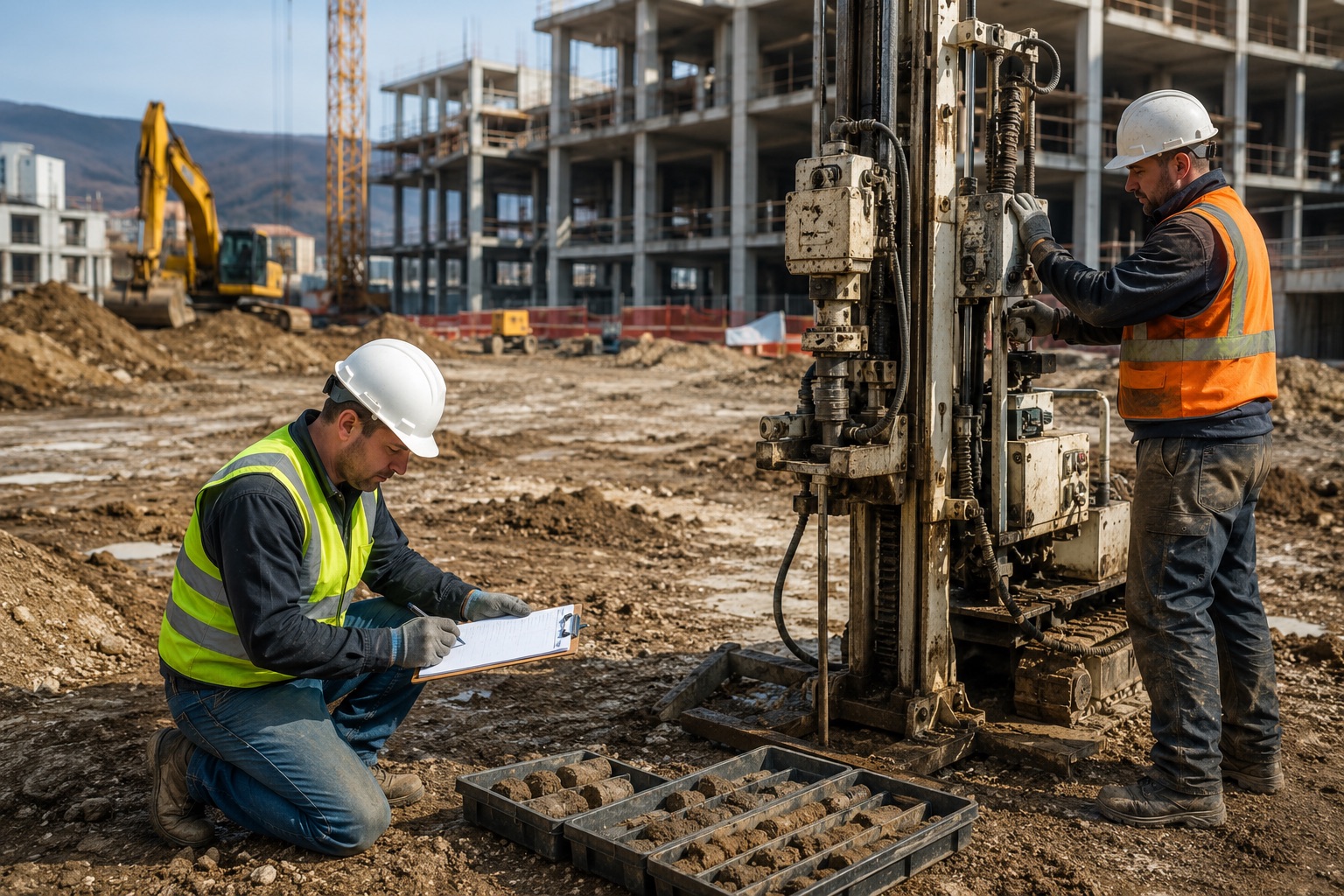
Geotechnical Assessment for Construction Feasibility
For every construction, it all begins with the base ground. Geotechnical engineers should thoroughly check soil properties and underground conditions for foundations. The process of assessing the potential land and underground for a construction project is a geotechnical site assessment.
Engineers recommend geotechnical site assessments to ensure that the potential land is suitable for building construction. It assesses the soils, groundwater conditions, and settlement risks, as these can affect future structural performance.
Inadequate site investigations can lead to settlement, foundation cracks, or destabilized slopes. The project will incur costs for structural failure, delays, and unfavorable situations.
Geotechnical investigation is critical for risk identification and plays an important part in construction plans. The local government in California determines if it requires a geotechnical report for a permit. The California Department of Transportation, the California Geological Survey, and the LADBS hold this jurisdiction.
What Is a Geotechnical Site Assessment?
Geotechnical site assessment is a detailed investigation of the geologic and engineering conditions. It reveals the presence of soil, rock, groundwater, and subsurface. Engineers perform a site assessment of the potential project location.
The idea is to see the ground’s ability to support the structure. The engineers assess the ground conditions during field investigations. Further, they analyze the soil in detail with laboratory tests.
The assessment starts with project planning, and it helps to grasp the site conditions before construction. Site assessment is an important step to increase safety and enhance project planning. The primary focus is to achieve:
- Evaluating soil strength
- Identifying settlement risks
- Determining groundwater conditions
- Assessing slope stability
- Supporting foundation design
- Reducing construction risks
Why Geotechnical Assessment Is Critical?
Investigations are an important part of the projects. Soil conditions can affect structural performance, and these assessments help calculate that impact.
The correct geotechnical site assessments prevent project delays and avoid risky project budget issues. Properly framed inspections safeguard schedules, jobs and your project budgets.
Soil Stability Issues
Weak or loose soil may not support heavy structures. Settlement and soil movement over time can result from unstable soil.
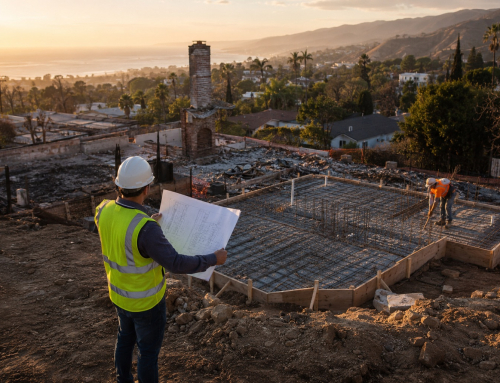
Read more to find out why every natural disaster like fires and floods require a comprehensive structural and foundational analysis before any rebuild can occur.
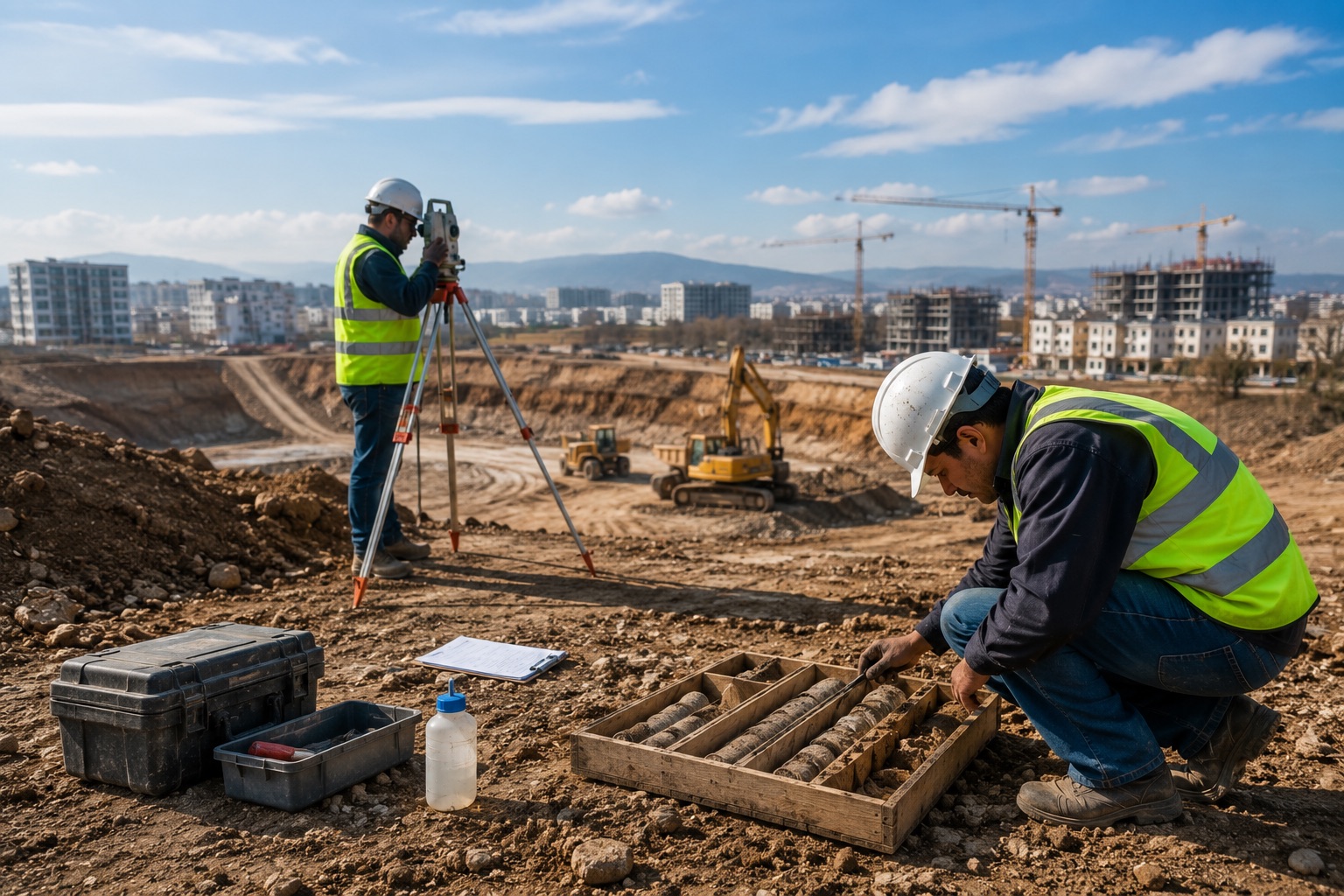
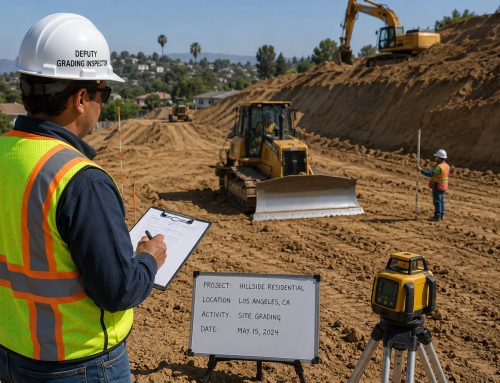
Geotechnical engineers conducting site assessment, soil sampling, and land surveying to evaluate ground conditions for construction project feasibility.
Foundation Failures
Structural damage mainly depends on foundation design. The geotechnical investigation results enable the choice of appropriate foundation systems.
Groundwater Challenges
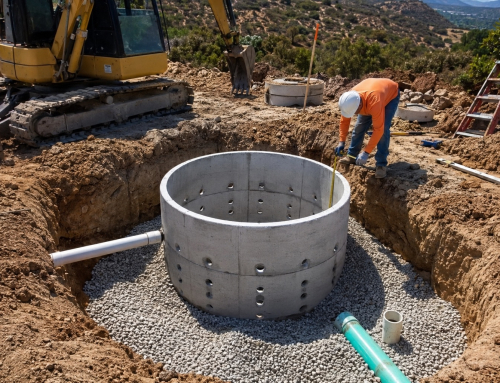
Excessive groundwater can create problems such as excavation and affect soil strength. Groundwater can also cause hydrostatic pressure around foundations.
Cost Overruns
Uncertain soil conditions that arise during construction can drive up construction costs. When you investigate early, there will be fewer surprises and delays.
Key Components of Geotechnical Site Assessment
Site Reconnaissance
The site reconnaissance is the primary step in the investigation process. The engineers go to the job location to see the situation. Before detailed testing, engineers can assess the system visually and indicate where problems are likely. This may include:
- Surface drainage conditions
- Existing structures
- Slopes and topography
- Presence or absence of signs of settlement or erosion activities.
- Access conditions
Subsurface Investigation
Subsurface investigations can be an important source of information regarding soil strength and groundwater conditions. Subsurface investigation is a means of evaluating the nature of subsurface soil. The following are the subsurface investigation methods.
- Boreholes
Technicians drill bores into the soil to obtain soil samples and the thickness of the soil layers.
- Test Pits
To directly visualize soil conditions, the technicians use test pits in the near-surface.
- Sampling Methods
Technicians can take either disturbed or undisturbed samples for laboratory tests.
Laboratory Testing
The engineers test the properties of soil samples in the laboratory. These tests are useful for engineers to understand the soil behavior under stress. The most common lab tests are:
- Soil classification
- Moisture content testing
- Shear strength testing
- Atterberg limits
- Compaction testing
Soil Field Tests
Engineers carry out several field tests during geotechnical investigation. Such as:
- Groundwater Analysis
Construction projects can be significantly impacted by groundwater. Engineers study:
- Water table levels
- Seasonal groundwater changes
- Drainage conditions
- Standard Penetration Test
For SPT, the technicians use a split-spoon sampler to carry out the standard penetration test. SPT is one of the most popular field tests, and engineers prefer it for checking soil resistance.
- Cone Penetration Test
In CPT, we push a cone into the soil, and the technician records the soil resistance.
- Plate Load Test
This test explores the behavior of soils and their load-supporting capacity under load.
- Percolation Test
A percolation test determines the rate at which water passes through a soil. Engineers use this popularly for septic system design and drainage studies.
Potential Issues in the Geotechnical Site Assessment
Several issues may occur on-site that can impact the accuracy of investigations. Proper planning helps reduce these challenges. However, we can lessen their impact with proper planning. The following are some common problems during site assessment.
- The conditions occurring in soil may vary over a small distance. This is more complicated for site evaluation.
- Drilling and testing operations may be difficult in some urban areas or on steep slopes.
- For some projects, engineers should consider the contamination, wetlands, or protected environmental areas.
Cost of Geotechnical Investigation
Geotechnical investigations are a front-end cost and are always handled up front. They can save money in the long run and reduce construction issues and design changes. The types of investigations required for the site will impact the cost of a geotechnical investigation:
- Project size
- Number of boreholes
- Soil conditions
- Site accessibility
- Testing requirements
What does a Geotechnical Report look like?
A geotechnical report is a summary of the investigation results and of any engineering recommendations for the site. Structural engineers, contractors, and local agencies will use this report in their project planning. Typically, the report contains:
- Site description
- Soil profile information
- Field exploration results
- Laboratory test results
- Groundwater observations
- Foundation recommendations
- Grading recommendations
- Pavement recommendations
- Drainage considerations
Useful Practices for Site Assessment
Proof of accurate geotechnical assessment is the compliance with engineering and local standards. However, we can achieve accuracy with advanced tools, i.e., drones, remote sensing, and digital models. Key good practices are:
- Proper soil sampling
- Adequate field testing
- Use of experienced engineers
- Accurate documentation
- Use of modern equipment and technology
What is a feasibility study in construction?
The Feasibility Study helps in decision-making on a particular project site. It assesses technical, financial, environmental, and construction considerations.
Technical feasability
Technical feasibility explains whether the site conditions can accommodate the structure. Engineers observe soil conditions, soil types, groundwater levels, grading requirements, drainage, and foundation requirements, etc.
Economic feasability
While examining a project’s economic feasibility, we calculate the expenses. Solid ground might lead to higher excavation, foundation, or stabilization costs. As soon as one investigates, the more accurate the cost estimate will be.
Environmental feasability
For environmental feasibility, the professionals study the groundwater and contamination issues, erosion, and environmental impact. Further, some sites may require an environmental study before the construction.
Feasibility studies help make the right choices before investing money and other resources in any project development.
The importance of Geotechnical Investigation for a feasibility study
Geotechnical investigations are an important part of a project’s feasibility. It includes an evaluation of the site’s suitability for the proposed construction project. The engineers can decide on the foundation system based on the site conditions. For example, a shallow foundation, a mat foundation, or a deep foundation.
Expansive soils, liquefaction, and slope instability are potential geotechnical problems. A geotechnical investigation can identify these at an early stage. Good soil data can help budget and avoid unforeseen construction costs.
Factors Influencing Feasibility Study of Construction Projects
Various factors influence the feasibility of construction work. Several geotechnical issues can impact the viability and economic implementation of a project.
- Soil bearing capacity is the soil’s ability to hold a structure.
- Certain soils are more compressible than others. Excessive settlement can damage the structures.
- In earthquake-prone areas like California, construction projects require a case-by-case engineering approach.
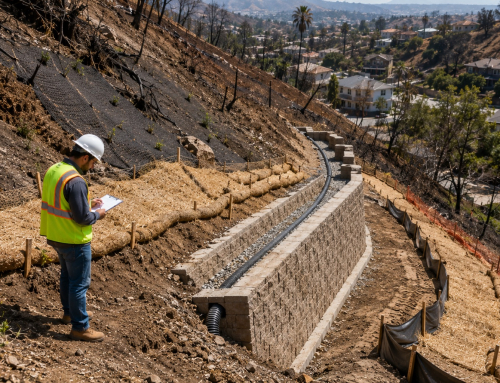
- Engineers should analyze slopes for hillside construction projects to decrease landslide risks.
Final Thoughts
The construction industry widely serves the public regardless of its type and location. So, safe and successful construction is important, whether it is a new building or a refurbishment. We can only achieve this combined goal with geotechnical site assessment and a feasibility study.
These investigations enable an understanding of the site and groundwater conditions and restrictions, before construction starts. It also guides the engineer in both the design and development of a site. Proper investigation contributes to better foundation design, minimum risk, and cost control of projects.
Professional geotechnical investigations are a part of construction planning. Especially for complex construction projects and procedures, they hold a significant position.
F.A.Q.s
Why are the geotechnical investigations necessary?
It helps check the site suitability for construction, so it is important to avoid post-construction damage.
Why is soil testing important for construction?
Engineers use soil tests to determine soil strength and settlement. They would be capable of deciding about drainage and foundation type for the construction project.
What is the expense of a geotechnical investigation?
The price is a function of project size, drilling needs, soil characteristics, and the Lab test requirements.
Which tests should we consider during site feasibility studies?
The most typical tests are:
- Standard Penetration Testing
- Cone Penetration Testing
- compaction testing, Shear strength
- Groundwater assessment
Build with knowledge. Build with confidence. Build smart from the ground up.