What End-to-End Inspection and Materials Testing Services are Required for Construction Projects?
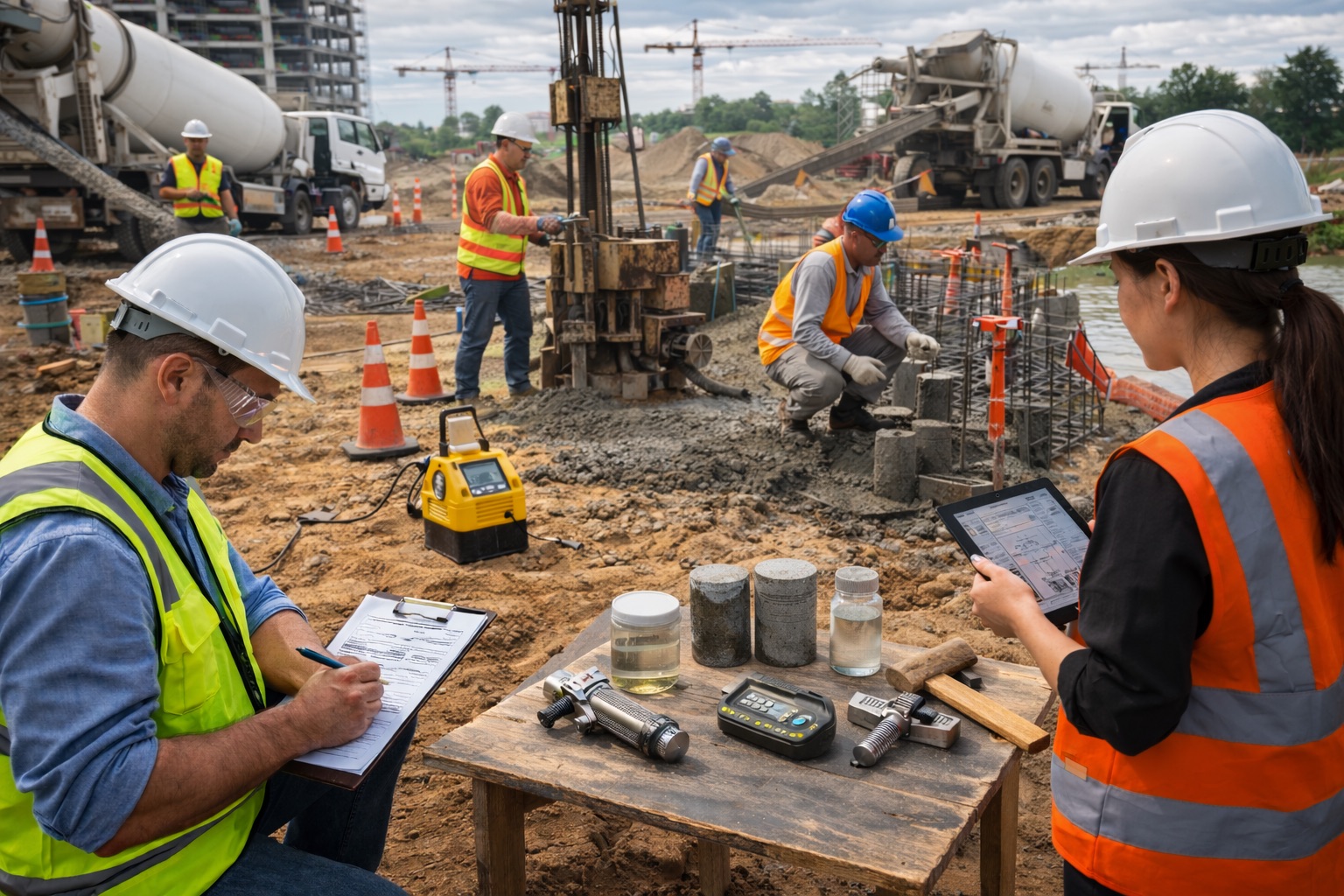
End-to-end inspection implies quality control from beginning to end. This starts before construction. It goes on with grading, foundation work, structural framing, and final approval. It is a combination of field inspection and laboratory testing. It also includes compliance with regulatory, etc.
Without testing, the projects are at risk. Soil may settle. Concrete may crack. Steel may fail. Delays and legal problems may follow. Repairs can be costly.
An integrated approach avoids such problems. Engineers test the soil. Inspectors monitor work in the fields. Laboratories are used to verify material strength. There are reports that confirm code compliance. Everything works as a single system.
This article describes the stages of inspection. It includes geotechnical and structural inspections, environmental inspections, and special inspections. It also explains the need for these services in modern construction.
What does End-to-End Inspection of a Construction mean?
End-to-end inspection is a project-life-cycle coverage. It begins prior to the completion of the design. It goes on till the completion of the project.
This approach develops a single-source quality system. Close communication is conducted among engineers, inspectors, and contractors. It includes:
- Field inspections
- Laboratory testing
- Verification of compliance with codes
- Final certification
Problems are found early. Corrections happen fast. In regulated areas such as California, the Los Angeles Department of Building and Safety requires documented inspections. It is often required at a number of stages.
Integrated services help meet such a requirement with ease. End-to-end inspection means that nothing gets past the inspection.
Pre-Construction Inspecting and Site Evaluating Services
Every project commences with the ground. Geotechnical site investigation tests the soil conditions.
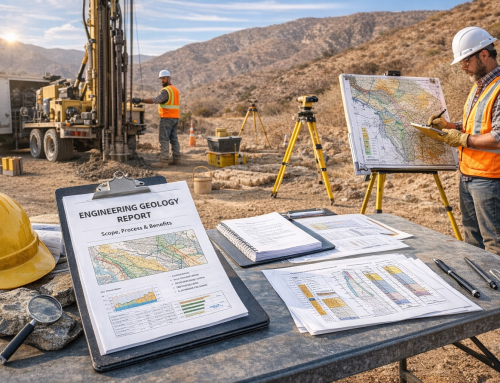
Engineers drill borings. They collect samples. They test soil in terms of type and strength. Exploration at the subsurface level tries to find:
- Weak layers
- Expansive clay
- Loose fill
- Groundwater levels
- Soil classification testing
- Strength tests for indexes properties
- Bearing capacity
The Geological testing helps prevent project delays and closures. Properly framed inspections safeguard schedules, jobs and project budgets. The Los Angeles Department of Building and Safety says visual checks help catch early problems.
Environmental site assessment
The environmental assessments check for contamination. The California Geological Survey provides the regional hazard information. It can be used to support sound development planning.
Groundwater evaluation is also of importance. A high-water table has an effect on the design of a foundation.
Early testing to avoid expensive redesign. If an analysis of weak soil is discovered later, then the foundations have to change. That causes delays and additional expense.
Pre-construction inspection makes uncertainty less. It develops confidence in designing.
Read more to find out why End-to-End Inspections and Materials Testing is so important to ensure construction stability, along with avoiding health concerns.
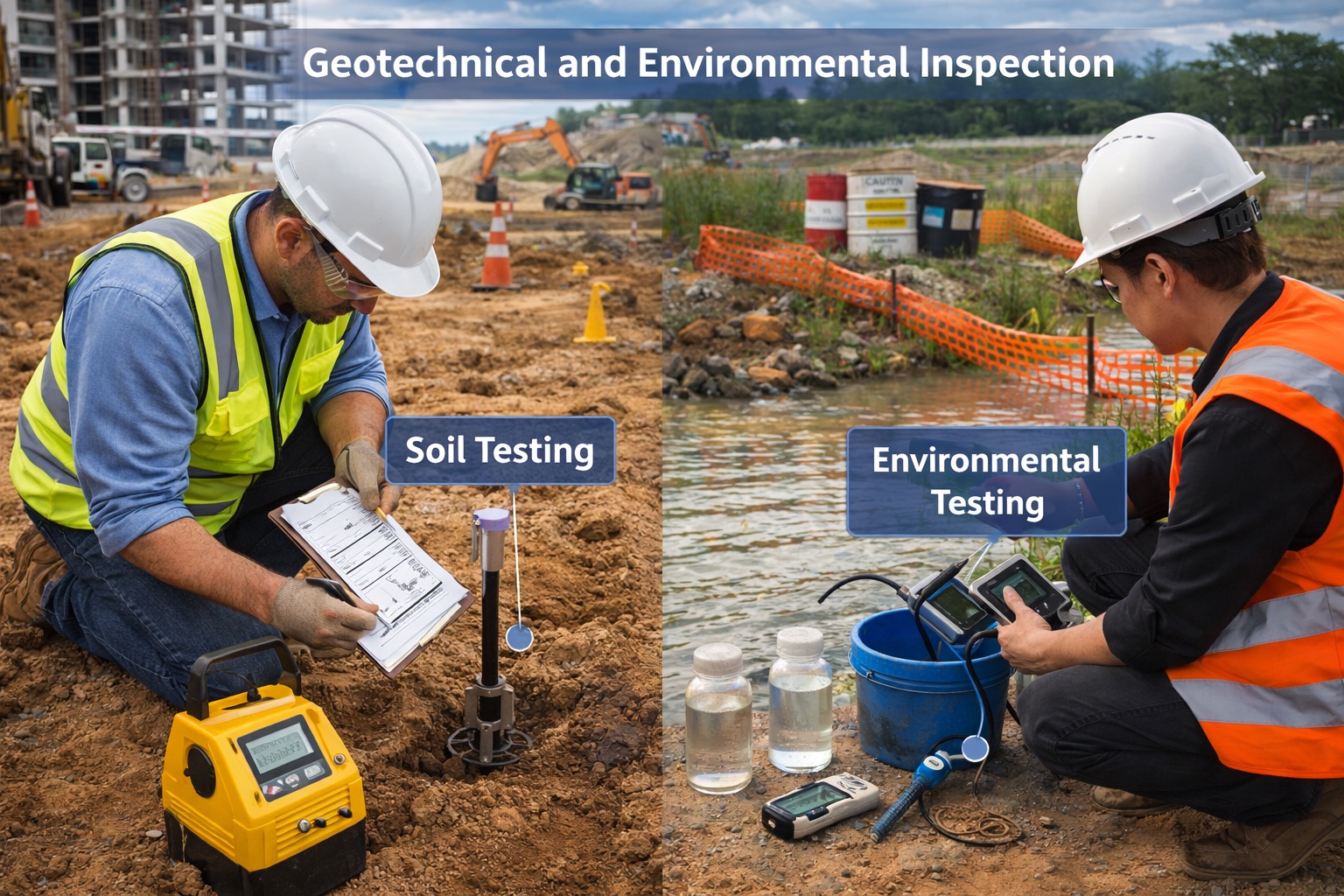
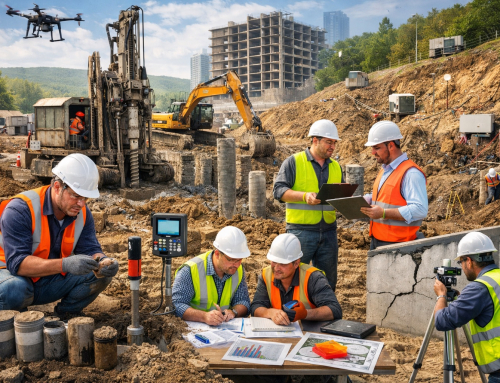
Soil testing and environmental monitoring in progress at an active Los Angeles construction site, ensuring geotechnical stability, groundwater safety, and full regulatory compliance for urban development projects.
Geotechnical Inspection on Construction
Inspection is continued through grading once it starts. Excavation and grading are to be performed according to the approved plans. Inspectors check the dimensions of the fill and the moisture content.
Compaction testing is very important. Two common methods are:
- Testing the nuclear density gauge
- Sand cone testing
These tests ensure soil density is as per specification. Subgrade preparation is also checked. Poor preparation results in a settlement. Slope and excavation safety inspections make workers safe.
Retaining systems and shoring have to perform properly. In seismic areas, such as Southern California, there are strict grading controls. Agencies such as the Los Angeles County Department of Public Works control such parameters.
Proper geotechnical Inspection prevents settlement. It protects slope stability. It limits long-lasting movement in the structure.
Inspection and Testing Services for Foundation
Foundations transmit the loads from the building to the soil. Spread footing shall be inspected prior to placing concrete.
Inspectors check for depth and bearing surface. Grade beams are used to interconnect footings. Reinforcement is to be according to the approved drawings.
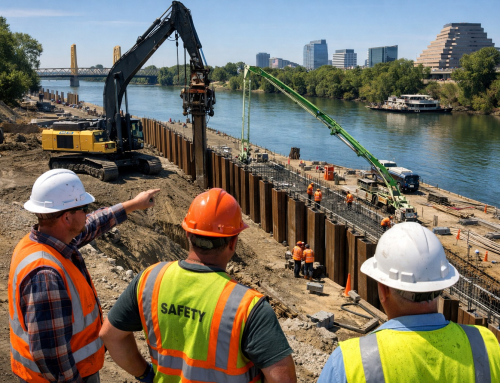
Mat foundations have to be closely observed. Large pours must be constantly monitored. Deep foundations like drilled shafts and piles are the types that require special monitoring. Inspectors check the depth, diameter, and positioning of reinforcement.
Load testing is a way of verifying capacity. Proof-testing is used to validate the design assumptions. Without a foundation inspection, the foundation’s performance is at risk.
End-to-end services help in ensuring proper load transfer. They are protecting the entire building above.
Materials Testing Services Required in Construction
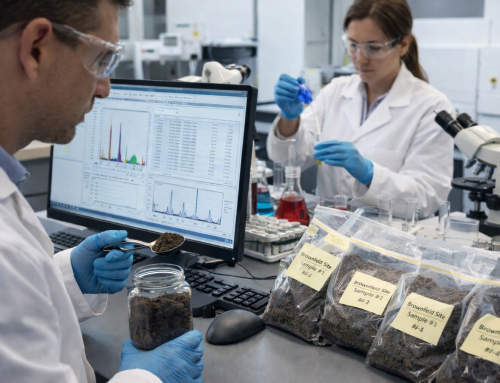
Construction materials need to meet strict standards. Soil laboratory tests include:
- Atterberg limits
- Grain size analysis
- Direct shear tests
- Proctor compaction tests
Concrete compressive strength testing for design strength. The cylinders are cast and tested to meet certification requirements.
Asphalt density and stability testing are ways to ensure the durability of pavement.
Masonry and Grout Testing, checking mortar for the performance of the structure. Steel reinforcing inspection is used to verify the size and spacing of the reinforcement. It also checks the steel placement.
California Department of Transportation (Caltrans) has stringent material test requirements. Mainly, it requires infrastructure materials to maximize an agency’s infrastructure projects.
Laboratory standards are based on ASTM and AASHTO procedures. Quality control is the process of ensuring materials meet specifications. It is usually done before they are made permanent.
Testing to Protect the Structural Integrity
These inspections are Code-supervised. Special inspection by certified professionals is required for certain elements. These include:
- Placement of steel reinforcement
- Reinforcing steel
- Structural steel welding
- Post-tensioned concrete
- High-strength bolting
- Anchor installation
- Shotcrete application
- Non-destructive testing
They are used by building departments as a requirement. In Los Angeles, the Los Angeles Department of Building and Safety administers special inspection programs. These are based on the California Building Code.
Non-destructive testing methods, such as ultrasonic test find hidden defects without damaging materials. Special inspection is for the sake of public safety. It ensures the structural reliability.
Inspection for the Environment
During and prior to construction, environmental testing takes place frequently. Soil contamination testing is used to identify hazardous substances.
Groundwater monitoring checks for migration of pollutants. Hazardous material identification can be for Lead, Asbestos, Petroleum hydrocarbons, Remediation, Verification, Testing. It confirms the requirement for the clean-up.
Regulatory compliance checks also ensure projects are standardized. For this, they undergo checks with state standards from other state agencies. For example, the California Environmental Protection Agency.
Environmental testing benefits workers. It protects the local surrounding communities. It is also in favor of sustainable development. Permitting is frequently a matter of these reports.
Pavement and Base Inspection
Subgrade Inspection: Roadways and Parking lots do need inspection in layers. Base material placement has to abide by grading plans.
Compaction Verification: Pavement thickness testing is used to verify compliance of design. Long-term performance is dependent on proper density and drainage.
The Los Angeles County Metropolitan Transportation Authority requires pavement testing. Adequate inspection of pavements minimizes pavement cracking and rutting. It extends service life.
Documentation and Enforcement of Regulations
Inspection is not complete without documentation. Inspectors prepare field reports on a daily basis. Certified test results are issued by the laboratories.
Deputy inspectors work on behalf of building departments. They verify the fulfillment of approved plans.
Codes are built according to the California Building Code and any modifications that may be incorporated into the area code. Third-party verification helps to add transparency. Documentation protects owners from a legal perspective.
So, if there are any disputes, the records yield the compliance. Accurate reporting speeds can allow for approvals and final sign-off.
Advantages of End-to-End Inspection and Testing
Integrated inspection has many advantages. Such as:
- It reduces structural risk.
- It brings improvement in the quality of construction.
- It limits change orders. It reduces long term maintenance costs.
- It makes the work and living space safer for the workers and the occupants.
- It speeds up the agency approvals.
- In highly regulated states such as California, coordination of inspection prevents delay.
- The cost of the testing is low compared with the cost of failure. in at a slower pace.
Who needs end-to-end inspection services?
Many stakeholders benefit from these services. It is the control of risk needed by developers. Contractors require quality verification.
Public agencies require their compliance. Infrastructure owners have to safeguard assets. There is a need for safety assurance on the part of industrial project managers.
In large metropolitan areas such as Los Angeles, inspection is not an option. It is mandatory for most commercial and public projects. To support all project participants, end-to-end services are provided.
How to Select a Construction Inspection and Testing Company?
It is important to choose the right geotechnical engineering firm. Look for the proper accreditation. Laboratories should comply with recognized standards.
Inspectors should be appropriately certified. In-house laboratory capability is a means of improving efficiency. Experience with similar projects, so the learning curve is reduced.
Transparent reporting helps to create trust. Firms with familiarity with California agencies are preferable.
Enquiries about communication systems. Clearer reporting will stop confusion. It is very important for a strong inspection partner to protect your investment.
Why This Matters in Southern California
Construction endeavors require accuracy. End-to-end inspection and materials testing services provide full lifecycle quality control.
They start with the investigation of the soil. They go on through grading, foundation, structural work, and final approval. These services are a protection of safety. They improve durability.
They ensure compliance with regulations. An integrated system of field inspection and lab testing is used.
Documentation is in support of legal protection. Modern construction cannot be based on partial testing. It demands coordinated oversight from the beginning to the end.
F.A.Q.s
Define the processing time for Phase I Environmental Site Assessment
Mostly Phase I reports require approximately 2 to 4 weeks. The time duration depends on the size of the property and the availability of records.
What time does it take for a Phase II Environmental Site Assessment?
Phase II may take longer than a few weeks. It depends on the drilling, lab testing, and the site conditions.
Why does Southern California specifically need an environmental assessment?
In the case of many commercial transactions – yes. For development projects, environmental review may be required under state and local rules in the State of California. Large projects require review by federal agencies.
Compare the cost for Phase I and Phase II ESA?
Phase I is generally less expensive because it is not associated with lab tests. Phase II has costs for drinking and geological drilling, sampling, and laboratory analysis of samples.
Build with knowledge. Build with confidence. Build smart from the ground up.