Methane Testing, Soil Gas Survey & Mitigation Level Determination in Los Angeles
Planning an ADU, new home, multifamily building, or commercial development in Los Angeles? Understanding your property’s methane requirements early can help you coordinate foundation design, environmental reporting, and permit submittals.
Marshall GeoScience provides methane testing and methane mitigation design for projects throughout Los Angeles and surrounding communities. Our methane services help property owners, architects, developers, and contractors move from a soil gas survey to mitigation level determination and a coordinated design approach.
From Mid-Wilshire and Koreatown to Playa Vista, the Westside, the Harbor area, and the San Fernando Valley, start with a review of your project address and proposed construction.
Request a methane testing estimate or call (818) 310-6161.
Methane Testing in Los Angeles: Does Your Property Need It?
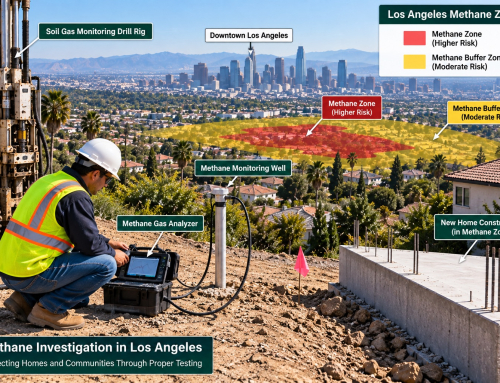
The City of Los Angeles establishes methane requirements for new buildings and paved areas in designated Methane Zones and Methane Buffer Zones. The property’s mapped designation and project scope determine the applicable review; a neighborhood name or ZIP code does not establish a site’s methane concentration.
Start with the property address or assessor’s parcel number, confirm the permitting agency, and review the applicable methane mapping. City of Los Angeles property information can be researched through ZIMAS.
Where site testing is required, City rules call for a Department-approved testing agency working under the supervision of a licensed architect or registered engineer or geologist. Certain designs and code exceptions provide alternative compliance paths. The appropriate approach should be established for the individual project rather than assumed from its location.
Official references: Los Angeles methane mitigation requirements and site testing requirements and exceptions.
Soil Gas Survey: Understanding Conditions Below Your Building
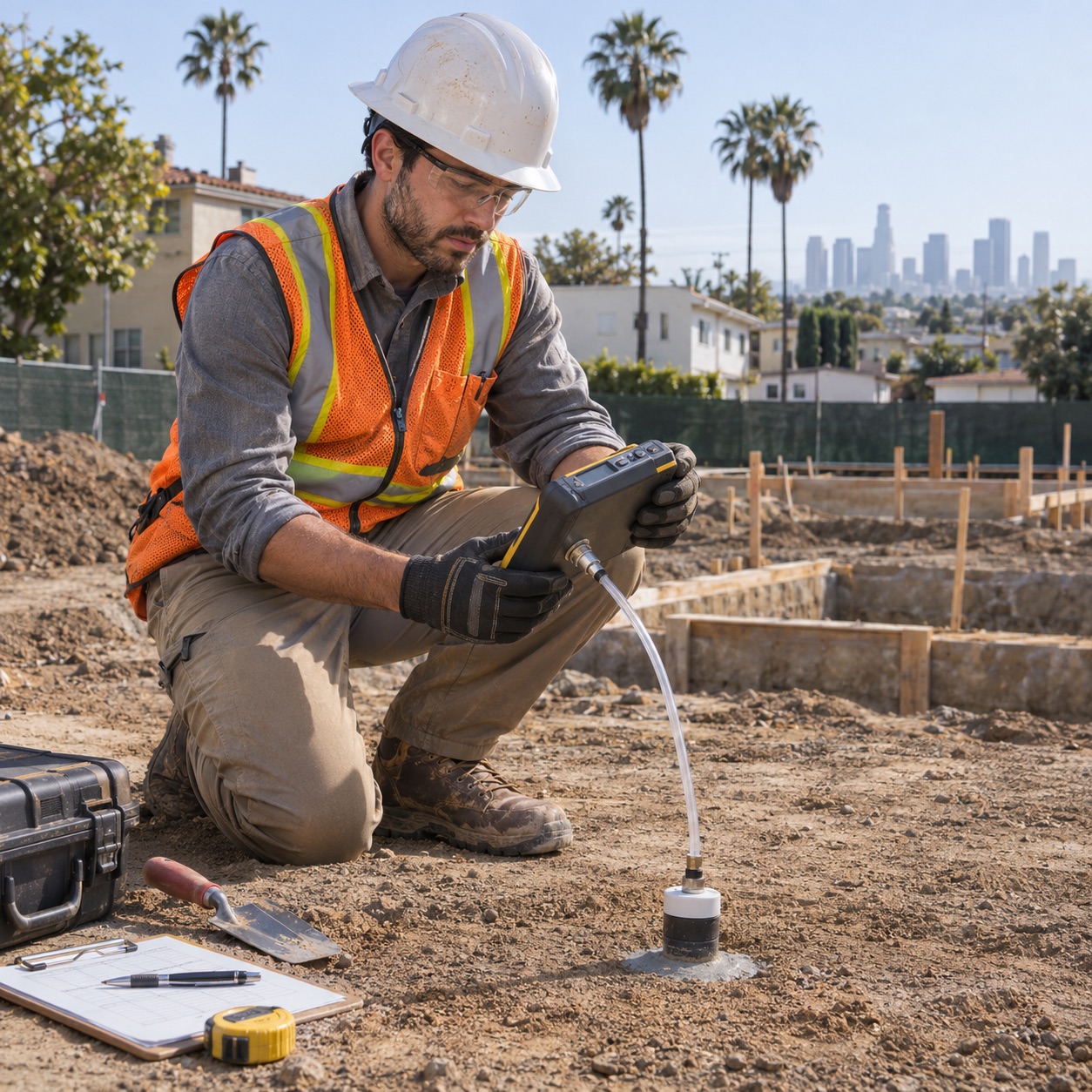
A methane-focused soil gas survey evaluates subsurface gas conditions to provide information for mitigation planning. It measures methane concentration and pressure at the site rather than relying on nearby properties or regional assumptions.
Los Angeles’ published testing protocol includes shallow soil gas testing followed by gas probe testing. The results are documented in a report for the building permit application. Testing should be scheduled before grading; the bulletin specifies additional timing requirements when testing after grading is unavoidable.
For your project, discuss the proposed building footprint, lowest slab or footing elevation, access, and any existing testing with the project team before scheduling fieldwork. These details help establish an appropriate scope and coordinate the survey with the construction plans.
See the official LADBS Site Testing Standards for Methane.
Mitigation Level Determination: Establishing the Site Design Level
Mitigation level determination connects the methane investigation to the building’s mitigation requirements. In the City of Los Angeles, the formal classification is the Site Design Level.
Table 71 identifies the following design methane concentration bands:
|
Site Design Level |
Design methane concentration |
|
Level I |
0–100 ppmv |
|
Level II |
101–1,000 ppmv |
|
Level III |
1,001–5,000 ppmv |
|
Level IV |
5,001–12,500 ppmv |
|
Level V |
Greater than 12,500 ppmv |
ppmv means parts per million by volume.
Concentration alone does not establish the required mitigation system. Design methane pressure also affects the required components, and applicable exceptions must be evaluated. A ZIP code cannot be used to assign a Site Design Level.
The objective is to give your design team a documented basis for the next step: identifying the mitigation measures that apply to your building and permit application.
Official reference: Table 71 — Minimum Methane Mitigation Requirements.
Methane Mitigation Design and Methane Deputy Inspection
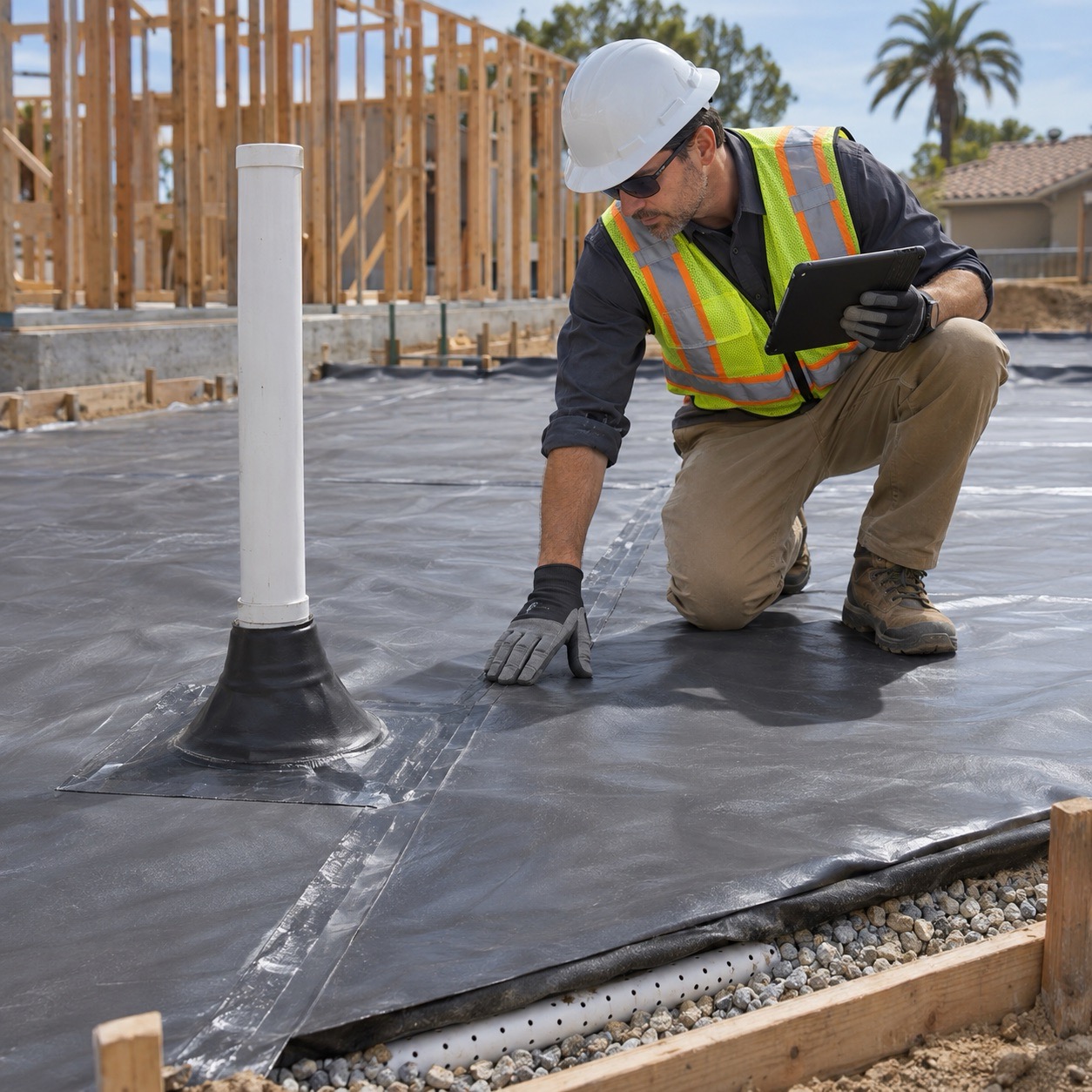
Methane mitigation design translates the site findings and applicable requirements into construction details. Depending on the approved approach, components may include a methane-resistant membrane, sub-slab venting, utility seals, mechanical extraction, or gas detection equipment.
Testing, design, and deputy inspection serve different purposes. A soil gas survey supplies site data. Mitigation design establishes the construction approach. A properly certified deputy inspector checks the installation work within the inspector’s authorized scope.
If your plans call for methane barrier deputy inspection, coordinate the required inspections with the installation schedule. Ask Marshall GeoScience about methane testing, mitigation design, and inspection coordination when requesting your proposal.
Official reference: LADBS deputy inspector licensing.
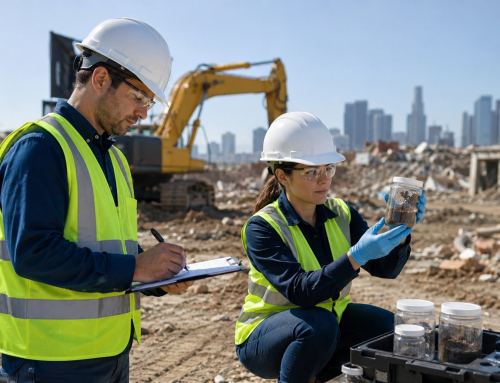
Our methane testing and environmental testing laboratory services in Los Angeles help achieve your construction goals by avoiding risky project decisions that can cause massive construction issues.
Methane Testing in Mid-Wilshire, Fairfax, Hancock Park and Koreatown
Marshall GeoScience supports methane testing inquiries throughout Mid-Wilshire, the Fairfax District, Hancock Park, and Koreatown. Whether you are planning a Hancock Park ADU or a Koreatown multifamily development, include the property address and proposed foundation concept when requesting a review.
For infill construction, discuss site access, existing structures, and the planned building footprint early. That information helps coordinate the soil gas survey with the rest of the project team.
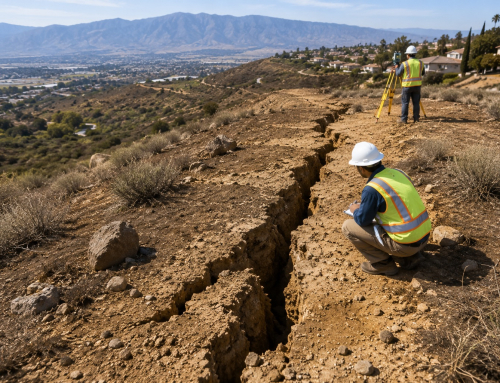
Find out why every property undergoing construction in Los Angeles requires a methane test and methane soil analysis as it can heavily affect your construction, especially when building a permitted foundation for a property in Southern California where underground corrosion can cost you more than just money, it can cost your life!
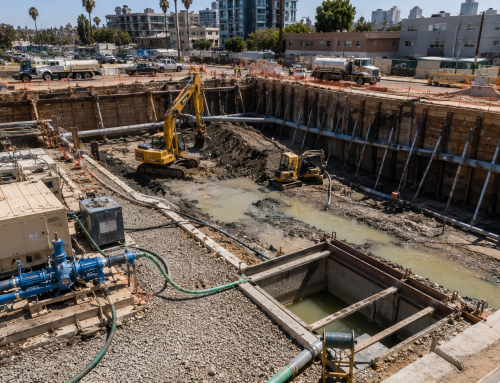
Los Angels Methane Barrier Installation
Soil Gas Survey in Playa Vista, Playa del Rey and Marina del Rey
For projects in Playa Vista, Playa del Rey, and Marina del Rey, begin by confirming both the parcel’s jurisdiction and any existing project approvals. Marina del Rey includes unincorporated County territory, and mailing addresses alone should not be used to select a permitting agency.
The City code also identifies a specific approved methane program for the First Phase Playa Vista project. Share existing methane reports and approved plans so the project team can evaluate the applicable requirements before defining new testing or design work.
References: Los Angeles County unincorporated area information and LAMC Section 91.7104.3.8.
Methane Testing in Wilmington, San Pedro and Long Beach
Our service area includes Wilmington, San Pedro, and Long Beach. When requesting methane testing for a Harbor-area property, provide the site address, project plans, and any building department comments already received.
Wilmington and San Pedro projects must be evaluated within the City of Los Angeles framework. Long Beach administers its own methane mitigation program, including review under its municipal code. The proposal and reporting approach should reflect the agency reviewing your particular project.
Official reference: Long Beach methane gas mitigation program.
Methane Testing in Downtown Los Angeles, Union Station, Westlake and Echo Park
Planning construction in Downtown Los Angeles, the Union Station area, Westlake, or Echo Park? Request methane review while the site and foundation plans are being developed.
For a project with a basement or subterranean parking, share the proposed lowest slab elevation with the testing team. For an addition or redevelopment, provide previous environmental reports and permit comments. Reviewing this information together helps establish the next steps for the soil gas survey and mitigation level determination.
Methane Testing in Beverly Hills, Cheviot Hills, Sawtelle and Century City
Marshall GeoScience accepts methane testing and mitigation design inquiries for Beverly Hills, Cheviot Hills, Sawtelle, and Century City. Start with the exact project address so the permitting jurisdiction can be confirmed.
Beverly Hills is a separate city; City of Los Angeles requirements should not automatically be applied to its projects. For a new residence, ADU, basement, or commercial building, request a scope tied to the reviewing agency and proposed construction.
Methane Testing in Pacoima, Porter Ranch and the Aliso Canyon Vicinity
For Pacoima, Porter Ranch, and properties near Aliso Canyon, methane review should focus on the individual parcel. Proximity to a gas storage facility, oil field, or other regional feature does not establish a property’s measured methane concentration or Site Design Level.
Send your site address, proposed improvements, and any agency correspondence to Marshall GeoScience. We can discuss the requested services and help you identify the information needed to scope the project.
Methane Testing and Soil Gas Survey FAQs
Does every property in these ZIP codes need methane testing?
No. A ZIP code is a service-area reference. The parcel’s mapped designation, proposed work, applicable agency requirements, and any approved exceptions determine the compliance approach.
What is the difference between a soil gas survey and mitigation level determination?
The survey collects subsurface gas data. Mitigation level determination evaluates the results to establish the applicable design classification and inform mitigation planning.
Can methane testing be completed in one day?
Do not plan around a same-day completion promise. The published Los Angeles protocol requires sequential gas probe measurements with a minimum 24-hour interval, subject to specified conditions. Access, grading, and reporting also affect scheduling.
How much does methane testing cost?
Request a proposal for the property. Pricing depends on the testing scope, site area, access, proposed construction, and reporting requirements. Identify whether the proposal includes testing only, mitigation design, or inspection coordination.
Is a methane deputy inspector the same as a testing agency?
No. Deputy inspection is a construction inspection function. Methane site testing has its own agency approval and professional supervision requirements. Confirm the qualifications appropriate to each part of the work.
Request Methane Testing, a Soil Gas Survey or Mitigation Level Determination
Start your methane review with the information your project team already has. Send Marshall GeoScience the project address, assessor’s parcel number if available, proposed plans, existing reports, and building department comments.
Tell us whether you need methane testing, a soil gas survey, mitigation level determination, methane mitigation design, or coordination with required inspections. We will discuss your project and prepare a scope for the requested services.
Call (818) 310-6161, email info@marshallgeo.com, or request your project estimate.
Explore our related environmental engineering services.
Build with knowledge. Build with confidence. Build smart from the ground up.