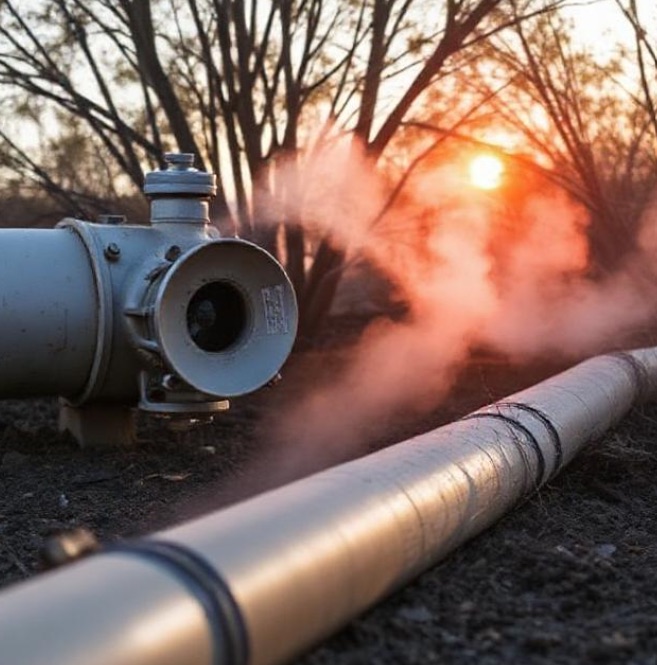
What you didn’t know about Southern California is that Methane gas can hide under the ground in Southern California. It comes from old oil wells, landfills, or soil. Sometimes the gas can cause fires. Long ago, the Wilshire area had a gas accident. This shows why checking gas is very important. Cities like Los Angeles, Long Beach, and Los Angeles County now make builders test for gas before starting work.
Groups like LADBS and Caltrans make sure the rules are followed. Testing helps keep homes and buildings safe. Builders can plan vents and strong floors. These tests follow rules from FHWA and AASHTO.
What is Methane Testing?
Methane is a gas that can usually be located below ground. It is typically found at abandoned petroleum derelict sites, waste landfills, and beneath a wide range of discarded materials. Sometimes it gathers in soil near homes, roads, or buildings. If the gas is not checked, it can catch fire or cause small explosions. It can also enter buildings and make the air unsafe.
Methane testing looks at how much gas is in the soil and how fast it moves. Workers use simple tools to measure gas levels. This helps them decide if vents or barriers are needed. Cities like Los Angeles, Long Beach, and Los Angeles County require testing before any construction. Agencies such as LADBS and Caltrans use the results to plan safe buildings and roads. Following rules from FHWA and AASHTO makes sure projects are safe for people and property.
Methane Zones and Regulatory Jurisdictions
A Methane Zone is an area where methane gas may be found under the ground. A Methane Buffer Zone is a nearby area that could be affected by gas movement. These zones help builders and city officials know where testing is needed.
Maps from resources like Geo Forward Methane Zone Mapping show areas at risk. These maps guide developers to check soil and gas levels before construction.
Zoning rules also play a key role. Cities like Los Angeles and Long Beach require methane testing based on the zone. LADBS and Caltrans use zones for the development of ventilation systems and foundations in ways that will provide structure stability and security. AASHTO and FHWA have established guidelines to be followed by the county and its building permit holders, to prevent methane contamination in public areas and ensure compliance with federal and state regulations.
The right methane inspections prevent project disasters and the risky parts of the project, which can save both lives and money.
Methane Testing in the City of Los Angeles (LADBS)
The LADBS performs testing of the soil vapors for all Methane Zone developments in Los Angeles. Properties in a Buffer Zone may need testing. It depends on how close the property is to danger and how it will be used.
LADBS follows the Methane Mitigation Standards and Ordinance 175790. These rules tell how tests should be done and how to stay safe from gas. Only LADBS-approved testing companies, like Geo Forward, can do tests.
Tests use a 5-level hazard scale. Engineers use it to see if vents, barriers, or other safety steps are needed. LADBS gives help through the Geo Forward LADBS Overview.
Doing tests keeps homes, schools, and buildings safe. It also makes sure building follows rules from LADBS, Caltrans, FHWA, and AASHTO.
Read more to find out why every construction project should always start with a methane test to confirm the zone and regulatory jurisdiction procedure.
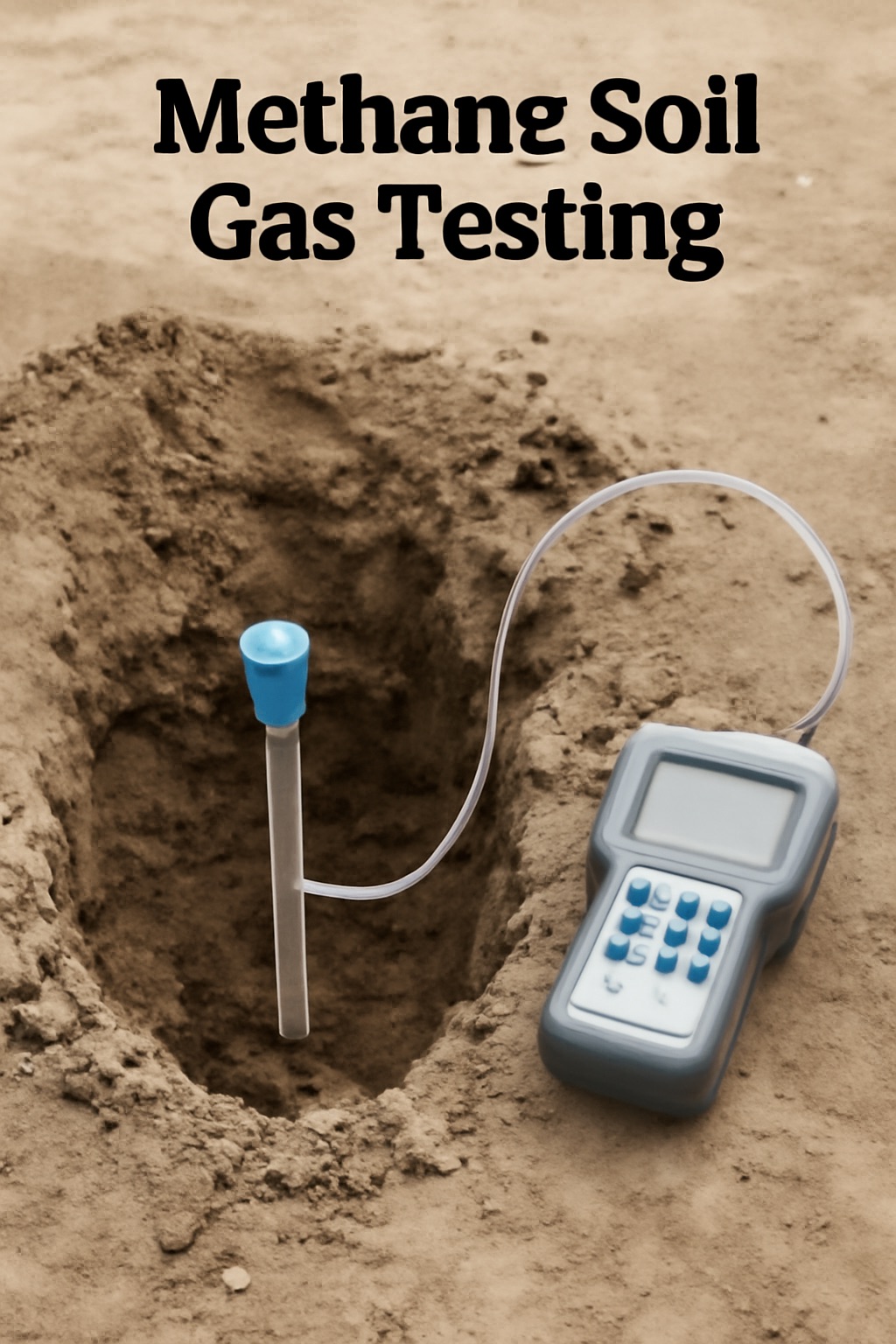
Methane Soil Gas Testing for Safety and Environmental Monitoring in Construction Projects
Methane Testing in Long Beach and Signal Hill
The city of Long Beach has rules for methane testing. These rules are like LADBS standards but enforced by the city itself. Properties in areas with gas must have soil gas tests before building.
Signal Hill has many old oil wells. Gas can come up from these wells. This makes many parts of the city high-risk for methane. Builders in these areas must be careful.
City permits may mention LADBS rules but need a local application. Testing is done in the same way as Los Angeles. Workers use soil probes, watch gas for 24–48 hours, and send samples to a lab.
Geo Forward gives guidance for Long Beach and Signal Hill. They help developers follow safety rules. The tests ensure the safety of homes, Tschudiresses, and businesses to remain idle, and that the results meet testing requirements established by agencies, including Caltrans, FHWA, and AASHTO.
Methane Testing in Unincorporated Los Angeles County
The Building and Safety Division of Los Angeles County administers all activities related to the testing of Methane in Los Angeles (LA) County. Testing may be required for all areas located 1,000 feet from a landfill or 300 feet from a well (oil, gas).
These sites may not use the LADBS hazard levels, but methane soil gas testing is still required. Workers measure gas in the soil and check how fast it moves. The risk is based on gas levels and how close the site is to a hazard.
If tests show high gas levels, mitigation may be needed. This can include vents, barriers, or other steps to keep gas from reaching buildings. Testing helps protect homes, businesses, and schools.
Documents are provided for the County of Los Angeles to ensure compliance with Local Laws & Regulations regarding Methane Testing. Documents are also used to ensure County Testing complies with State & Federal Regulations as follows: Caltrans, FHWA, AASHTO.
Typical Testing Process
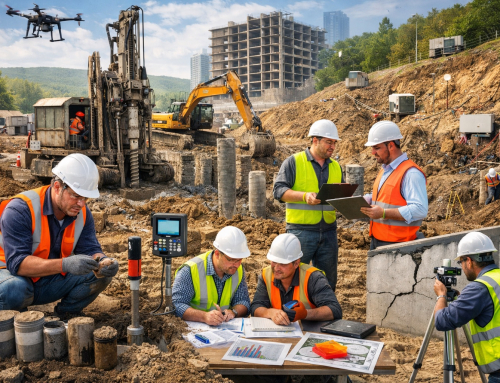
Phase 1: Site Visit and Review The testing team first visits the site. They check the land and note hazards. Maps and zoning are reviewed to see if the property is in a Methane Zone or Buffer Zone. Agencies like LADBS or LA County Public Works provide zoning information.
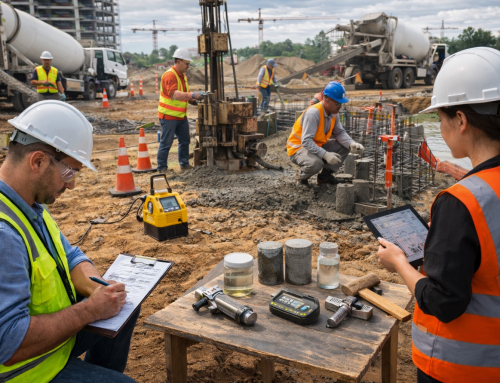
Phase 2: Drilling Methane Probes Workers perform the methane testing by drilling small holes in the ground. These holes are typically five to ten feet deep. Probes measure gas levels under the soil. Proper drilling follows guidance from Caltrans standards.
Monitoring Gas is checked for 24–48 hours to see how fast it moves and how much is present. Repeated readings give accurate results.
Lab Analysis Samples are sent to a lab. Gas chromatography is used to measure methane percentage by volume. Testing follows safety rules from FHWA and AASHTO.
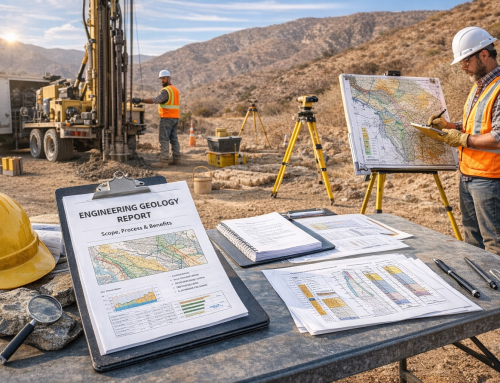
Report and Permit Submission A report is prepared with all findings. Risks are explained clearly. The report is submitted with the building permit application to ensure compliance with local codes and safety rules.
Mitigation Requirements Based on Results
LADBS uses Levels I–V to classify methane hazards. Each level has rules for how much mitigation is needed.
Common ways to reduce methane risks include barriers that block gas, venting systems that release gas safely, and methane alarms that warn if gas is present. Venting can be passive or active, depending on the hazard level.
All plans must be approved by LADBS. Work is checked by deputy methane inspectors to make sure it follows rules.
Mitigation adds costs to construction. All builders must create budgets for their ongoing operations regarding barriers, vents and monitoring devices. Conducting an actual proper test early in the project will reduce the potential of incurring any additional costs that could delay the project. Mitigation Standards are developed for the purpose of safeguarding domiciles, schools and companies.
Comparing City of LA vs Long Beach vs LA County
In Los Angeles, properties in a Methane Zone or Buffer Zone must have tests. Mitigation follows the 5-level hazard system used by LADBS.
In Long Beach, testing is required for areas with historic oilfields. The city uses LADBS-style rules, but approvals are handled locally.
In Los Angeles County, testing is needed for sites near landfills or oil and gas wells. Mitigation depends on how close the site is and the test results.
Each testing plan will be unique to that area based on the distance between the landfill and/or oil and or gas well, and based on the results of the testing. Following the testing standards, the developer can, along with design professionals and/or the builder of a new home, design a safe and hassle-free development.
Best Methane Practices for Developers and Builders Doing Construction in LA
Check methane zone maps before buying land. This helps know if gas may be under the soil.
Hire a testing expert early. Use LADBS-approved testers when you can. Early testing saves time and prevents problems later.
Plan for gas safety in your budget and schedule. If appropriate, include barriers, vents, and alarms. Although not required for testing by the city, you may want to consider performing the testing regardless. Early testing will prevent delays and unnecessary cost due to construction mistakes.
Work with professionals like Geo Forward. They help check gas, plan safety steps, and follow local rules. Doing these steps keeps homes, schools, and buildings safe. It also makes sure your project meets rules from the city, county, and state.
Conclusion
Methane testing is not just a rule. Gas underground will threaten the safety of people, buildings and business.
Los Angeles, Long Beach, and the County of Los Angeles have distinctive rules. Each place has its own way to require tests and handle gas hazards. Builders must know the rules before starting a project.
Early testing and planning with LADBS-approved experts or consultants like Marshall Geoscience is very important. It helps prevent delays and extra costs.
Projects are protected and kept on schedule by following the best practices for project implementation. In addition, projects provide protection to the community while guaranteeing compliance with all local, county, and state construction codes.
FAQs
Do I need methane testing for every project in LA?
No. You need testing if your site is in a Methane Zone or Buffer Zone. You can check this on the LADBS maps.
Can I skip testing if there’s no known contamination?
No. Even if you do not see signs of gas, the city may still require testing based on your zone. Hidden gas is still a risk.
How long is a methane test valid?
Most reports stay valid for 12 months. Some cities may ask for updates if the site changes or if the permit takes too long.
Who can perform certified testing?
Only approved experts can test methane in Los Angeles. Use LADBS-certified testers or trusted groups like Marshall Geoscience.
Build with knowledge. Build with confidence. Build smart from the ground up.