Introduction to Wildfires in LA
Wildfires are nothing unusual in Los Angeles. These are a part of life in Southern California. But as things stand today, fires are bigger and more intense. Long droughts. High heat. Strong Santa Ana winds. All this goes to increase the risk.
When a wildfire is over, it does not mean that danger stops. When land burns, it becomes unstable. Buildings may appear to be safe, but they are weak. Ash spreads in the air. Pollution of water systems is possible. Roads and utilities may be destroyed.
Wildfire recovery in Los Angeles is not only about getting people back into their homes. It is a question of returning the land to safety again. It is more about protecting people and preventing disasters in the future.
Recovery is technical. It demands engineers, environmental experts, and inspectors. This process is guided by many local agencies.
These include numerous agencies of the State of California. For example, the Los Angeles Department of Building and Safety (LADBS). Moreover, the Los Angeles County Department of Public Works, the California Geological Survey (CGS), and Caltrans are also responsible departments.
How wildfire impacts in Los Angeles?
Wildfires damage the land first.
- Vegetation burns away. Roots disappear. Soil becomes loose. On deteriorated, steep hillsides, this is dangerous.
- The California Geological Survey (CGS) explains the slopes. Those slopes have been burned because they can fail in the rain. Even small atmospheric storms can cause mudslides.
- Another problem is water-worthiness of the soil. Burned soil may repel water. Due to the slope of the hills, rainwater does not soak in. This creates more erosion problems. For example, in the canyons of Los Angeles and hillside communities.
Buildings and homes are usually damaged next…
Heat weakens concrete. Steel can bend. Wood framing may be aesthetically acceptable, but unsafe on the inside. That is why LADBS wants to do structural inspections before people come back.
Infrastructure is also affected.
- Roads crack. Retaining walls shift. Drainage Systems become clogged with debris.
- Caltrans surveys highways post-large fires. Local city engineers have inspections on streets and bridges.
Infrastructure is also affected.
Air quality after a wildfire is another concern. Ash contains fine particles. Sometimes it includes toxic contents from burned homes. The South Coast Air Quality Management District has monitors for the air levels.
Post-Wildfire Water Systems Analysis
A test must be carried out to analyze the water system. The Los Angeles County Department of Public Works responsible for stormwater monitoring. It also observes flood channels to determine if they are contaminated.
Wildfire levels of hazards in California are serious. Geology, engineering, and environmental science combine with one another.
The post-wildfire soil testing and analysis for fire rebuild construction helps prevent project delays and closures. The Los Angeles Department of Building and Safety says visual checks help catch early problems and avoid future wildfire destruction.
Emergency Response and Initial Assessment
- The first step in recovery is evaluation.
First, fire crews put out the fire securely. They sound off on the fact that no applications of fire are now at work.
- Next, damage surveys begin.
Burn severity mapping is rarely conducted using drones and satellite images. Cal Fire and the State of California emergency agencies facilitate this work.
Engineers provide inspections of buildings. LADBS for foundations, walls, roofs, and support systems are checked. The unsafe buildings are marked properly.
Transportation systems are also checked. Caltrans checks highways. LA Metro inspects rail lines and stations in areas affected by fires.
Air quality is monitored on a daily basis. If the levels of pollution are high, public health warnings are given.
Water systems are tested. Contamination is also checked in pipes, reservoirs, and channels. This phase moves quickly, but it is detailed because safety comes first.
Read more to find out soil test after a wildfire can help properly develop property and construction stability, along with avoiding health concerns and risks to your families health.

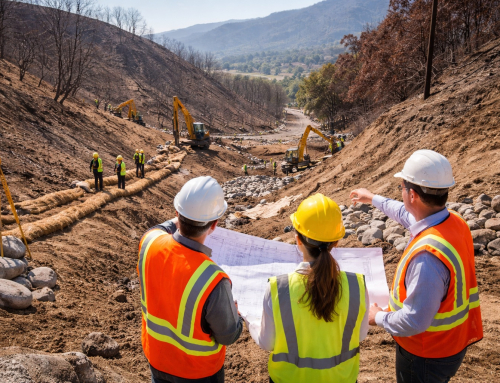
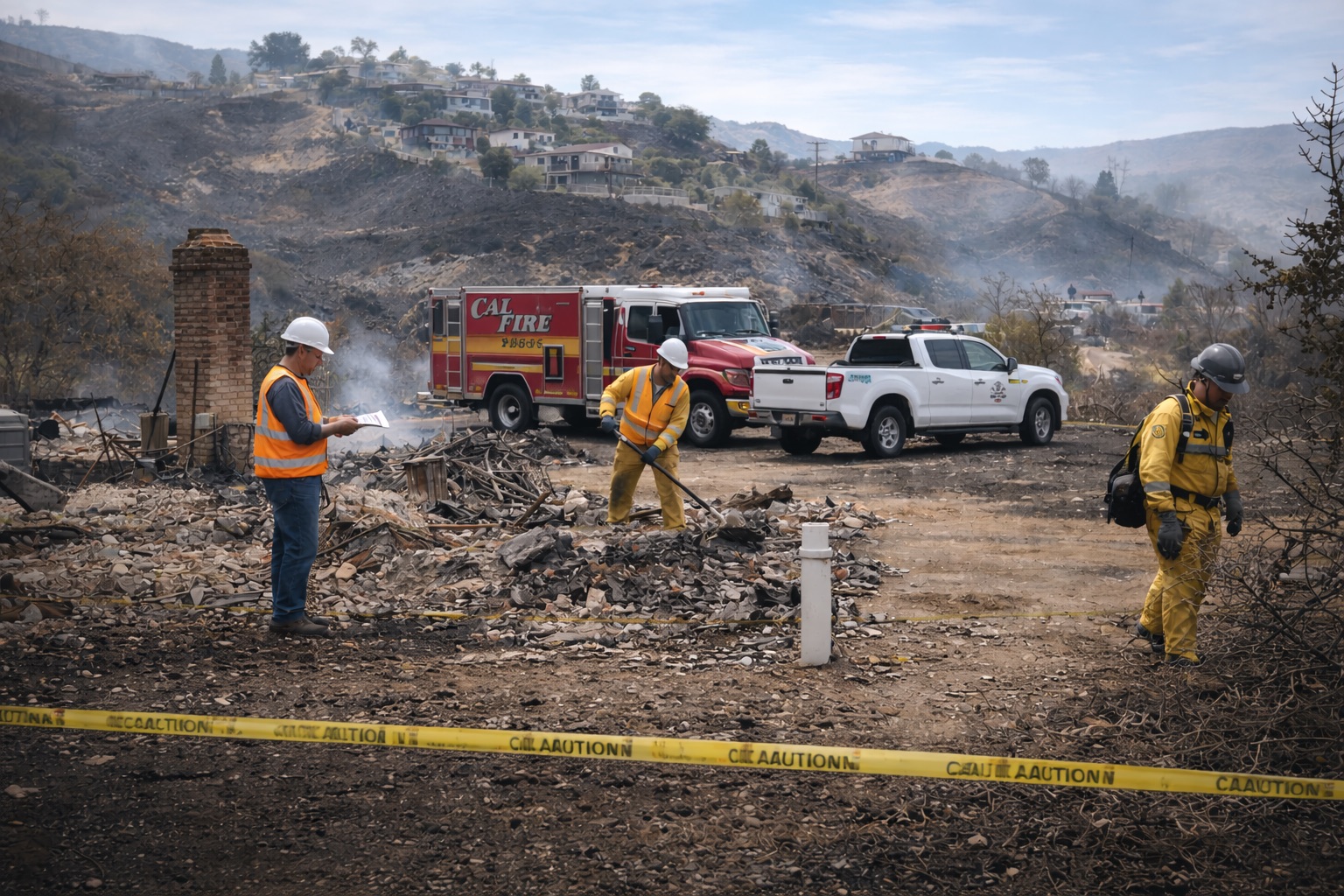
Wildfire recovery operations in Los Angeles hillside community showing structural safety inspection, debris assessment, and post-fire site stabilization after a major Southern California wildfire.
Safety Planning Before Re-Entry
Residents are not immediately able to return. Safety planning is a first step that needs to be completed.
Exclusion zones are created. These areas are blocked because of hazards. Fencing and warning signs are put in place.
Geotechnical engineers are responsible for checking slopes. They look for cracks and loose soil. Los Angeles burned hillsides are significantly dangerous post-rain.
Utilities are inspected, such as gas lines, to ensure they are made safe from leaks. Electrical systems are investigated. Damaged wires are repaired.
Air quality is again tested prior to cleanup crews starting the job following a wildfire.
Workers are supposed to use protective equipment. Masks. Gloves. Eye protection. Protective clothing.
LADBS requires permits before the rebuilding process begins. All repairs must be done in accordance with updated building codes.
Site safety after a wildfire protects both workers and residents.
Soil Stabilization & Erosion Control after Wildfire
Erosion is one of the biggest threats after wildfire in Los Angeles. There is no vegetation along burned slopes. Soil moves easily. When we do get rain, we have fast-flowing water.
The California Geological Survey warns that unanimous of debris flows are available after fires. This is particularly true in the California mountains, particularly in Southern California.
Soil stabilization wildfire measures are applied quickly. The mulch is to be spread for the slopes. This slows water runoff.
Hydroseeding is used in re-establishing plants. A solution of water and seeds is squirted on the burnt ground.
Silt fences are installed close to the storm drain. These traps prevent the soil from getting into the drainage system.
Contour logs and wattles are built on the sides of the slopes. They provide a slowing down of water and control erosion.
The Los Angeles County Department of Public Works monitors flood control channels. It also controls debris basins’ conditions. These systems must remain unblocked to prevent any flood.
Caltrans also models shoring up slopes near highways so as to keep drivers safe. Erosion control wildfire area work is in a hurry. This needs to be done before the heavy rain.
Debris and Ash Management
Burned areas have dangerous debris. It needs to be cleaned properly to remove toxic substances.
Ash may contain heavy metals. The burned homes emit chemicals. Hazardous waste should be handled carefully.
The California Department of Toxic Substances Control recommends procedures in dangerous material removal.
The stages of debris removal occur as follows.
- First, poisonous materials are sapped out. Then, debris is removed structure-wise.
- Controlling dust is done by water sprays. Trucks with debris are covered.
- Storm drains are lightened in order to avoid contamination. The Los Angeles Regional Water Quality Control Board regulates water protection measures.
Ash and debris management is not a simple cleanup. It is a question of protecting the environment.
How to Monitor and Rebuild after a wildfire?
After removing debris, recovery continues for a long time.
Engineers monitor the slopes for movement. The California Geological Survey (CGS)has hazard maps that are updated.
LADBS helps enforce fire-resistant building standards. Homes must contain safer materials. Roofing must resist flames. Windows must comply with fire-rating requirements.
Creation of defensible space is needed. Vegetation should be removed around buildings. This reduces fire spread.
Caltrans and LA Metro incorporate fire resiliency in the long-term design of infrastructure.
Los Angeles County also has public education programs. Aquatic Communities: Vegetation management and emergency preparedness are learned through this educational program.
Wildfire recovery in Los Angeles is now shifting toward resilience. Its objective is not purely a matter of rebuilding. The goal is safer rebuilding.
Conclusion
Wildfire recovery in Los Angeles is technical. It is organized. It involves many agencies. The California Geological Survey (CGS) does studies on slope stability.
LADBS inspects buildings. Los Angeles is responsible for flood control. Caltrans protects highways. Environmental oversight is supported by agencies of the State of California.
Post-wildfire site safety refers to inspections, erosion control, air monitoring, and debris management. Soil stabilization wildfire measures protect hillsides.
Ash Cleanup helps protect water and air. Southern California will be at risk of wildfire. However, good planning and engineering can help minimize future damage.
Wildfire recovery in Los Angeles is a matter of safety. It concerns science, where rebuild denotes building stronger than before.
F.A.Q.s
- What is the must-steps for wildfire recovery in Los Angeles?
The first step will be a safety assessment. Fire crews secure the area. Engineers provide inspections of buildings. Slopes are observed to determine their stability. Air and water quality are tested.
- Can we return home after a wildfire?
Returning home depends on the inspection results. Buildings must be cleared by safety officials. Utilities must be tested. The air quality must be acceptable. Residents should wait for official approval from city authorities for reentry.
- Why are burned hillsides in Los Angeles dangerous after rain?
Wildfires destroy vegetation and root systems. Soil gets loose and repels water. Rainwater running downhill speedily leads to erosion, mudslides, or debris flows. These risks are monitored by the California Geological Survey monitor this risk.
- How is air quality monitored after a wildfire?
Yearly Air is tested for fine particles and pollutants. The South Coast Air Quality Management District periodically dispenses updates for Los Angeles County. If the levels of pollution are high, public health warnings are given.
- What is soil stabilization after wildfire?
Reducing the erosion threat is part of soil stabilization. Some of the methods are several mulching, hydroseeding, silt fences, and sloped reinforcement. These measures help to protect homes, roads, and the drainage system from post-fire flooding.
Build with knowledge. Build with confidence. Build smart from the ground up.