Deputy Inspector vs. Special Soil Inspector: Key Differences
The building department has just sent you your approved plan. The permit condition is: Special inspection required. You’re now thinking about the possibility of a deputy inspector or a special inspector of soils.
The confusion is understandable. The terms deputy inspector and special soil inspector overlap significantly. At a project location, you can overhear the use of one term and the other term or both terms, and you may think they are the same. However, there are “real” differences regarding scope, certification, and the agencies in charge.
If you’re not aware of the difference, your project will suffer. It may be non-compliant, not on schedule, and not structurally stable. We’ll cover what it is and what skills you’ll need to have in this guide and also instruct you on how to find the right professional the first time.
What Is a Deputy Inspector?
A deputy inspector is one who is a certified inspector and works on behalf of the local building official. They verify the alignment of building components with the plans and the building code.
The city or county inspector only makes periodic visits. A deputy inspector is different. They provide continuous or periodic on-site inspection during critical construction activities.
Where the Term Comes From
The word “deputy inspector” is most commonly used in Southern California. It is primarily from the Los Angeles Department of Building and Safety (LADBS) and the jurisdictions. In many parts of the country and within IBC, it is referred to as a special inspector.
Two terms describe the same role, which is a functional term. They are both qualified and independent professionals called in to monitor and record compliance with code during construction.
The right deputy inspector prevents project delays and avoid risky project budget issues. Properly framed inspections safeguard schedules, jobs and your project budgets.
Common Types of Deputy Inspection
Deputy inspection covers a wide range of construction disciplines, including:
- Inspection of reinforced concrete: confirmation of both rebar positioning and mix design as well as pour conditions
- Inspection of grout, mortar and reinforcement structural masonry.
- Structural steel and welding: connections, welds, and high-strength bolting
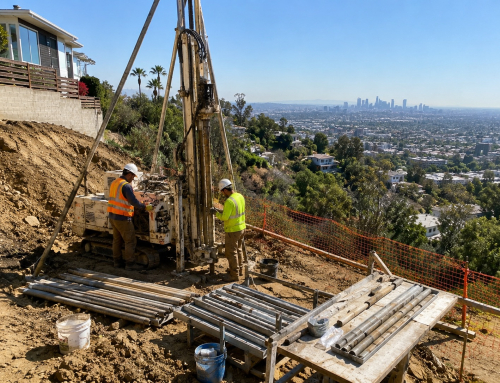
- Shoring and earth retention: monitoring tiebacks and soldier piles and excavation support.
- Soils: observing the placement of earthwork, fill, and compaction of soils in a construction project; grading.
In the last category, the deputy inspector role overlaps with the special soil inspector role, and here the confusion begins.
Read more to find out why every natural disaster like fires and floods require a comprehensive structural and foundational analysis before any rebuild can occur.
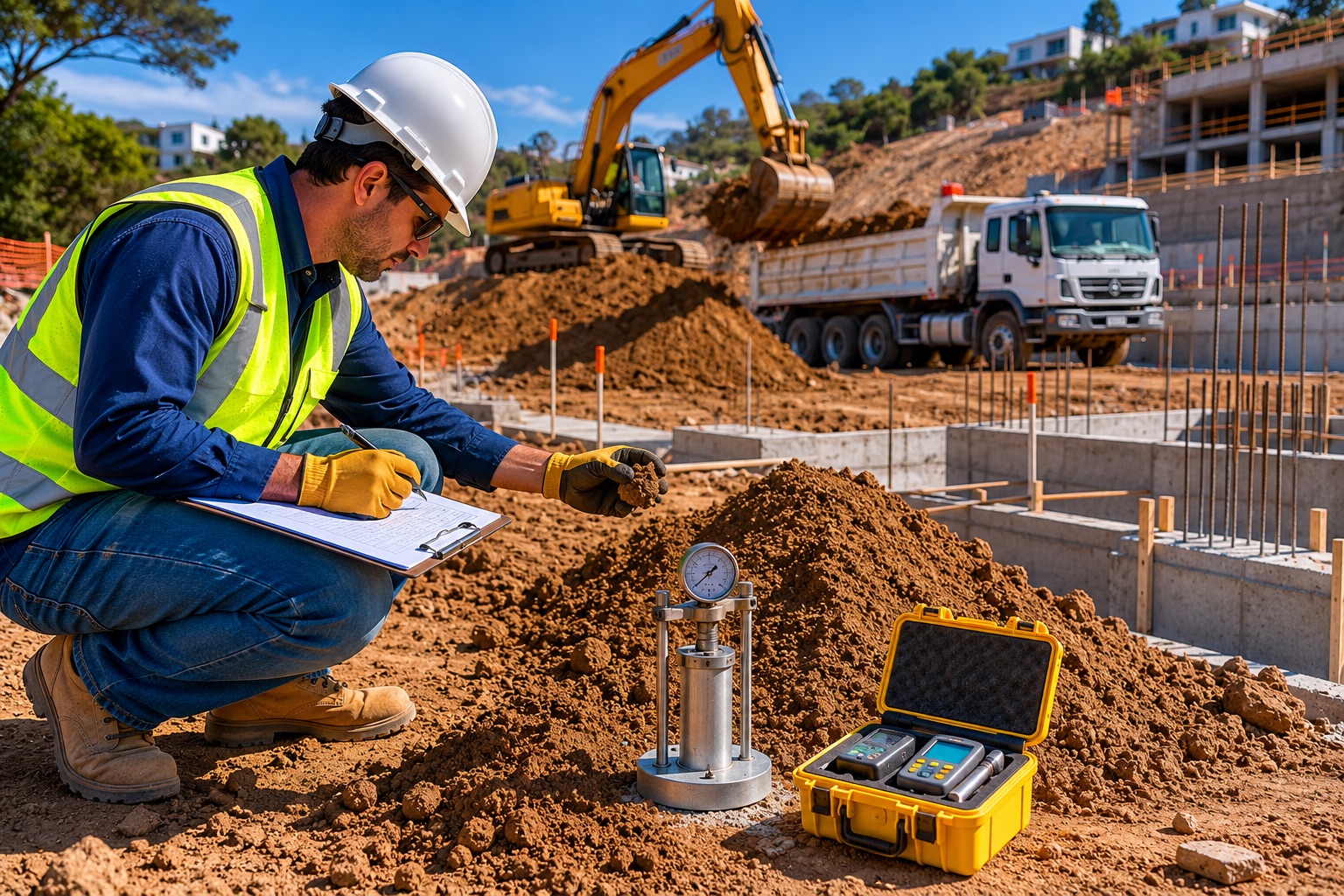
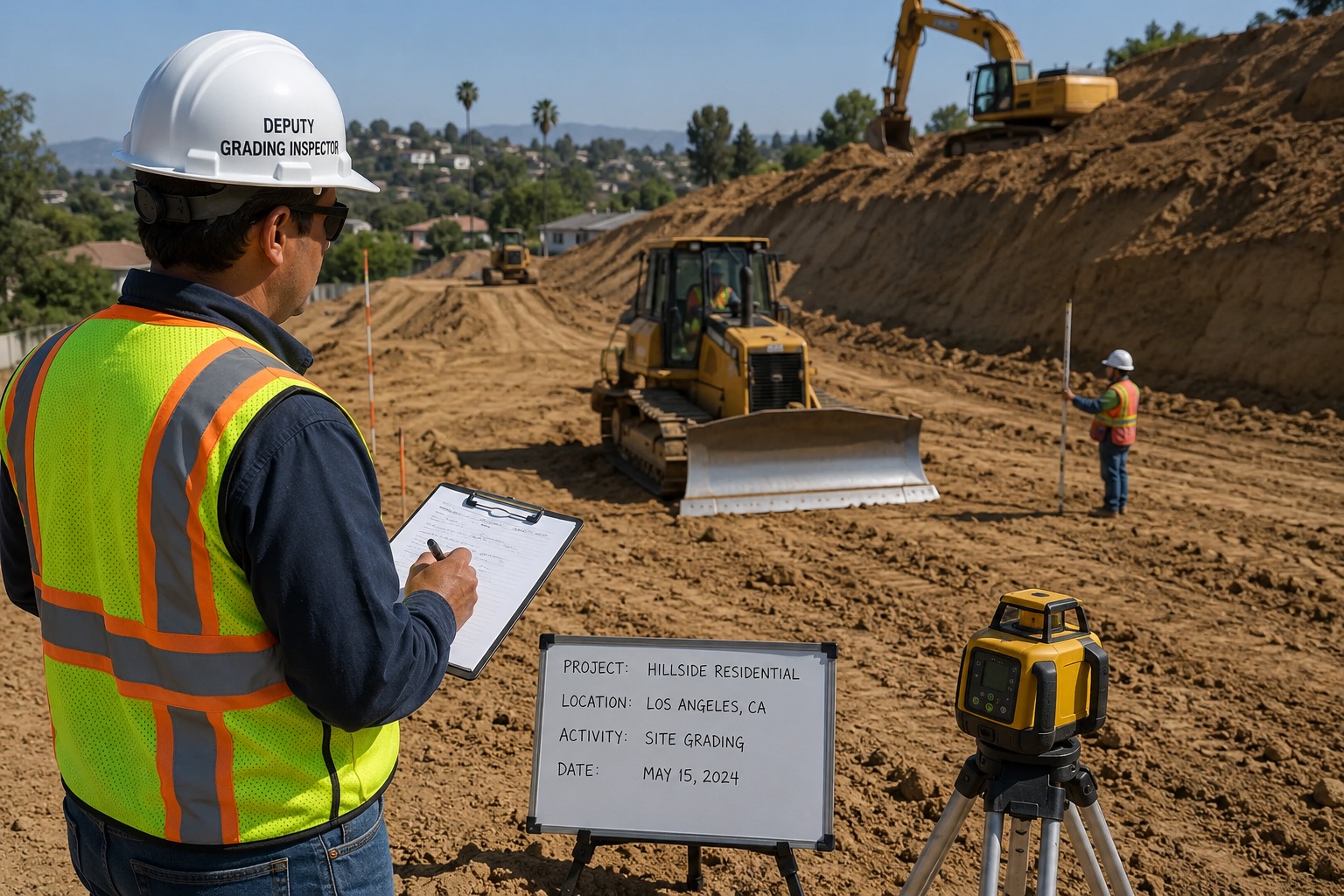
Special soil inspector conducting compaction testing and geotechnical observation during foundation construction, ensuring soil compliance with the geotechnical report and special inspection requirements.
What Is a Special Soil Inspector?
A special soil inspector focuses specifically on earthwork and soil-related construction. Their job is to verify that grading, excavation, fill placement, and foundation preparation. They follow the project’s geotechnical report and the approved plans for approving the work.
Typical Tasks of a Special Soil Inspector
On a typical project, a special soil inspector may perform:
- Site grading observation — confirming that cuts, fills, and slopes match the grading plan
- Backfill compaction testing — using nuclear gauge or sand cone methods to check soil density
- Soil Compaction Test – after filling, using the nuclear gauge or sand cone method to ensure perfect soil density.
- Subgrade Preparation – checking soil under slabs, footings, and pavement to ensure it meets criteria
- Foundation Excavation Observation — verify firm foundation for the footings as suggested professional engineers.
- Utility trench backfill testing – compaction of installs over utilities.
Relationship to the Geotechnical Engineer of Record
The special Soil Inspector observes and tests but is not making engineering judgements. They carry out work under the supervision of the licensed geotechnical engineer.
If the inspector finds conditions as described above, previously unanticipated conditions, the geotechnical engineer will evaluate. Then they will make recommendations according to the conditions. This chain of responsibility involves a geotechnical firm that will supply a soil inspection rather than people.
Deputy Inspector vs. Special Soil Inspector: Side-by-Side Comparison
|
Factor |
Deputy Inspector |
Special Soil Inspector |
|
Scope |
Broad: concrete, masonry, steel, welding, shoring, grading |
Focused: soils, earthwork, grading, compaction |
|
Certification |
ICC certification + local deputy registration (e.g., City of LA) |
ICC Soils Special Inspector; often also holds deputy grading credentials |
|
Reports To |
Building official and project team |
Geotechnical engineer of record and building official |
|
When required |
Any code-triggered special inspection category |
Engineered fill, grading, foundations, and earthwork phases |
|
Project Phase |
Throughout construction, depending on discipline |
Primarily grading and foundation phases |
|
Regional Terminology |
“Deputy inspector” (Southern California) |
“Soils special inspector” or “soil technician” elsewhere |
You may simply refer to this as the “deputy inspector” rather than technical specialty as a “special soil inspector”. In most cases, a special soil inspector, appointed in Los Angeles, serves as a deputy grade inspector.
When Does Your Project Require A Deputy Inspector?
Code Triggers Under IBC Chapter 17
Chapter 17 of the International Building Code establishes when special inspection is mandatory. Soil-related triggers include:
- Placement of engineered fill deeper than 12 inches
- Deep foundations, including drilled piers, driven piles, and micro-piles
- Retaining walls and earth retention systems over certain heights
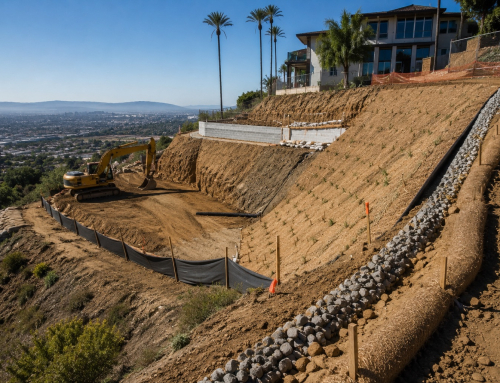
- Hillside grading and slope construction — especially in landslide and seismic hazard zones mapped by the California Geological Survey (CGS)
- Verification that site soils match the conditions assumed in the geotechnical report
Structural triggers require deputy inspection in the matching discipline. For example, concrete over a certain strength, structural welding, post-tensioning, and masonry
Check Your Permit Conditions
Your approved plans will include a list of required special inspections. This list usually appears on a dedicated sheet or in the permit conditions. It tells you exactly which inspection categories apply to your project. If soils or grading appear on that list, you need a qualified soil inspector on site during the relevant work.
Can One Person Fill Both Roles?
Yes, one person can perform both roles. Many soil inspectors hold deputy grading inspector registration along with additional ICC certifications in concrete or masonry. Hiring a multi-certified inspector, or a firm, can reduce the number of people for site coordination. It can also streamline your inspection schedule.
Certifications and Qualifications to Look For
Before hiring anyone, verify credentials that fit your jurisdiction and scope:
- ICC Soils Special Inspector certification — the industry-standard credential for soil inspection, issued by the International Code Council (ICC).
- Local deputy inspector registration — it is required in jurisdictions like the City of Los Angeles. For example, LADBS requires licensed inspectors.
- Nuclear gauge certification — inspectors performing density testing with a nuclear gauge must hold radiation safety training. They must also operate under a program licensed by the California Department of Public Health, Radiologic Health Branch.
- Affiliation with a licensed geotechnical firm —they ensure review of test results and observations. Later, a professional engineer will sign off on the results.
You can verify them through the ICC’s certified professional’s directory or your local building department. The departments can reject the report by an unqualified inspector. Such reports can force costly re-inspection or even removal and replacement of completed work.
How to Hire the Right Inspector for Your Project
Follow these three steps to get the right coverage without overpaying:
- Review your approved plans and soils report first:
The special inspection list on your plans defines exactly what you need. Your geotechnical report may also provide observations and tests for grading and/or foundation.
- Match certifications to your jurisdiction:
An ICC-certified soils inspector may qualify in one county but need additional registration in LA. So, confirm local requirements before scheduling.
If your project falls within or next to public infrastructure, additional inspection and coordination requirements may apply. Work near transit corridors may require coordination with LA Metro and compliance with its adjacent construction guidelines.
Projects in unincorporated areas fall under Los Angeles County Public Works. Work within state highway right-of-way involves Caltrans encroachment permits and inspection standards. Confirm these requirements early — they can affect both your inspection scope and your schedule.
- Consider a full-service geotechnical firm:
Hiring a company offers real advantages with both deputy inspection services and geotechnical engineering under one roof.
The communication between the field inspector and the engineer of record will be seamless. The uninterrupted coordination results in faster resolution of different soil problems and provides concise reporting. Moreover, there will be a single contact point for scheduling across all project phases.
F.A.Q.s
What is the difference between a deputy inspector and special inspector?
Specifically, there is no difference, and the role and responsibilities are the same. Deputy inspector is the term used in Los Angeles and Southern California. However, the IBC and most other jurisdictions use special inspector.
Who owes the payment to the deputy inspector?
Under the IBC, the project owner is responsible for employing special inspectors. This independence requirement exists to prevent conflicts of interest. The project budget is inclusive of this cost, and the general contractor coordinates it.
What is an estimated cost for soil inspection services?
Costs vary according to region and scope of work. Typically, we pay soil inspection hourly; half-day or full-day minimums are common. Compaction testing may carry per-test fees. For most projects, inspection costs are a small fraction of total construction cost — far less than the cost of failed work discovered later.
Can my contractor act as the deputy inspector?
No. Special inspectors must be independent of the contractor performing the work being inspected. This is a code requirement designed to ensure unbiased verification.
What will be the consequences of ignoring special inspections?
The building department can refuse a certificate of occupancy. It can also require destructive testing, order the removal of completed work, or issue stop-work orders. Uninspected work is unverified work, and the burden of proving compliance falls on you.
Build with knowledge. Build with confidence. Build smart from the ground up.