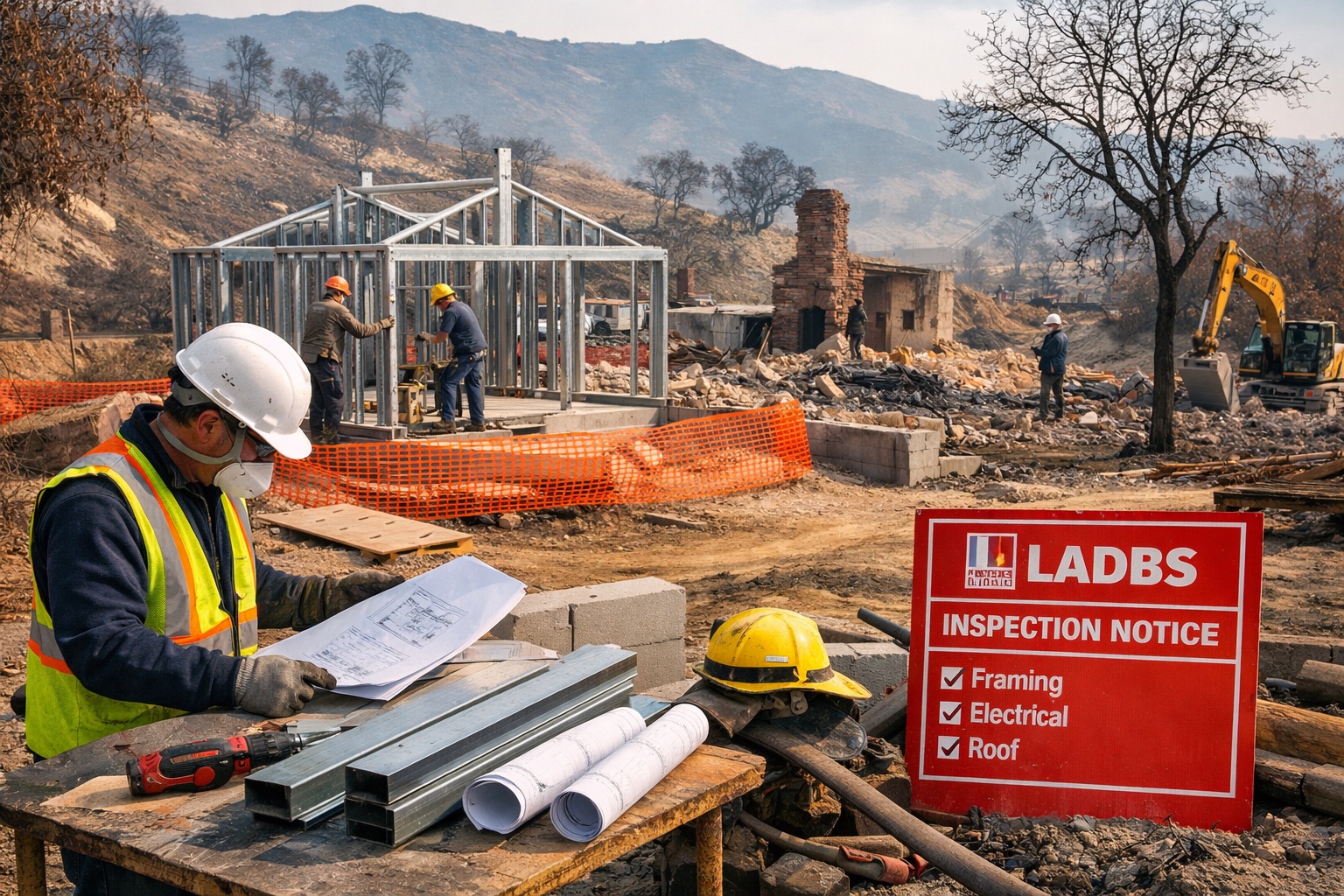
One of the most challenging tasks that a family may encounter is to be restored after suffering a fire. Fires in Southern California spread rapidly. Homes can be gone in hours. It is left to clean-up its ash, devastation, and hard decisions.
Fire zone reconstruction is not just like any rebuild. Burned land is weaker. Soil can shift. Structures that appear to be stable can collapse in the future. Rules are strict for a reason. All of the actions are checked by the agencies such as LADBS and Los Angeles County.
A large number of families are seeking to quickly rebuild. That feeling is normal. But hurrying results in error. Cracks, unsuccessful inspection, and increased subsequent expenditure are the result of missed damage.
This is a guide on how to restructure the fire properly. It provides the action plan, the avoidance plan, and the safe way back plan. The goal is simple. Create a house to go and save your family.
Knowing What to do After a Fire
The damage caused by fires can reach much deeper than this.
Structural Damage
Heat weakens materials. Steel bends. Wood is burnt indoors before it is burnt outdoors. Beams of roofs might appear okay, however, but become weaker. Quick heat and cold water could cause cracks to foundations. Such issues remain concealed. This is the reason why professional inspections are important.
Soil and Site Damage
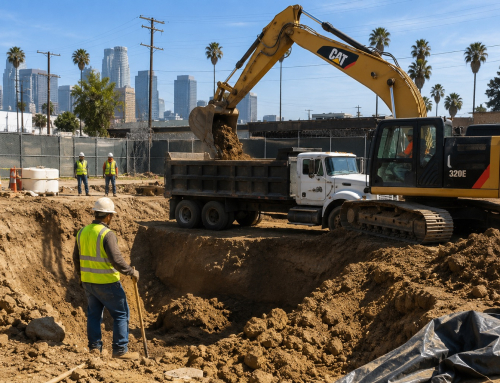
Plants are stripped on the ground by fire. In the absence of roots, soil is blown away by rain. Hillsides slide. Flat land settles unevenly.
Water is also not absorbed well in burned soil. This leads to flooding and erosion. Fear of such risks should be exposed before reconstruction.
Water and Smoke Damage
Fire fighters consume a lot of water. It is that water sinks in walls, floors and framing. Mold grows fast. Smoke leaves behind toxic remnants which cannot be cleaned by normal cleaning methods. Assessment of the fire damage should be conducted in air quality, moisture test and material testing.
The Post Fire Rebuilding To-Do’s
Are Your Hired Contractors Licensed?
Never get any contractor that is not licensed and make sure that they have a lot of experience in rebuilding after a fire. There are strict codes within fire zone projects. Contractors need to be aware of LADBS regulations and actions during inspection.
Check license using the state Web site. Ask about past fire rebuilds. Speed does not count as much as experience does.
Observing Fire Zone Regulations
Fire zone regulations are no-go. They minimize the risk in case of the next fire. The rules aim at curbing the destruction and enhance safety in future fire outbreaks.
Fire-resistant siding: It is a type of siding that reduces the speed of flames propagation, and it prevents the exterior walls to be exposed to heat.
Noncombustible roofing: Fireproof roofs expertly stop embers that can be submitted into flames and ignite the house in the event of a wildfire.
Ember-resistant vents: Special vents prevent the entry of the flying embers in attics and wall cavities.
Adequate clearance around buildings: Reduced space around buildings lowers fuel that facilitates fires.
Such regulations save life and property. They also assist in the insurance approval. Their following enhances safety and is also likely to advance insurance eligibility and rates.
Wilt Advise Search into the Structure and Soil
Ensure that you inspect all the things prior to reconstruction after a fire.
Engineers should check:
- Foundations
- Framing
- Roof systems
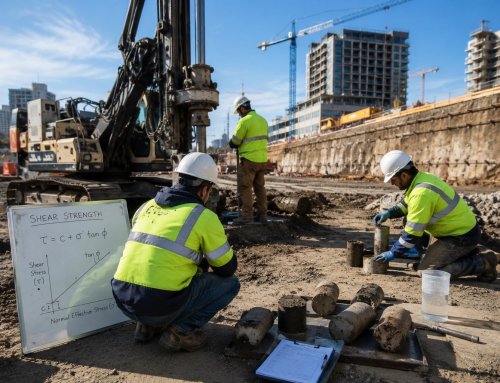
Geotechnical engineers are to check stability and drainage of soils. This is very vital in regions that are prone to earthquakes. Early problem-solving is cost-effective and will not lead to delays.
Do Keep Safety a Priority
Fire sites are dangerous. Ash, rubbish, nails poking out and broken wires are usual. When buildings are burned, they may have concealed major risks that may injure someone unless moistened by care.
Fencing the site: Fencing involves keeping the children, pets and the general population out of dangerous locations.
Protective gears: Comprising of Helmets, gloves, masks and boots are used to keep workers off dangerous debris and poisonous ashes.
Suppressing dust: Dust management minimizes the risk of breathing and avoids the transmission of ash to nearby houses.
Utilities Securing: Water and electricity lines, gas / electricity Cutting the supply of utilities in the building and checking the piping helps to prevent fires and electric shocks. Secure places will save accidents and stoppage of projects.
Make sure to file Insurance Claims Early
The majority of rebuilds are covered by insurance. Bring the claim to commence immediately. Make sure to take photos and save reports, as well as keep records of all damage done to your property. Collaborate with the specialists to prove your point. Late or lost documents may make coverage less.
The right grading reports helps prevent project delays. Properly framed inspections safeguard schedules, jobs and project budgets. The Los Angeles Department of Building and Safety says visual checks help catch early problems.
Rebuilding after a Fire: The Do-Not’s
Don’t Rush the Process
Rushing leads to mistakes. Overlooked inspections result in failures in future. The untamed destruction is more expensive to remedy.
The slow start of work frequently implies a quick end.
Do Not forgo Permits and Inspections.
Permits are required. Inspections protect you. There never was a reason to skip the permit process. They take care of the rebuild being acceptable of safety codes and approval by the local authorities.
Stop-work orders: The city may close a construction until appropriate wrongs have had their permits and checks filled in.
Penalty Fines: Construction without the consent can lead to expensive fines and fines.
Problems with insurance: Insurance companies can refuse to pay or terminate insurance when work is prohibited.
Difficulty in selling of home in future Unauthorized work may complicate future property sales and mortgage.
Do Not Rule Out Fire-Resistant Materials
The use of old materials when rebuilding increases risk. Fire resistant products are now in high demand in many fire zones.
An untreated wood and flammable roofing should be avoided. These increase insurance premiums and future risk of fire.
Don’t Cut Corners on Quality
Poor labor and cheap materials cannot withstand stress. There are greater expectations of fire rebuilds.
Good work saves your financial and family investment.
Read more to find out about Rebuilding After a Fire – The Do’s and Do Not’s of Reconstruction in a Fire Zone
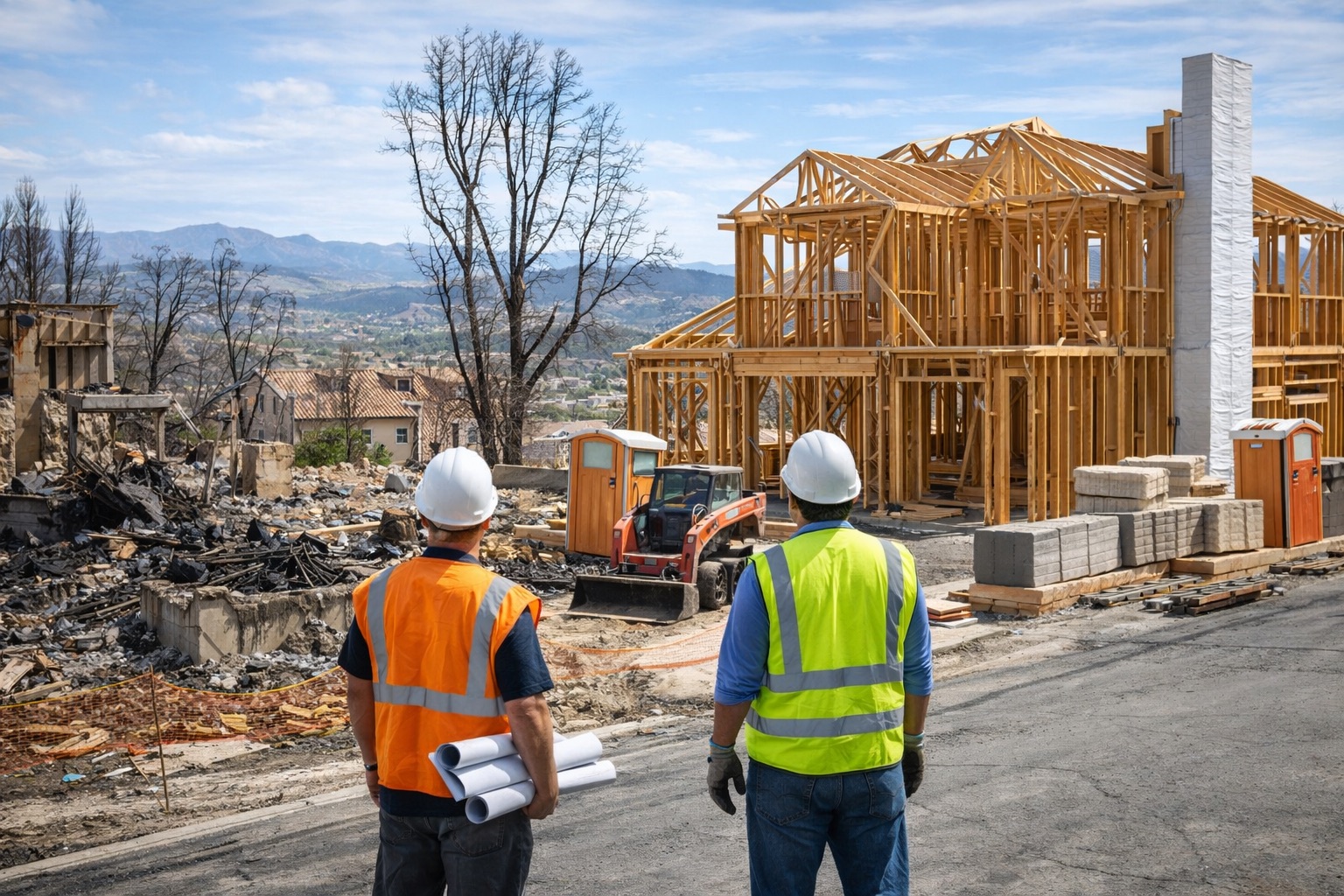
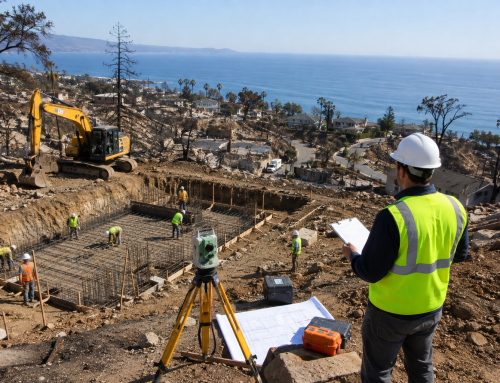
Wildfire rebuild project showing post-fire debris removal and new residential framing, illustrating fire-damaged property recovery, code-compliant reconstruction, and resilient home rebuilding in fire-prone areas.
Important Decisions in Reconstruction in a Fire Area
Fire-resistant materials
Materials that readily burn are also avoided so as to safeguard the structure in the case of a wild fire.
Concrete or reinforced masonry: These are non-combustible materials that offer a high level of protection against fire and heat.
Steel framing: Steel does not catch fire, and it maintains its shape during extreme heat as compared to wood.
Stucco or fiber cement siding: These are the exterior finishes, which are ember resistant and take time to spread the fire on a wall.
Class A fire-rated roofs: Fire-rated roofs provide maximum protection to embers on the fly.
Mineral wool insulation: This is fireproof insulation that prevents heat entry into the house.
These are more fire/heat resistant materials. Their inclusion can increase survivability in a wildfire by far.
Fire-Safe Design Features
Contemporary houses lower the chances of fire. The smart construction of buildings prevents the entry of heat, flames, and embers to the interior.
Covered eaves: Enclosed eaves are used to block embers penetrating to the attics in an event of a wild fire.
Dual-pane temperate windows: Tough glass is not easy to break or to heat which makes it unlikely that fire sets in the house.
Fire-resistant vents: Special vents prevent embers without interrupting the correct flow of air.
Sealed joints and locations Sealing small locations prevents the entry of smoke and embers into the wall and roof lines.
Landscape and Defensible Space
Fire wise landscaping is important. How your yard is designed will serve to prevent fire approaching your home.
- Alongside home clearing: Dry plants Dry grass and brush trimming will remove the fuel that can be used by the fire and spread it to the home.
- Replacing mulch with gravel: The gravel is not combustible and it prevents igniting of embers adjacent to walls and windows.
- Using minimum flame native plants: Native plants that are rich in moisture burn at a slower rate and produce heat.
- Planting trees far other than the roofs: The act of keeping trees away off the roofs would ensure that the fire will not jump onto the house.
Decent landscaping retards the spread of fire. A strategically positioned yard gives the firefighters time and minimizes the damage in the case of wildfire.
Legal and Permit Schedule
Permits for Fire Recovery
Rebuilds of fire necessitate the demolition, grading, and construction permit. LADBS does review plans very closely, so make sure you are prepared with the correct records and documentation. Plans should fulfill the existing codes of fire and seismic. Obsolete designs might be disallowed.
Fire Zone Zoning Rules
The zoning regulations can alter following fires. Other zones restrict the size of buildings or demand larger access roads by the fire trucks. You should never design without looking at the existing zoning regulations.
Insurances and Code Compliance
Rebuild homes are required to comply with modified codes as per the expectations of the insurance companies. Code compliance secures future and present claims.
The Emotional Aspect of Rebuilding
Fire recovery is stressful. With buildings, families are the greater losers. They forget, lose the comfort, and routine.
Common challenges include:
- Anxiety
- Sleep problems
- Financial stress
- Decision overload
Support helps. Most of the counties have recovery and counseling services. It is also beneficial to speak with people who experienced fires.
Social help is effective. Neighbors share resources. Friends assist regarding eating and provision. Collectively, it is easy to rebuild.
Conclusion
It is a process of patience to rebuild after a fire and it needs the proper direction. When it is done right, lives will be saved and future risk is minimized.
The do’s are clear. Outsource certified workers. Follow fire zone rules. Install fireproof substances. Get permits. Inspect everything.
The do-not’s matter just as much. Do not rush. Do not skip inspections. Do not cut corners.
Not just buildings, fire damage recovery. It is of safety, stability and rest of mind. Families will be able to restructure better homes and secure futures with the appropriate correct steps.
Build with knowledge. Build with confidence. Build smart from the ground up.