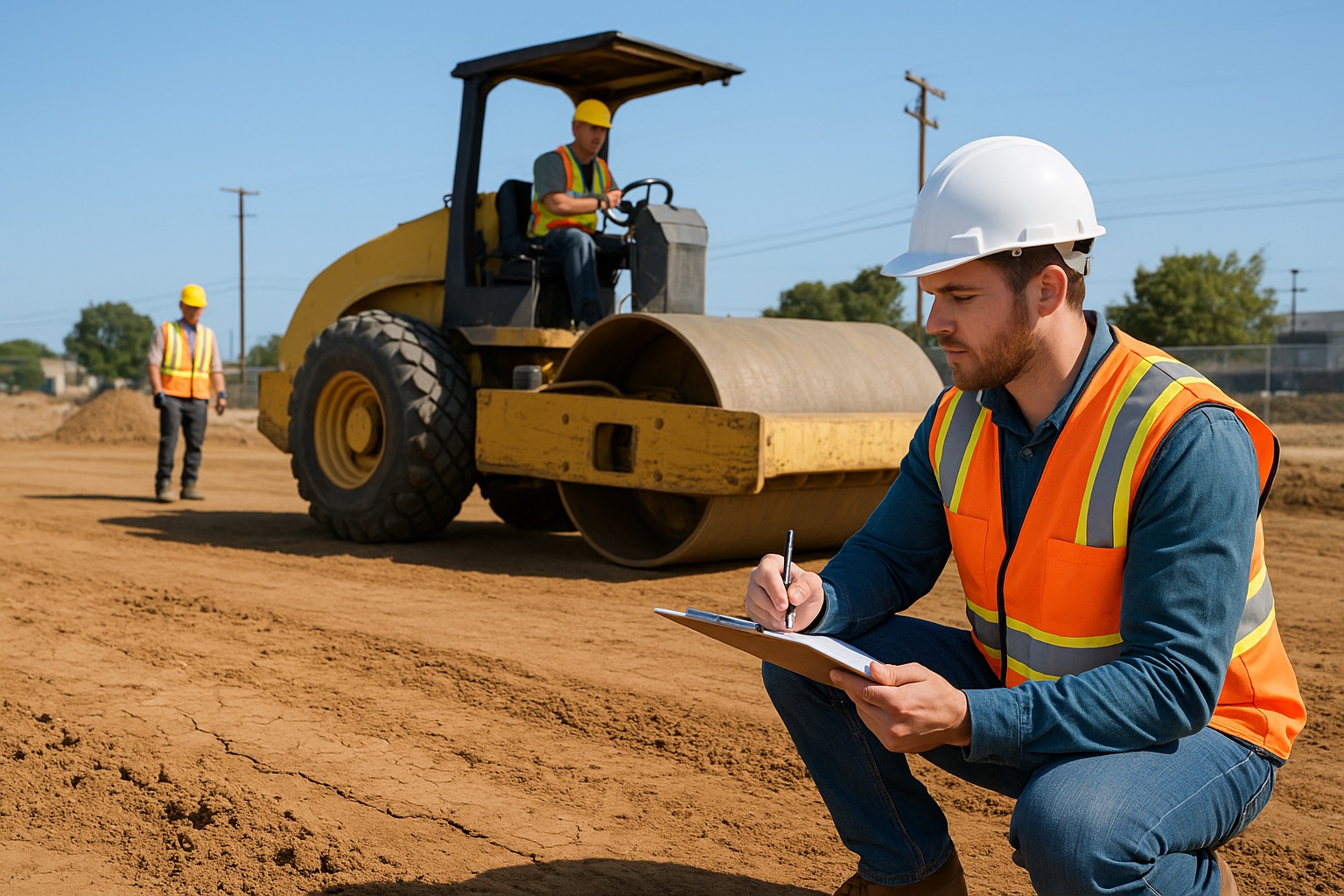
Good soil is very important for safe houses. The Los Angeles Department of Building and Safety says soft soil can make houses crack. Hard soil keeps houses firm and does not move. Builders check soil before they start any work.
Hard soil makes buildings strong and last longer. The California Geological Survey says hard soil stops rain and quake damage. Roads, bridges, and houses need strong soil too. Workers watch soil closely during all building work.
Watching soil helps keep building work safe. Caltrans has rules for roads and soil work. These codes keep houses and roads safe for people.
What is Soil Compaction and Why Is It Necessary?
Soil compaction means pressing soil to make it firm. Workers press the soil to remove air pockets. The goal is to make soil tight and strong. Hard soil can hold more weight without moving.
Compacted soil helps buildings, roads, and bridges stay safe. It stops soil from washing away during rain. Soil that is not compacted can sink or crack. Hard soil also makes roads last longer.
Builders use standards to check compaction. The Los Angeles Department of Building and Safety recommends following proper compaction rules. Most projects use the 95% Modified Proctor test for soil. The California Geological Survey says this test ensures soil is dense and strong.
Good compaction keeps soil firm under heavy loads. It prevents erosion and reduces settlement problems. This is why every building project must compact soil. Workers watch soil carefully to meet safety standards.
Who Checks Soil Compaction?
Soil compaction is checked by site workers and engineers. Engineers make sure the soil is firm and safe. Workers watch soil while machines press it.
Inspectors and engineers need proper training to do tests. Many have NICET or ICC cards for testing soil. The Los Angeles Department of Building and Safety says trained staff must check soil. These rules keep houses and roads safe.
On site, workers write down all soil tests. They check each soil part before adding more soil. Engineers approve soil that is hard and strong. They watch machines and workers to make work correct.
Good checking stops weak soil problems. It keeps houses, roads, and bridges safe in California.
The right grading reports helps prevent project delays. Properly framed inspections safeguard schedules, jobs and project budgets. The Los Angeles Department of Building and Safety says visual checks help catch early problems.
Pre-Observation Planning: What to Know Before You Start
Before checking soil compaction, workers must review the project plan. They look at project rules and how the soil must be compacted. The Los Angeles Department of Building and Safety says knowing these rules helps keep work safe.
Each type of soil needs different compaction methods. The California Geological Survey provides knowledge about soil types in California.
Workers also must know the compaction standard. Most projects use the Modified Proctor test. This test shows how dense the soil must be. Workers compare the soil to the standard before adding more soil.
Equipment must be ready before starting work. Workers check rollers, tampers, and moisture meters. They also prepare forms to write test results. A good checklist saves time and prevents mistakes.
Planning before checking soil makes work safe and correct. It helps prevent weak soil and keeps buildings, roads, and bridges strong.
Read more to find out Why rough grading reports help develop property and construction stability.
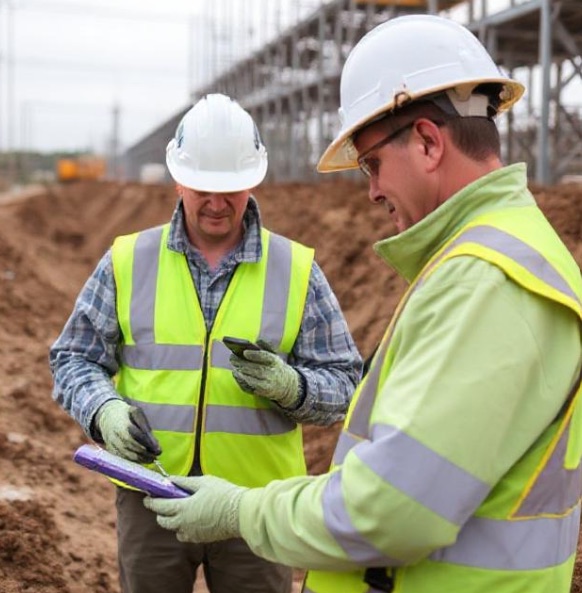
Engineers reviewing pavement design plans and soil conditions on a busy roadway construction site to ensure durability, safety, and long-term performance.
Field Methods for Soil Compaction Observation
Soil checks start with a simple visual look. Inspectors watch the surface for cracks. They also look for smooth layers. Clear roller lines help show proper compaction. The Los Angeles Department of Building and Safety says visual checks help catch early problems.
Field density tests give more exact results. One common test is the nuclear gauge test. It reads soil density and moisture in seconds. This tool must be used by trained workers. The State of California trains workers on safe test use.
Another method is the sand cone test. Workers dig a small hole in the soil. Then they fill the hole with sand to measure volume. This test is slow but very reliable. It is often used when gauges are not allowed.
The drive cylinder test is another option. Workers push a metal tube into the soil. The soil inside the tube gets weighed. This shows how dense the soil is. Some teams also use a balloon test to measure soil volume.
Inspectors also check each soil lift. A lift is one layer of placed soil. Workers must compact each lift before adding the next. They watch the roller passes and look for even pressure. Each lift gets recorded on field forms. This keeps the work safe and correct.
Moisture Content: Why It Matters and How to Monitor It
The perfect amount of moisture is required for compact well. This level is called the optimum moisture content. The California Geological Survey explains that correct moisture helps soil stay strong. When soil is at this level, it packs tight and supports heavy loads.
Soil can get too wet during work. Wet soil feels soft and shows shiny spots. It also forms mud when pressed. Dry soil looks dusty and breaks apart fast. Both conditions make compaction weak and unsafe.
Workers check moisture on-site often. A common tool is the speedy moisture tester. This tester gives fast and simple results. Some teams also use lab moisture reports. These reports help confirm the correct moisture level.
Weather changes can affect soil moisture quickly. Hot days make soil dry too fast. Rain makes the soil wet and soft. Workers adjust the compaction steps to match the weather. They may add water or air the soil out. Inspectors note every change during the work.
Proper moisture helps soil stay dense and safe. It also keeps roads, homes, and buildings strong.
Common Challenges During Observation
Soil work can face many simple problems. One common issue is mixed soil layers. These layers can change soil strength fast. Some layers may also hold trash or debris. These problems make compaction weak and unsafe.
Equipment issues can also slow the work. A roller may stop working suddenly. Some teams may also pick the wrong roller. Wrong tools make the soil uneven and soft. Good planning helps avoid these issues early.
Operator mistakes happen on busy job sites. Some workers may drive too fast. Others may make too few passes. Both mistakes leave loose spots in the soil. Slow and steady passes give better results.
Communication gaps also create problems. Contractors may not share daily soil changes. Inspectors may miss key updates from the field. These gaps lead to wrong tests or missed steps. Simple talks help keep everyone aligned.
These challenges can delay the project work. They also harm the safety of the site. Clear steps and good checks prevent many issues. Strong teamwork makes the soil safe and stable.
How to Document and Report Observations Effectively
Daily field reports help track soil work clearly. These reports list test results and soil conditions. They also show weather and equipment used. Clear notes help teams review the day fast. The Los Angeles Department of Building and Safety provides guidance for daily inspection reports.
Reports must mark any areas that do not meet rules. These spots may need extra work done. Inspectors write simple notes about each issue. This helps the contractor fix problems early.
Some projects need reports on soil changes. These reports list steps taken to correct soil. They also show what tools or tests were used. The California Department of Transportation suggests using digital systems for tracking daily work.
Digital tools make reporting much easier. Many teams use apps for field tracking. These tools store photos and location notes. Digital reports help keep all records clear and organized.
Tips for Effective Soil Compaction Observations
Check soil the same way every time. The Los Angeles Department of Building and Safety says tests should be spaced evenly. Pick spots that show all soil types. This helps make soil work safe.
Watch the machines and how soil moves. Rollers and tampers make marks on the soil. Each pass changes how firm the soil becomes. The California Geological Survey says watching these marks stops weak spots.
Always compare field tests with lab tests. Use the Modified Proctor chart to check soil. This shows if soil is strong enough.
Talk clearly with the work team every day. Share notes and problems with all workers. The California Department of Transportation says good talks stop mistakes. Clear talks keep soil work safe.
Conclusion
Good soil compaction checks are very important for safe buildings. The Los Angeles Department of Building and Safety says strong soil helps foundations stay firm. Proper testing stops cracks and weak spots in houses, roads, and bridges.
Following proper soil tests improves long-term building strength. The California Geological Survey explains that compacted soil holds heavy loads better. It also prevents erosion and settlement over time. This keeps all structures safe for many years.
Trained staff must do soil checks at every stage. Inspectors and engineers should watch each step closely. The California Department of Transportation recommends routine inspections for all projects. Good records, careful work, and regular checks keep soil firm.
Strong soil and careful observation make building work safe. These steps protect people, roads, and homes across California.
FAQs
Why is soil compaction critical in construction?
Soil compaction provides ground stabilization, settles, and carries building, road, and bridge loads. Without compaction, soil could crack, shift, and settle, which causes structure damage.
What are the typical tests used to validate soil compaction?
Current tests include Modified Proctor test, nuclear gauge testing, sand cone testing, drive cylinder testing, and balloon testing. These tests validate soil density, moisture, and strength
Who will check soil compaction for your project?
Trained inspectors, engineers, and workers on site may share this responsibility. As an example, both LADBS and Caltrans in California require certified personnel to perform soil compaction checks and document their findings.
What moisture level is best for soil compaction?
The best moisture level is the optimum moisture content, a determinate of the Modified Proctor test. Soil compacts best at this moisture level, thus providing maximum strength and density.
What if the soil does not pass compaction test?
The crew will need to re-compact, re-work, or modify moisture in soil that does not meet proctored density before construction continues. Documentation and repairs will also need to occur for any failed tests.
Why does California have strict soil testing rules?
California has earthquakes, varied soil types, and heavy infrastructure loads. Strict guidelines from LADBS, CGS, and Caltrans help prevent settlement, cracks, and foundation failures.
Build with knowledge. Build with confidence. Build smart from the ground up.