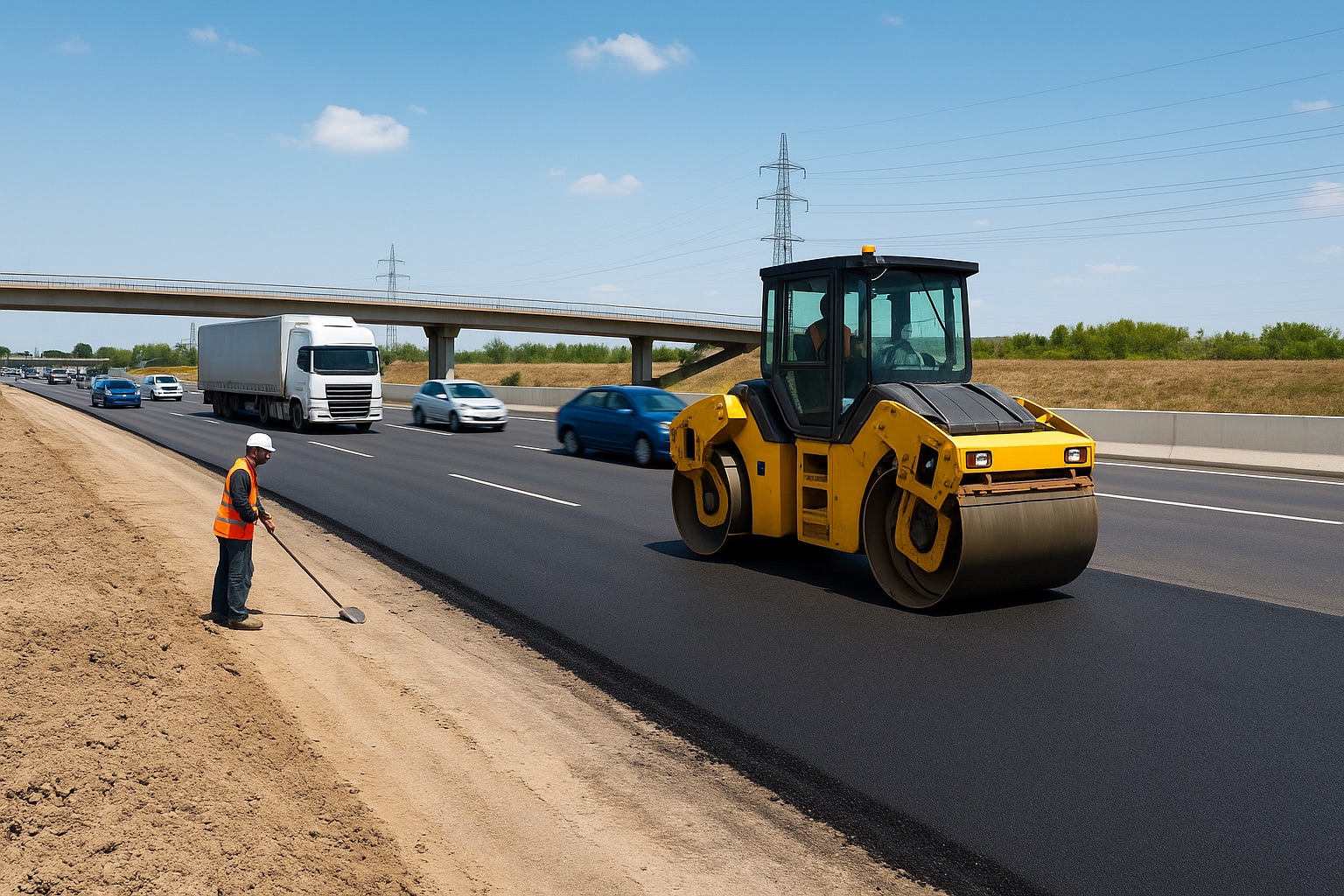
High-traffic roadways include urban local city arteries, highways, and interstates. Road pavements are a daily-use infrastructure. Heavy traffic also uses the road. Therefore, since the roadways are so busy, having a strong roadway is paramount.
If the design is poor, the road can crack or form potholes quickly. It leads to increased repair costs and also suspends the traffic. According to the FHWA, a good pavement design should meet traffic needs safely and cost-effectively.
Good pavement design has three main goals. It must be durable so it lasts for many years. It must be safe so drivers can travel without danger. It must also give long-term performance even when trucks and cars use it every day.
Understanding Traffic Loading and Volume
Traffic loading represents the total weight of vehicles acting on a roadway. The term ESAL, or Equivalent Single Axle Load, is often employed by engineers. One ESAL represents the force of a standard truck axle.
Traffic can provide insight into the amount of stress a roadway can expect. It can also measure the time for which the roadway is exposed to traffic.
Daily traffic volume indicates the number of vehicles using a roadway in a day. However, it does not consider the stress of individual vehicles on the roadway. Heavy vehicles such as trucks, buses, and freight vehicles can impose far more damage on a roadway.
Therefore, the design of pavements also considers heavy vehicles, not only total traffic. Roads with frequent truck traffic need stronger pavement layers to stay safe.
Site Assessment and Subgrade Evaluation
Concrete site assessments begin with a geotechnical investigation. The engineers check the soil for its strength and the capability of supporting the pavement. However, the soil is distributed in the categories of soil, clay, sand, and gravel. In California, local rules from Caltrans and Los Angeles County Public Works must be adhered to.
Soil testing is done to determine the amount of weight the soil will support. These tests include California bearing ratio, R-values etc,. The Caltrans Highway Design Manual guide for using CBR and R-values in design.
Drainage is also important. If water stays in the soil, it becomes soft and weak. Local rules from LADBS and LA County Public Works require proper drainage to keep the soil strong all year.
The right pavement design can prevent project delays a strong pavement system has several layers that work together.
Selecting the Right Pavement Type
Flexible Pavement
Flexible pavement is made with asphalt on top of a base layer and the soil. The various layers assist in distributing the weight from vehicles and trucks. Asphalt can flex a little, which is beneficial when the earth below it shifts. It is also fast to build, which helps when a road needs work.
Rigid Pavement
Rigid pavements are created using concrete. These pavements have joints to prevent cracking. The cracks are produced due to the natural expansion and shrinkage of concrete.
Rigid pavements are also extremely durable. They will not bend or stretch when heavy trucks or buses cross over them. It is used on highways and other busy roads that need a long lifespan.
When to Use Each Type
Flexible pavement costs less at first and is easy to fix. Because rigid pavements are solid, they require repairs in the future. Rigid pavements are also expensive to install but promote longevity and load-bearing weight.
Engineers are utilizing rules established by local agencies. For example, the California Geological Survey constructed a safe and economical pavement.
Read more to find out why every road, bridge, or highway must follow strict codes.
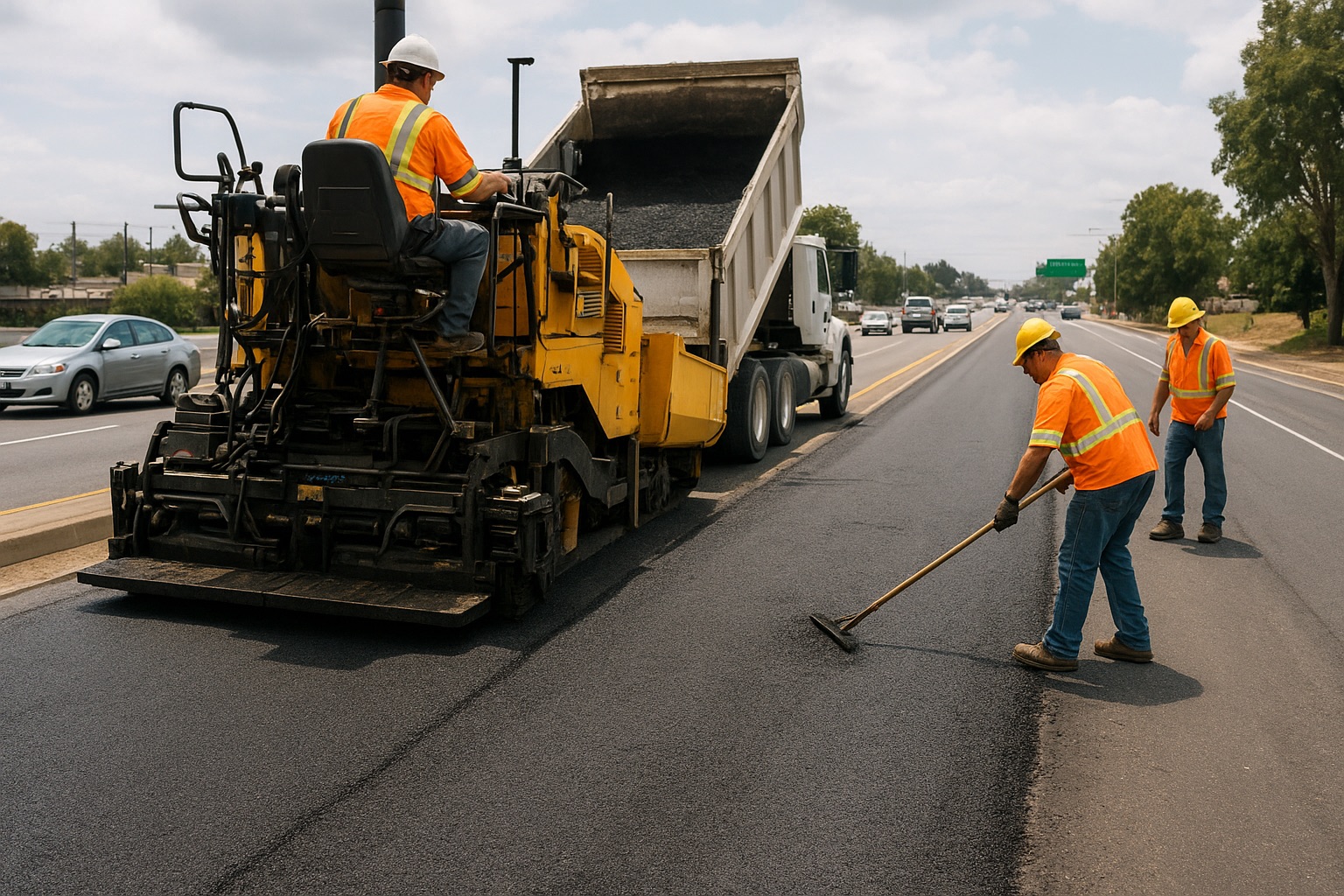
Road construction showing asphalt paving and compaction on a busy multilane roadway, demonstrating proper pavement design and quality control.
Designing Pavement Layers for Durability: Role of Each Layer
A strong pavement system has several layers that work together. The surface course takes the direct load from cars and trucks. The base course and sub-base help spread this load so the soil does not get damaged.
The subgrade is the native soil layer that the pavement is built above. Engineers test the subgrade as well as all the layers to be sure they are stable and safe.
Material Selection: Each layer needs the right materials. The surface layer often uses asphalt or concrete. The base and sub-base layers use strong rock materials called aggregates.
Some projects include additional mixes to improve the strength of the material or to reduce moisture effects.
Compaction and layer thickness are essential. Good compaction ensures each layer is tight and stable. If a layer is not compacted properly, the pavement will crack or settle, too soon. Layer thickness is important.
Thicker layers can carry more weight and last longer. Engineers follow rules from the California Geological Survey to choose the correct thickness.
Drainage Design and Water Management
Drainage is extremely important for busy roads. Water has the ability of ruining pavement and undermine soil. When water either stays above or below pavement, it is one of the causes of cracks and potholes.
They ultimately deteriorate the surface. Thus, engineers in California determine the drainage requirements for all earthwork.
Surface drainage is draining off the liquid roadway using elevation, with slopes, gutters, or channels. Subsurface drainage helps conduct liquid below the pavement. Edge drains conduct liquid away from the edges of the road.
Surface and subsurface drainage with edge drains work together to keep the road dry. Engineers design roads with all of the drainage options added within the road. Hence, water can be removed quickly, and soil erosion will not happen at the edges of the road.
Load Distribution and Structural Design
Load distributions and structural designs function as safeguards. They allow roads to service heavy traffic. Most engineers will use the recommended material from the AASHTO Pavement Design Guide.
This guide explains the behavior of pavement under loads. Moreover, it also shows the longevity of the pavement for that load.
Measuring the correct layer thickness is the most important for pavement design. Roadways with trucks, buses, or freight need thick layers for heavy loads. Engineers determine the subgrade soil strength with the local ordinances.
For unique conditions, we use data from both LADBS and the California Geological Survey. Safety factors are implemented. Moreover, the pavement will not crack sooner than expected.
Construction Quality Control
Construction quality control ensures that a road is constructed properly. Teams test the soil, rock, asphalt, and concrete to make sure they are strong enough. These checks help engineers know the materials will last. Caltrans and Los Angeles County Public Works ask for these tests on most projects.
Workers also run field tests to measure how tight the layers are. If a layer is not compacted well, the road can crack or sink. In the case of asphalt, the crew monitors the temperature when paving.
To have a robust and smooth pavement, asphalt should be laid at the correct temperature. QA and QC help achieve a properly built road.
Maintenance and Lifecycle Cost Considerations
Road maintenance helps a road stay safe and strong. Some roads are built to need only small fixes. Some pavements are constructed to allow a long road lifespan, with very few repairs done. Engineers determine the best solution by assessing the number of vehicles that utilize the roadway.
Preventive maintenance is important. It means fixing small problems before they grow. Workers seal cracks so water cannot get inside the road. They also add a thin new layer on top to keep the surface smooth.
These steps help the road last longer. Lifecycle cost planning looks at the total cost of a road over many years. It helps engineers pick the best and lowest-cost plan for a city.
Conclusion
Quality design allows the busy roadway to remain durable, safe, and functional for years. A good pavement design uses strong materials and incorporates good drainage. It uses adequate thickness in the different layers.
Pavement design takes into account the soil, predicted traffic, and weather conditions. Primarily, these are based on standards from agencies such as Caltrans and LADBS.
Collaboration is necessary. The geotechnical engineers and traffic engineers must share similar ideas and information. How to make sustainability a part of design is important as well. A good design can save money through decreased repairs and increased useful life of the roadway.
Key Takeaways for High-Traffic Road and Pavement Design
What is the best pavement type for heavy traffic roads?
Rigid pavements, such as concrete pavements, are chosen and utilized for heavy traffic. Long-lasting pavements must last extensively under heavy traffic conditions.
How thick should pavement be for high-volume roads?
The thickness of pavement surfaces typically increases or decreases based on the traffic, subgrade strength, design life, and base along the line; 8 to 15 inches will be acceptable.
What design methods are used for high-traffic pavement?
The road design standard within the U.S is AASHTO (American Association of state highway and Transportation officials). It has been applied in the design of road pavements. The design is through a mechanistic empirical analysis of the traffic loads. It is also based on domestic research of the traffic conditions.
Can asphalt handle heavy traffic loads?
Asphalt pavements could work effectively in the presence of heavy traffic. The state of the surface pavement is normally the issue of concern. When they are designed adequately, in the future, they work well. There should also be proper pavement thickness and supporting layers.
Why is drainage important in pavement design?
Poor drainage reduces pavements from the ingress of water and failure of the subgrade materials.
Build with knowledge. Build with confidence. Build smart from the ground up.