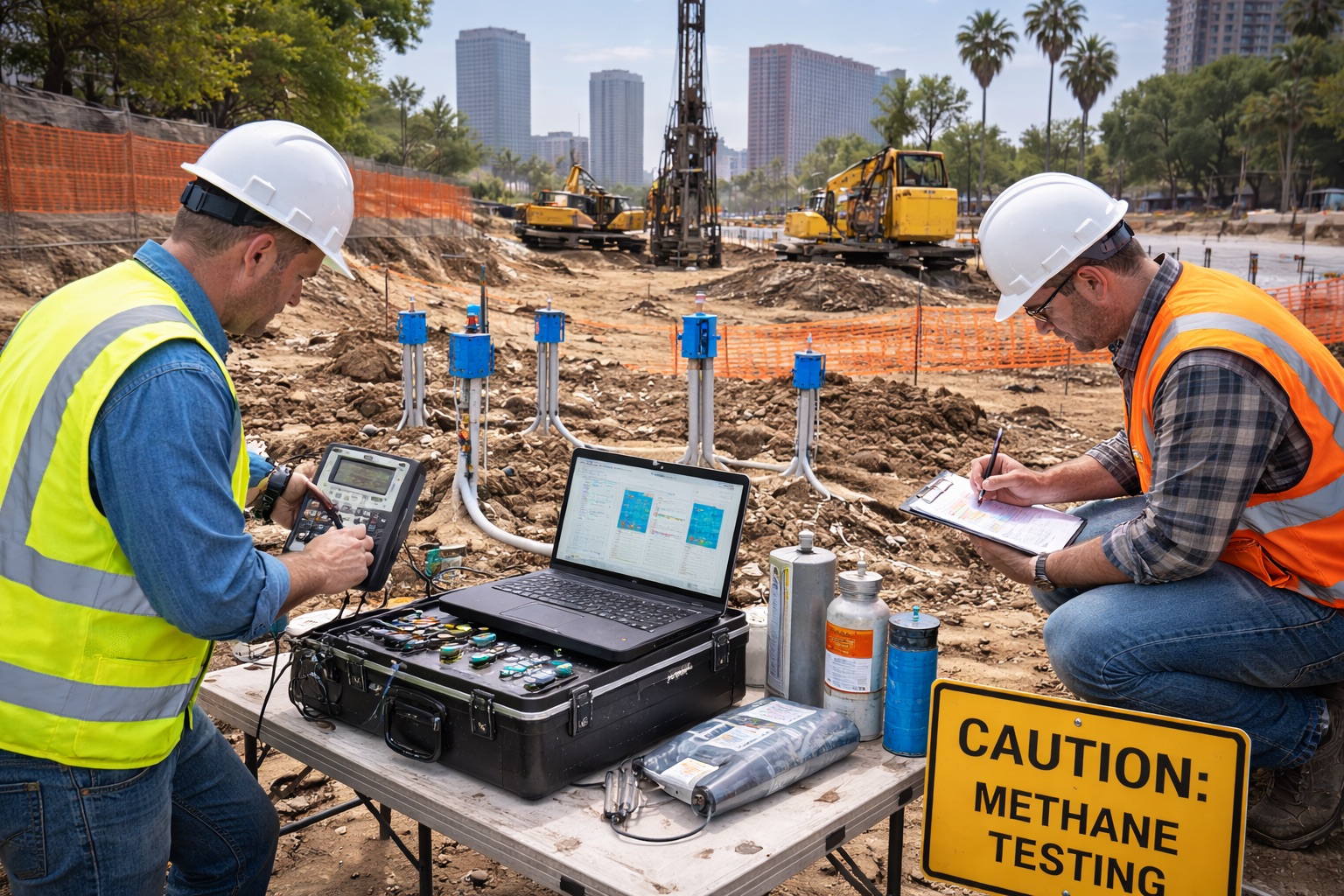
Introduction to Methane Soil-gas Testing
Methane soil-gas testing is critical to safe construction in Southern California. The region sits above old oil fields and buried organic materials. Methane can accumulate underground. Later, it will pose hazards if not evaluated and mitigated early.
Some areas of Los Angeles are quite old and have methane-related issues. Previously, underground gas migration has led to fires and explosions. These incidents encouraged local agencies to embrace stringent methane regulations.
In Los Angeles, LADBS requires methane testing at sites located in methane zones—for example, Long Beach. In LA, the non-incorporated communities also need methane discovery. Such rules protect employees, inhabitants, and civilian infrastructures.
Compliance with permitting requirements is easier when you understand local standards. This article explores everything about methane gas testing and standards. This article explores everything about methane gas testing and standards.
What is Methane Soil Testing?
Methane is a natural gas that is odorless and colorless. It occurs naturally from the earth. Methane in the underground in Southern California is a result of aging oil wells. It is also a by-product of materials from buried landfills.
Methane can accumulate in soil and under slabs. If methane concentrations become harmful, it becomes a fire and explosive hazard. Methane gas can also enter to the buildings through cracks, posing vapor intrusion risks.
Methane soil-gas testing measures the concentration of methane in soil. The tests are used to determine current methane levels.
It also includes the mitigation steps to be implemented before construction. Effective testing ensures the safeguarding of the population and meets the permit departments.
How Do Wildfires Change Soil?
Plant roots and minerals bind soil particles. Fire burns roots. Soil loses cohesion. Loose soil moves easily.
Fire also changes the soil itself. It can make a hydrophobic layer. This means soil repels water. Rain cannot soak in. Water runs off quickly. It collects dirt, dust, and debris (California Geological Survey – Burned Watershed Geohazards).
The weaker soil lacks plant and root cover. Runoff, landslides, and debris flows can be the result. Soil is left to be brittle unless the vegetation is regrown or the soil is stabilized.
The methane soil-gas testing analysis for construction helps prevent project delays and closures. Properly framed inspections safeguard schedules, jobs and project budgets. The Los Angeles Department of Building and Safety says visual checks help catch early problems.
Methane Zones and Regulatory Jurisdictions
Local governments use Methane Zone Maps to assess methane risk. The City of Los Angeles calls the map the official Methane and Methane Buffer Zones Map. Constructions in these areas must undergo soil-gas methane testing.
Areas outside the zones do not require testing, except where there is evidence of methane. A methane buffer zone: a zone surrounding known methane sites where testing may also be needed.
Zoning helps determine the required testing and mitigation. Zoning maps should never be ignored in planning construction.
Read more to find out why a methane soil-gas test can help properly develop a property and construction stability, along with avoiding health concerns.
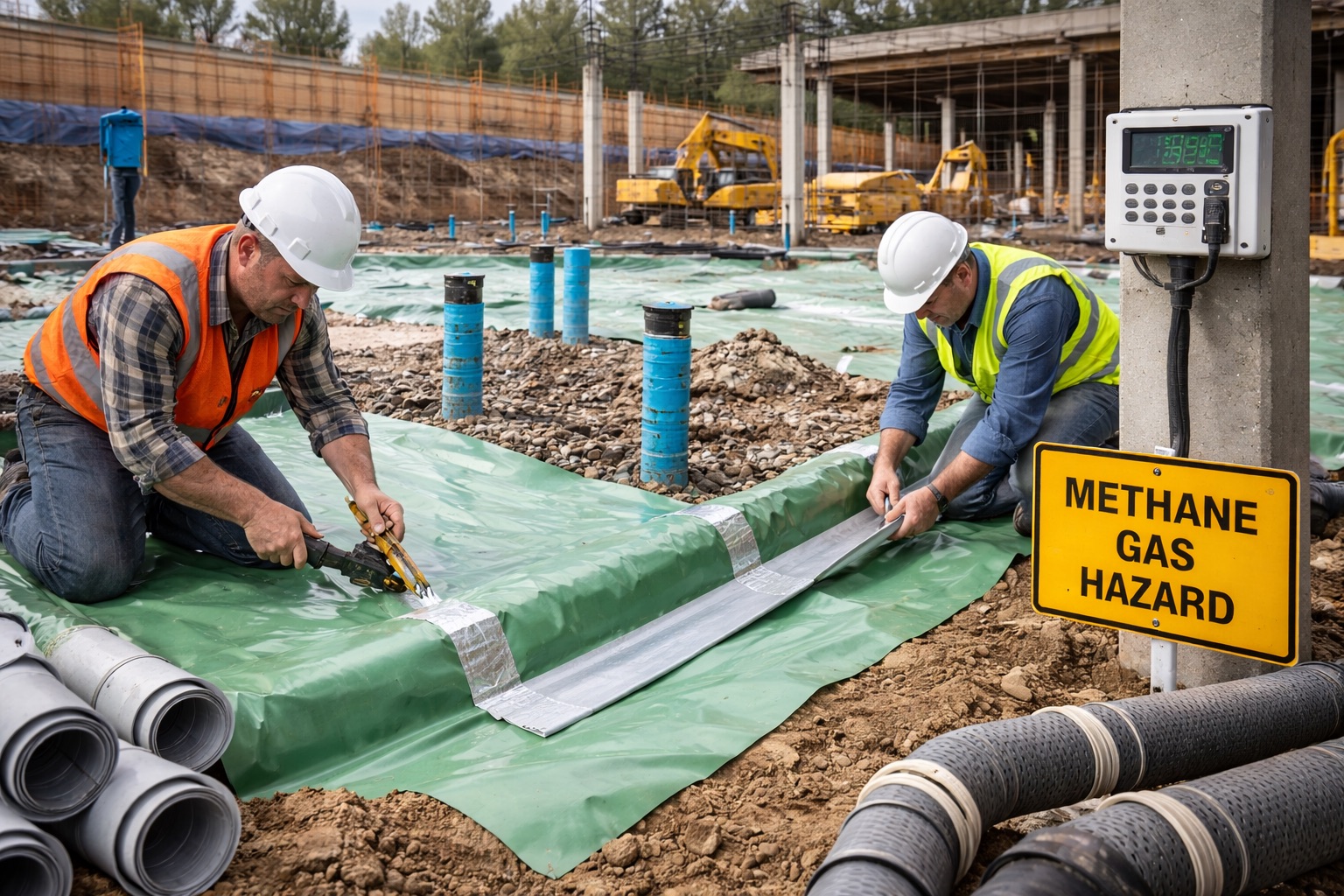
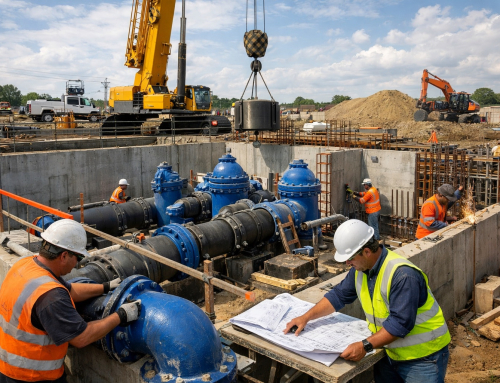
Construction workers installing methane mitigation systems at a California site, following LADBS and LA County methane safety standards.
Methane Testing in the City of Los Angeles
The Los Angeles Department of Building and Safety (LADBS) enforces methane testing. It handles mitigation standards. LADBS uses Division 71 of the Los Angeles Municipal Code to regulate methane hazards.
Who Must Test
If a property is in a methane zone or methane buffer zone, soil gas testing is mandatory. LADBS requires site testing and a mitigation plan. This requirement must be fulfilled when new buildings or paved areas are proposed.
Testing Standards
LADBS releases the testing standard for informational purposes. This information bulletin is titled “Site Testing Standards for Methane” (IB‑P/BC‑101). This document describes how to conduct shallow and deep soil-gas tests. Test results are then used to determine the design methane concentration and pressure.
Certified Professionals
Methane gas tests must be supervised by a licensed architect, engineer, or geologist. These are certified professionals for methane testing. Testing agencies also need LADBS approval to ensure the data is valid for permitting.
Hazard Levels and Mitigation
LADBS classifies sites into design levels from Level I to Level V. These levels are determined by methane concentration and pressure. Higher levels need stronger mitigation measures.
Mitigation systems may include passive or active venting systems. It may be gas barriers under slabs, alarms, and more. These systems must follow LADBS standards. Yet, equipment often requires approval from the Los Angeles Fire Department (LAFD).
Methane Testing in Long Beach and Signal Hill
Long Beach City has its methane legislation. These regulations are applicable to areas with a history of oilfield operations. In 2021, the city revised its Building Standards Code. It was mainly designed to address methane mitigation for use in areas near oil wells and other hazards.
Long Beach uses methane soil-gas testing in accordance with LADBS standards. However, review and approval are handled by Long Beach’s local permitting staff.
In areas like Signal Hill, where oil production was once dense, methane testing is common. Builders must comply with Long Beach requirements. It is mandatory for soil probes, monitoring, and laboratory analysis.
Plans for methane mitigation in Long Beach must be submitted with permit applications. They often reference LADBS‑style criteria adapted for the city.
Methane Testing in Unincorporated Los Angeles County
In unincorporated LA County, methane testing is required near certain hazards. Sites within 1,000 feet of a landfill or 300 feet of oil/gas wells typically trigger soil gas testing.
In these areas, methane testing is usually administered by the LA County Building & Safety Division. The county uses criteria based on methane concentration. It considers proximity to hazards rather than a strict zone map.
Testing results trigger mitigation requirements. Usually, if methane levels are high or if conditions indicate potential gas migration. Mitigation systems are similar to those in LADBS jurisdictions. They are designed to prevent gas intrusion.
You should always check the county building code. Moreover, you can consult local officials for current methane triggers in unincorporated areas.
Typical Testing Process
Most methane testing follows these basic steps:
- Preliminary Review: Review zoning maps, methane hazard maps. The site’s history is also important for identifying potential risks.
- Site Visit: A qualified professional inspects the property to plan the test. It includes the information on where probes and tests should be conducted.
- Drilling Probes: Shallow soil probes are drilled at consistent spacing. Then it will collect gas samples from the ground.
- 24–48 Hour Monitoring: Methane levels are monitored over a day or two. It ensures accurate and representative readings.
- Lab Analysis: Collected soil-gas samples are sent to a laboratory for analysis. Where it measures methane concentration and subsurface pressure.
- Report Preparation: A detailed report has been prepared. This report summarizes methods, results, and recommendations for mitigation if needed.
- Permit Submission: The completed methane report and any proposed mitigation plans are prepared. This is submitted with the building permit application.
This step-by-step process ensures that agencies have reliable information to assess site safety. The department determines if mitigation measures are necessary.
Investigation Requirements Based on Results
Once testing results are available, mitigation is designed based on hazard level.
LADBS Levels
In Los Angeles, LADBS uses levels I through V to determine the required system type. Higher levels require more complex systems.
Common Methane Mitigation Systems
- Gas barriers under slabs: membranes installed beneath concrete slabs. It prevents methane from entering buildings through the floor.
- Venting layers: Layers beneath the slab allow gas to escape naturally. No mechanical help is required then.
- Active venting by fans: Fans are used when the methane pressure is high. The aim is to eliminate the gas beneath the building safely.
- Methane detectors and alarms: Sensors warn citizens. An increase in methane concentration provides an early indication.
These systems will collaborate to minimize the risk of gas accumulation beneath buildings. They are part of building design. They should comply with the to local building codes. LADBS methane-reduction policies are one of them.
Budget Impact
Methane mitigation adds cost to construction. It can affect the design of the foundation, slab, and mechanical systems. Effective time management helps avoid unexpected circumstances and limit expenses.
Comparing City of LA vs Long Beach vs LA County
|
Jurisdiction |
Trigger for Testing |
Testing Required? |
Mitigation Policy |
|
City of LA (LADBS) |
Methane Zone / Buffer Zone |
Yes |
Levels I–V mitigation based on test results |
|
Long Beach |
Historic oilfield zones & oil/gas well areas |
Yes |
LADBS‑style rules, local approval |
|
LA County |
Near landfill or oil/gas wells (proximity) |
Yes |
Based on data & conditions |
These rules help ensure construction safety by identifying and mitigating methane hazards early.
Best Practices for Developers and Builders
To avoid delays and extra costs:
- Check methane maps early. Confirm whether a property lies in a methane zone before buying land.
- Hire certified consultants. Use professionals approved by LADBS, Long Beach, or the county.
- Plan methane mitigation in your budget. Include possible systems in early cost estimates.
- Test even if not required. Proactive testing can prevent permit delays later.
- Coordinate with environmental experts. Teams like those that specialize in methane testing help ensure compliance.
Working with experienced teams makes design and permitting smoother.
Conclusion
Methane soil-gas testing is more than a permit requirement. It protects individuals and property by reducing gas-related risks. Testing is necessary in the City of Los Angeles, Long Beach, and Los Angeles County.
Nevertheless, depending on specific conditions, procedures vary by jurisdiction. Early detection by certified professionals helps identify methane gas. Good testing and a sound mitigation plan ensure projects proceed on time. Sufficient methane assessment helps save lives and build safer buildings. It enhances adherence to local laws.
F.A.Q.s
Do I need methane testing for every project in LA?
No. Only if the property lies within a Methane Zone or Buffer Zone, or meets other hazard criteria per LADBS demands.
Can I skip testing if nearby sites have no methane?
Nearby conditions are not a guarantee. If local maps or proximity triggers apply, testing is still needed to confirm conditions.
How long is a methane test valid?
Methane tests reflect current conditions. Significant site changes usually require a new test.
Who can perform certified testing?
A licensed architect, engineer, or geologist supervised by an LADBS‑approved testing agency must perform tests in the LADBS jurisdiction.
Build with knowledge. Build with confidence. Build smart from the ground up.